"Keeping options open"
According to The Straits Times, Minister Grace Fu said Singapore is collecting data on the haze as it weighs possible action under the Transboundary Haze Pollution Act. She also said Singapore remains ready to help Indonesia, but there has been no update from its neighbour so far.
Enacted in 2014, the law targets those responsible for causing or condoning fires if the resulting haze keeps the PSI in the unhealthy range for 24 hours or more. Those found guilty face fines of up to S$100,000 (about US$77,855) a day, capped at S$2 million in total.
Pollution readings soar
Air quality in Singapore has deteriorated markedly:
- At 6 a.m., PSI readings ranged from 125 to 206 across the island, highest in the west.
- A 24-hour PSI of 201 and above is considered "very unhealthy"; above 300 is "hazardous" and would trigger school closures.
- All five regions were in the "unhealthy" range, the third level on the government's five-step scale.
Some sports facilities in the west were closed on Wednesday, and several lawmakers cancelled house visits. The government is distributing N95 masks to eligible residents and opening haze shelters in some community spaces.
The National Environment Agency said its haze task force is working with retailers to replenish masks, and stocks remain sufficient.
The worst haze in more than a decade
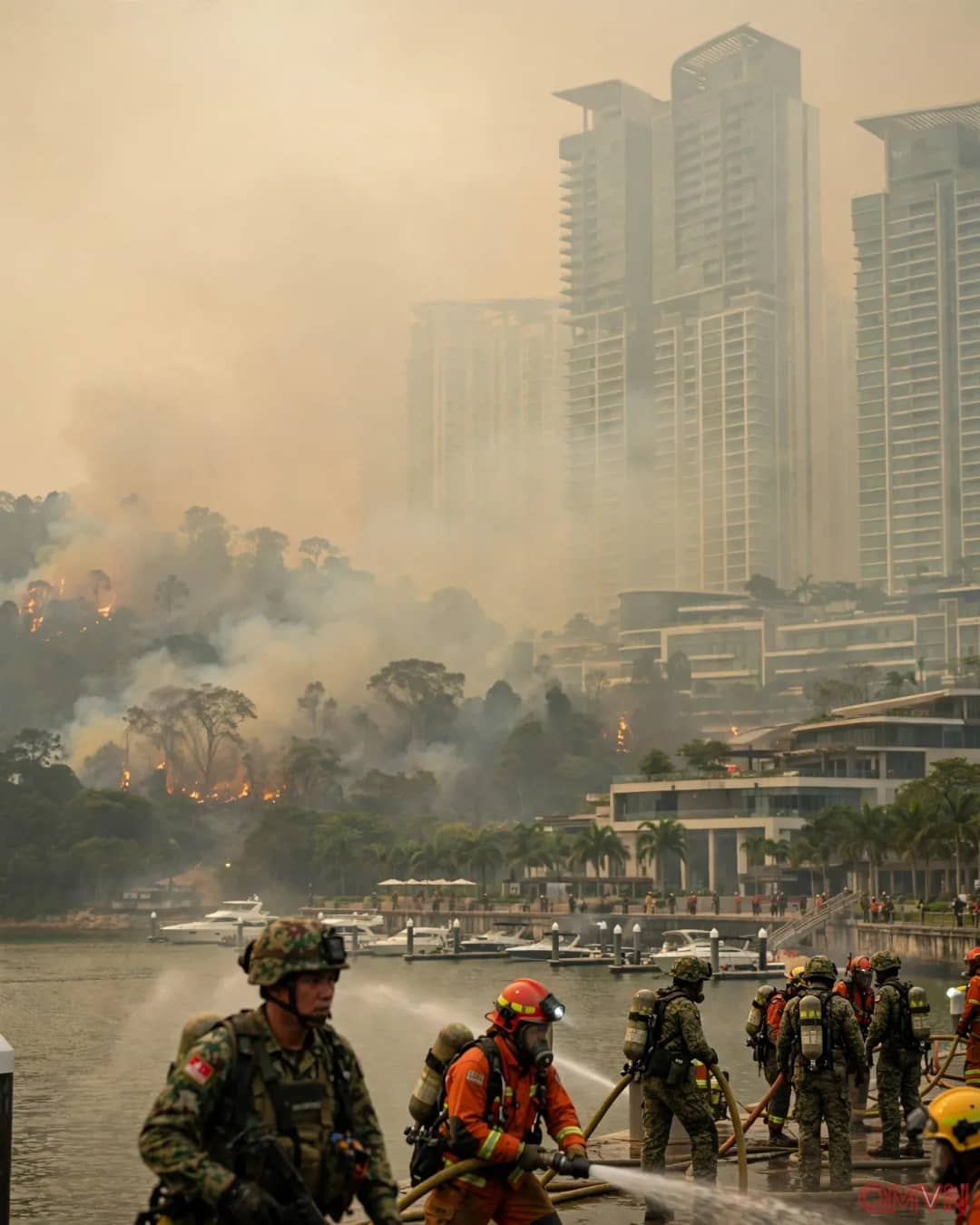
Several Southeast Asian countries have been blanketed for weeks by toxic haze from forest fires in Indonesia. Governments are under pressure to step up and coordinate their response to what is shaping up to be the worst episode in more than ten years.
The haze threatens not only health, especially for the elderly, children and people with respiratory illnesses, but also tourism, events and economic activity across the region.
Indonesia tries "dry ice"
Aerial firefighting in Indonesia has recently been hampered by poor visibility. The country is repurposing a weather-modification technique pioneered in the 1940s in its latest effort to fight the pollution.
Aircraft will disperse pellets of dry ice over South Sumatra province in an experimental approach that authorities hope will reduce the hazardous smoke.