MAIN STORY
A prime address with an extraordinary repair bill
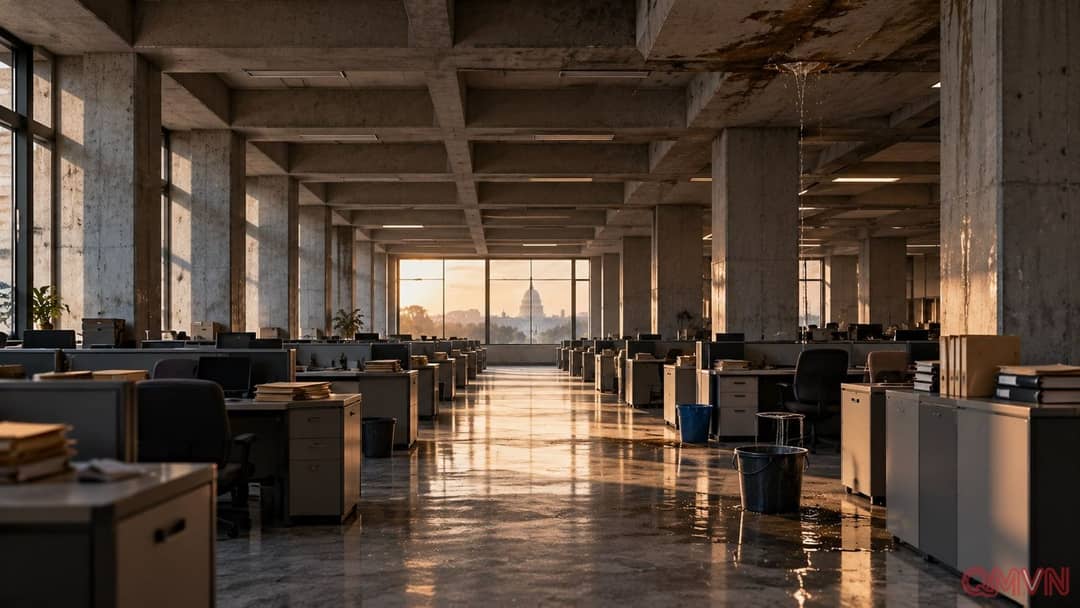
The Weaver building occupies valuable ground in southwest Washington near L’Enfant Plaza and the waterfront. Location may attract developers, but a vast purpose-built government complex cannot automatically become housing, shops or a contemporary workplace. Any prospective buyer must assess structural systems, conversion costs, planning restrictions, tenant demand and the conditions attached to a public asset.
In 2025, HUD and the General Services Administration said the building had more than $500 million in deferred maintenance and modernization needs. HUD cited leaks, failing infrastructure and workplace safety concerns when announcing its move to Alexandria. Those figures represent official assessments, not a sale price or proof that every renovation option is impossible. Relocation may also bring longer journeys for some employees and costs associated with leasing replacement space.
A national backlog behind a local story
The Government Accountability Office has listed federal real-property management as a high-risk area since 2003. Across civilian agencies and the Defense Department, estimated deferred building maintenance and repairs climbed from around $171 billion in fiscal 2017 to $370 billion in 2024.