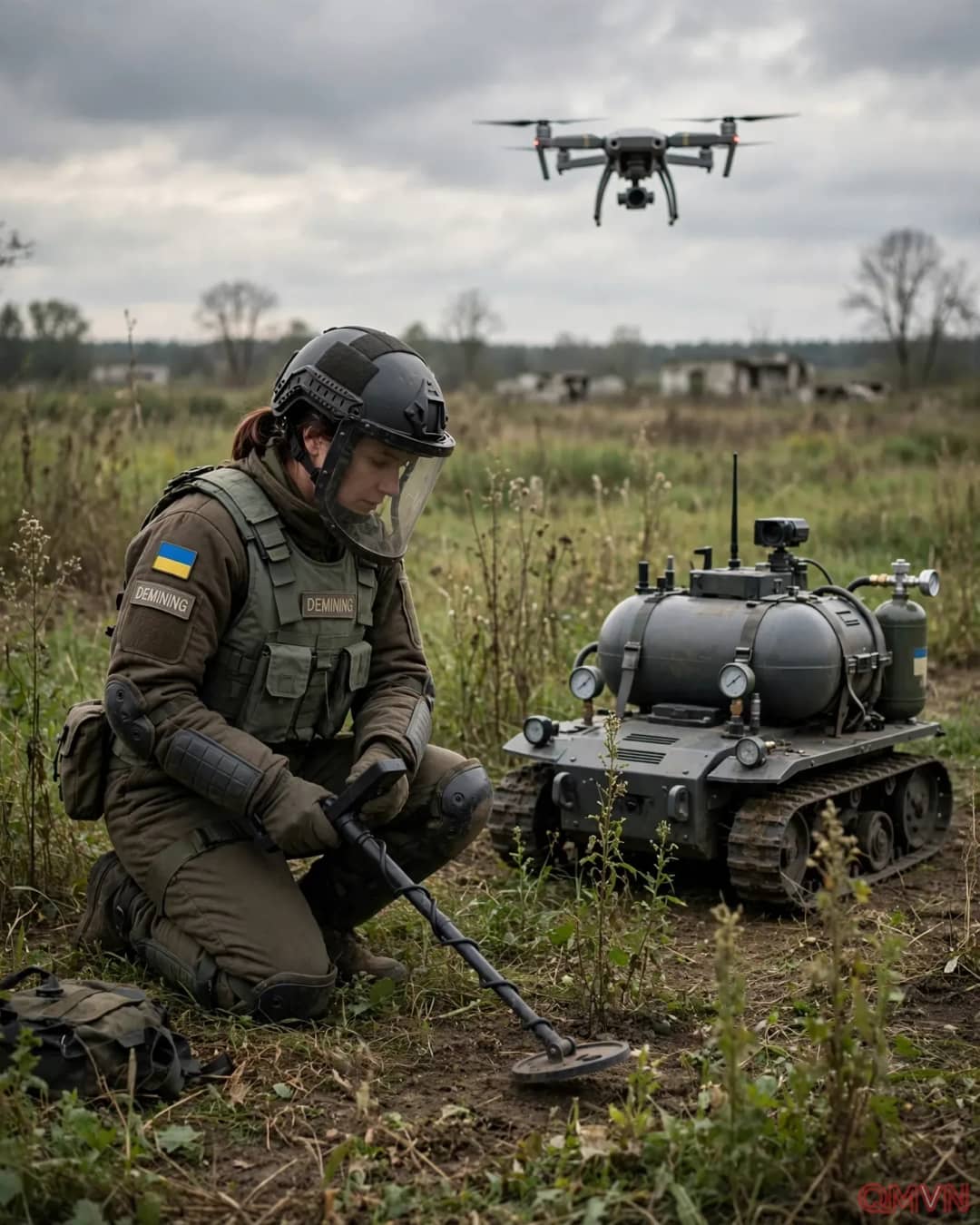
Unprecedented Contamination and Evolving Subterranean Threats
Across reclaiming farmland in the eastern Kharkiv region, frontline deminers such as 58-year-old Olena Kabanova perform exacting manual excavations under persistent aerial menace. Traditional clearance protocols, where operators kneel to meticulously carve out soil around suspected metallic signals, frequently consume up to 45 minutes for a single localized site. United Nations mine action advisers warn that the proliferation of drone-delivered cluster munitions and submunitions has dramatically expanded the contamination perimeter far beyond static frontlines, evoking historical parallels to ordnance drops along the Ho Chi Minh trail.
The operational hazard is heightened by the battlefield appearance of sophisticated sensor-fused ordnance. Russian forces have deployed the cylindrical POM-3 mine, an explosive device resembling an ordinary vacuum flask that detonates upon detecting the subtle seismic vibrations of approaching human footfalls.