MAIN ARTICLE
An alarm takes time as well as peace of mind
For Nikita Horskyi and Alona Horska, the night described by the newspaper began with explosions and another hurried move of their children from bed. Mark, 10, and Arina, 5, then had school to face. The familiar sequence showed how danger can take hours from a family before the working day starts.
Mark told the newspaper that the attacks affected his nerves and that he needed ways to calm himself. His words describe his own experience, not a clinical assessment. The important detail is how much attention a child must devote to managing fear alongside the ordinary demands of growing up.
Repeated alerts divide a day into uncertain intervals. Rest, shopping and meals become plans that can be interrupted again. A family may complete those tasks and still have lost the continuity that makes daily life predictable. Carrying on is work in itself, rather than evidence that the disruption has become harmless.
A place to wait is not automatically a place to learn
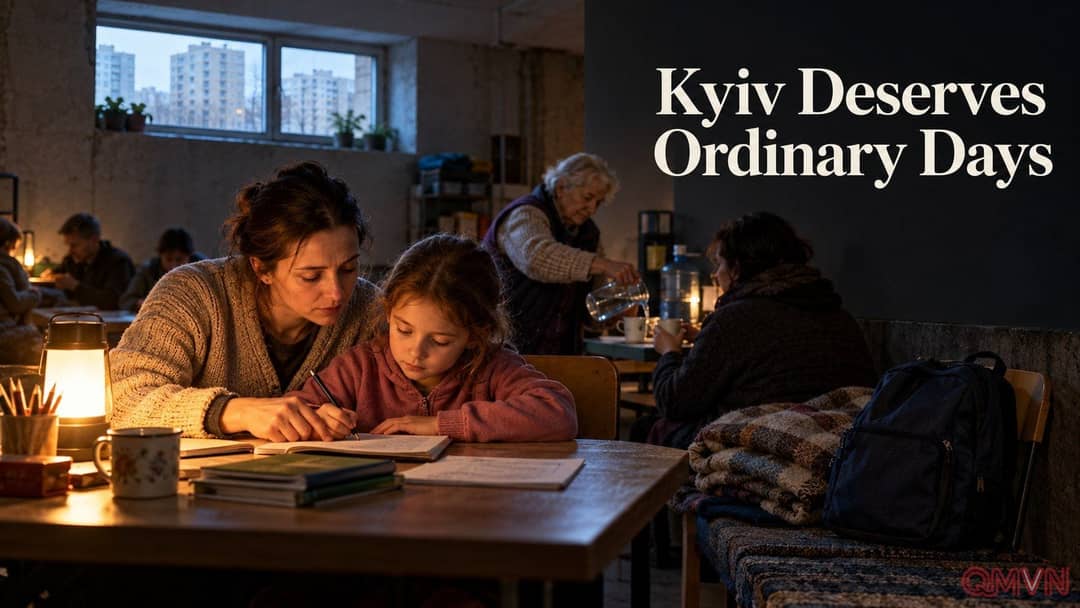
At Mark’s school, the report describes a basement also used as a gym, with wrestling mats and punching bags but no desks or chairs for lessons. Children attend different shifts because space is limited. Moving below ground changes their location; it does not necessarily preserve the classroom.