MAIN CONTENT
The global export engine behind familiar labels
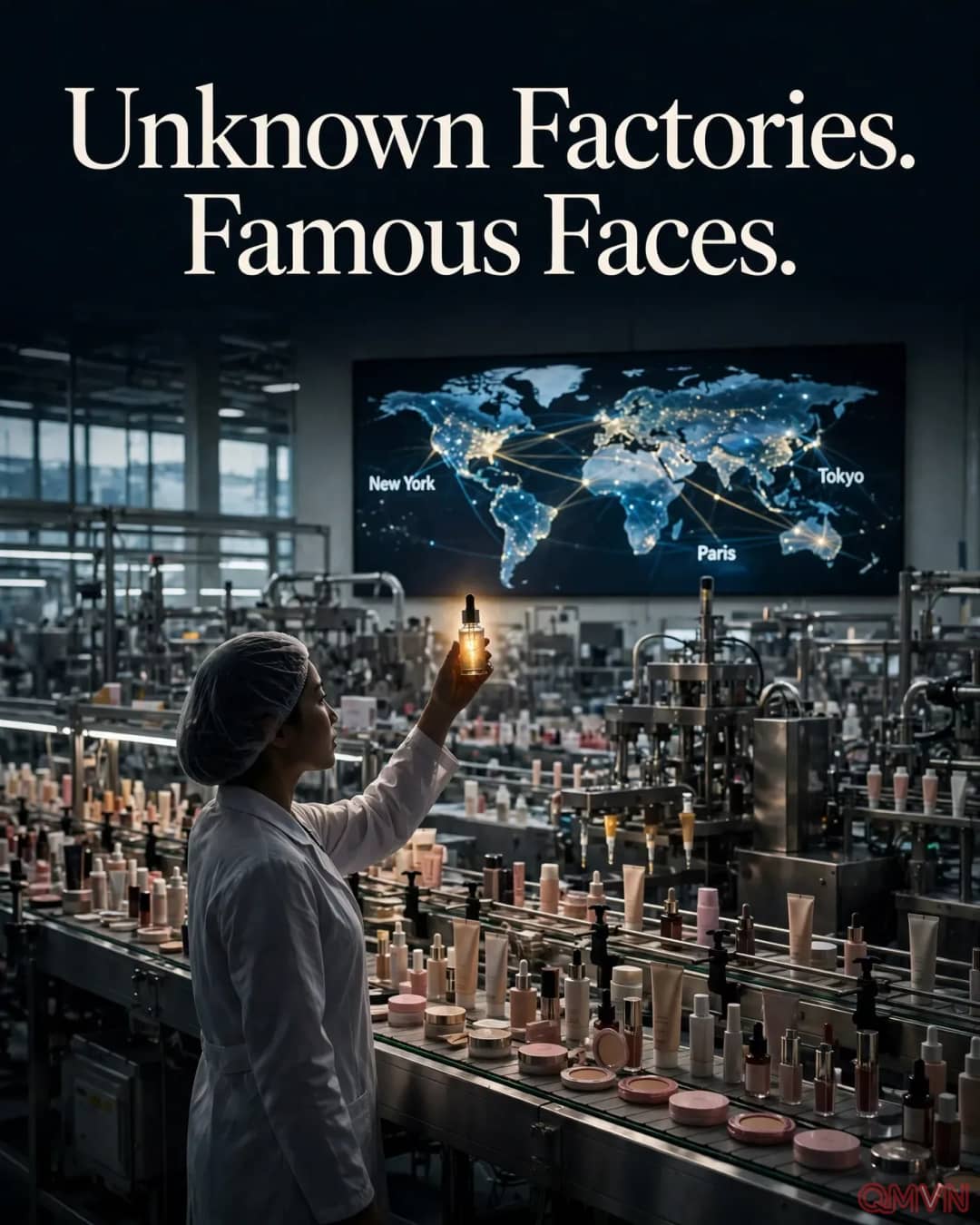
A moisturizer can become a worldwide sensation because of its brand story, but the product must first survive a much quieter journey through ingredient selection, stability trials, manufacturing and quality checks. Original development manufacturing, or ODM, allows labels to commission both formulation and production. Unlike a conventional factory that simply follows a fixed recipe, an ODM partner may help create the recipe itself. This division of labor gives smaller brands a route to overseas shelves without building expensive laboratories and production lines.
The model is especially powerful when customers discover cosmetics through short videos and online shops. A brand can identify a new texture or ingredient trend and collaborate with a manufacturer capable of developing a response. Beauty of Joseon, Round Lab, Anua and Medicube illustrate the diversity of Korean labels competing internationally; the underlying supply network can serve many clients at once. That diversification benefits producers, although each client brings different specifications, schedules and regulatory expectations.
The scale is becoming unmistakable. South Korea's first-nine-month cosmetics exports reached a record $11.1 billion in 2026, nearly equaling the $11.4 billion shipped throughout 2025. The United States accounted for $2.35 billion, ahead of China at $1.58 billion and Japan at $890 million, according to figures reported by The Korea Herald and attributed to the ministry. Export growth is therefore no longer confined to the industry's original regional strongholds.
Record earnings, but uneven economics
Cosmax reported third-quarter revenue of 875.8 billion won, up 49.5% year on year, and operating profit of 83.3 billion won, up 94.9%. Kolmar Korea reported revenue of 828.2 billion won, a 21.3% increase, and operating profit of 81.9 billion won, a 40.5% rise.
These are impressive operating results, but they should not be mistaken for uniform profitability across the manufacturing sector. Demand growth and financial resilience are two different achievements.
Cosmecca Korea's third-quarter revenue grew 35.7% to 247.5 billion won, while operating profit advanced only 0.1% to 27.2 billion won. The company cited rising expenses for outsourced filling and packaging as orders increased. When orders exceed available capacity, urgent outsourcing can preserve delivery dates but consume the margin that makes expansion worthwhile. The fastest-growing company is not necessarily the one keeping the most value from each additional order.
Foreign factories add a second complication. Kolmar Korea's American and Canadian facilities operated at just 8.1% and 17.6% of capacity in the quarter, respectively, while its US business recorded an operating loss of 3.8 billion won despite more than doubling revenue. Cosmax's US operation improved its operating position, posting a second consecutive profitable quarter on that measure, but remained loss-making on a net basis. Both examples underscore the difference between securing customers and making a complex international production network efficient.
Factories move closer to international customers
The industry's expansion is taking more than one route. Kolmar Korea plans to invest 173.3 billion won in a skincare plant in Sejong, scheduled for completion in 2028. Manufacturing at home provides access to established Korean ingredient suppliers, packaging specialists and researchers. In a sector where reformulation and small production adjustments matter, proximity to that ecosystem can be a commercial strength rather than a limitation.
Cosmax is pursuing additional production capacity abroad. In February 2026, it agreed to acquire 51% of Italian manufacturer Keminova, giving it a first manufacturing foothold in Europe. The facility's stated annual capacity is about 20 million units. A European base could shorten delivery times and help the group adapt to local requirements, while also exposing it to unfamiliar labor costs and the challenge of attracting sufficient orders.
Neither strategy is universally superior. A central Korean production hub can maintain dense networks of expertise; a geographically distributed network may offer customers faster replenishment and local market access. The commercial test is whether volumes rise enough to justify new fixed costs. Investors and brands alike will need to evaluate utilization rates, regulatory performance and consistency, not just announcements of new plants.
AI offers possibilities, not shortcuts
Technology is becoming another competitive frontier. Kolmar Korea is applying artificial intelligence to formulation optimization and ingredient-safety prediction, while Cosmax is exploring color matching, fragrances and personalized beauty development. These tools may help teams narrow experimental options, but they do not remove the need for physical testing, regulatory review or careful production controls. Consumer trust depends on repeatable performance long after a trend has passed.
NH Investment & Securities forecasts Korean cosmetics exports of $14.5 billion for 2026 and $17.8 billion for 2027, according to the report cited by The Korea Herald. Those are projections rather than confirmed outcomes. The same report points to opportunity in Europe, the Middle East and Latin America, where new customers and retailers may broaden the market. Currency movements, competition, distribution costs and differing product rules could still reshape the trajectory.
For consumers, the growing visibility of independent brands may look like a triumph of creative marketing. For manufacturers, success will be measured in quieter disciplines: safe formulations, reliable shipments, productive factories and the ability to evolve alongside changing preferences. The next chapter of K-beauty may be written as much in laboratories and production schedules as on social media feeds.