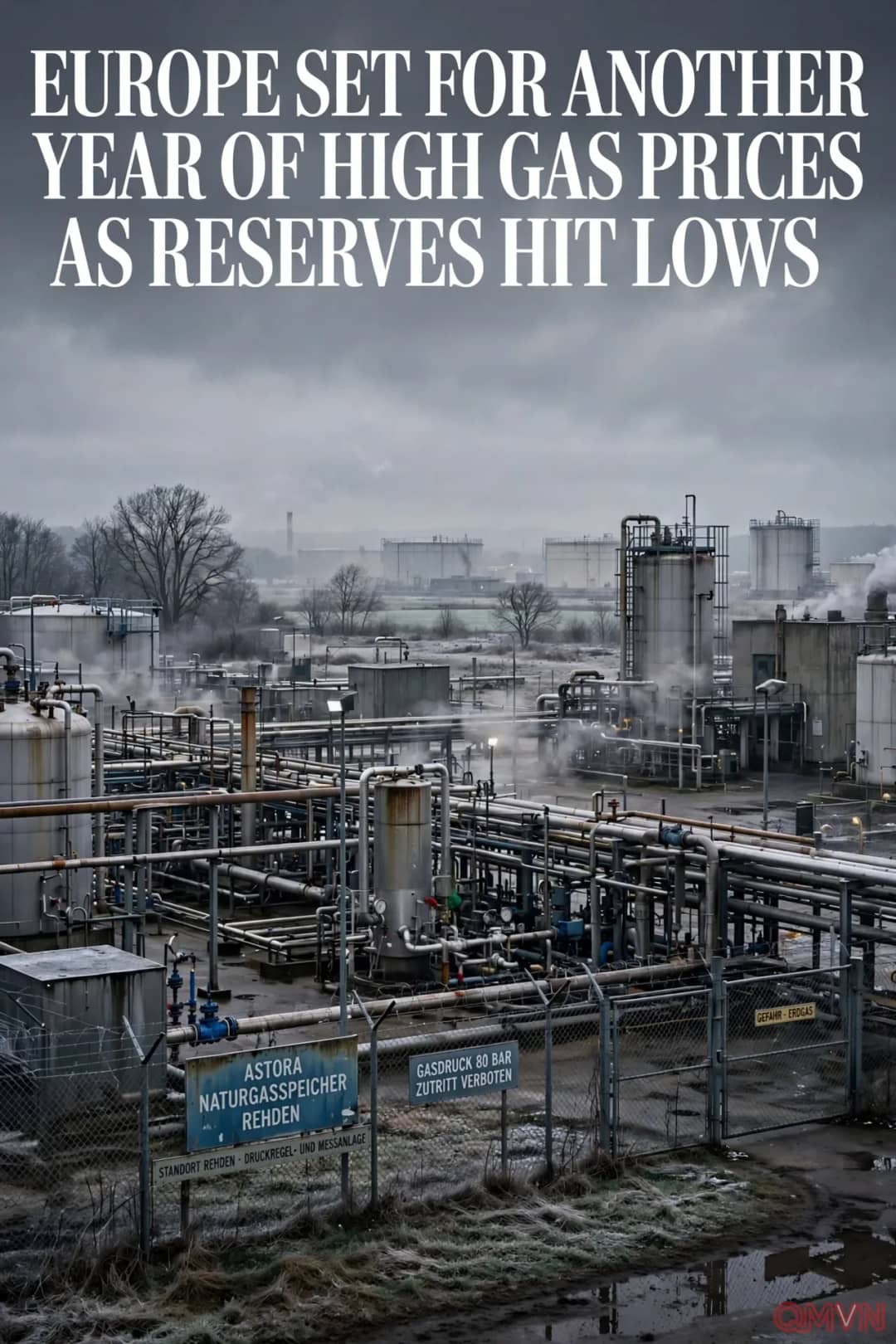
Underground Storage Enters Winter At Historically Depleted Levels
According to comprehensive European energy analytics published in Oslo and London, continental storage facilities are projected to enter the winter heating season at only 75% to 78% capacity by November 1—the conventional benchmark closing the injection season. This sits roughly 10 percentage points below the established five-year seasonal average, leaving the European Union without its traditional operational buffer.
The supply crunch was ignited by severe shipping halts in the Strait of Hormuz amid the conflict involving Iran, trapping approximately 20% of global LNG exports predominantly exported from Qatar and the UAE. Although non-Middle Eastern exporters like the US, Canada, and Nigeria expanded shipments, cutthroat Asian demand for spot cargoes severely restricted Europe’s ability to replenish reserves over the summer.
"It's not just this coming winter that we are tight, but we risk being tight the next summer." — Yuriy Onyshkiv, Energy Analyst at LSEG
Price Shock Threats And The Delayed Impact On Consumers
While energy economists do not foresee absolute physical blackouts, the absence of an operational cushion leaves the regional market acutely sensitive to volatile price spikes.