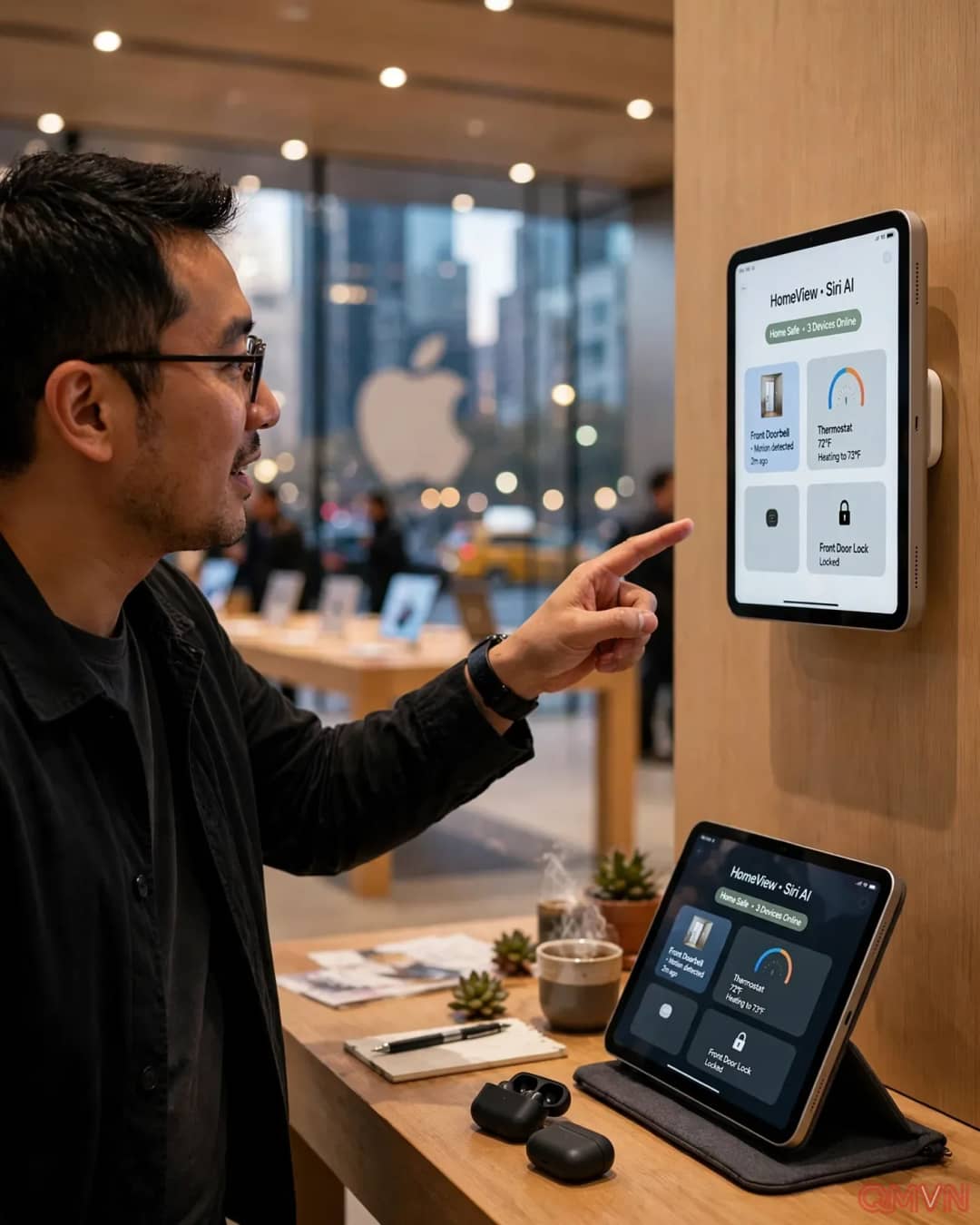
Apple's new window into the home
HomeView is designed to hang on a wall or sit on a table, with a screen Apple says is sized to fit into a home without being too imposing, a nod to its “sunflower” iMac of the 2000s. Like an iPhone or iPad, it shows a grid of square app icons that change depending on which family member the device recognizes. But in Apple's demonstration, users mostly spoke to it, with Siri juggling requests from several people at once.
To draw on private data such as messages and calendars, HomeView relies on a user's iPhone having been recently unlocked and connected to the same home network, an approach that reflects Apple's emphasis on privacy. The company hopes the device will attract people who have so far barely touched its Home ecosystem.
For people who haven't experienced the Home ecosystem or haven't gone further than maybe a product here or there, I think this is a great opportunity to look.
A full ecosystem, with partners
HomeView arrives as part of a broader lineup aimed at making the smart home simpler and more coherent:
HomeView, from $299, with a 7-inch screen and face recognition, shipping next month.
An updated HomePod smart speaker and a new Apple TV 4K priced at $299, more than double its predecessor's starting price.
Doorbells, cameras and thermostats made by LG and Schneider Electric, designed with Apple's help and set up with a single tap.
Ben Wood, chief analyst at CCS Insight, said the partnership might at first look like a break from Apple's habit of tightly controlling its hardware, but that closer inspection revealed “very deep collaboration” to ensure the products match what users expect from Apple. Kaiann Drance, Apple's vice president of product marketing for home products, said the partner devices can be added as easily as AirPods.
Siri's second chance
At the heart of the strategy is Siri. This summer, Apple upgraded its assistant's capabilities with help from Google, after years in which Siri was widely seen as lagging rivals in understanding and answering questions.
Analysts say it remains unclear whether the improved assistant is strong enough to lure consumers into a crowded market.
Apple needs to demonstrate that its AI capabilities can deliver meaningful benefits beyond basic voice commands, simplifying everyday tasks and bringing greater intelligence to the home.
Pescatore, an analyst at PP Foresight, added that Apple “has the brand, technology and loyal customers to make a serious impact,” but is “playing catch-up with rivals that have a far stronger presence.” HomeView will not be available in the European Union, where Siri's AI features remain unavailable because of regulations, Apple said, keeping the device out of one of the world's richest consumer markets for now.
A crowded battlefield
Apple released its Home app in 2016 and its HomePod speakers in 2018, but both have competed with Amazon's Echo line and Google's Home and Nest products. Amazon, which has invested heavily in Echo speakers and Ring doorbells, launched premium tablets just last week, while newer AI players such as OpenAI have hardware ambitions of their own. Analysts see an opening as households replace older devices.
Most smart speakers and hubs in homes today are low-cost devices that can't run AI at the edge, so they are ripe for replacement.
Agrawal, research director at Counterpoint, said Amazon and Google have only just begun refreshing their hardware for Alexa+ and Gemini, leaving the upgrade cycle “wide open.” Price will be a test: HomeView costs more than Amazon's Echo Show 8 at $199.99 and Google's Nest Hub at $99.99, while the new Apple TV 4K matches Nvidia's Shield TV Pro but costs more than rival offerings from Amazon, Google and Roku priced at $200 or less.
Services, shares and security
For investors, the home push is also about recurring revenue. With Apple's services business under regulatory pressure, analysts see new devices as gateways to subscriptions such as Apple TV, Apple Pay and iCloud. Apple's 2027 services revenue is forecast to rise 12% to $138 billion.
Growth in Apple's lucrative subscription services may be the gateway to earnings growth increases over the next two years.
Apple shares rose about 1% on Tuesday afternoon after touching a record, bringing their gain this year to 25%, ahead of the Nasdaq 100's 21%. Yet the launch also comes amid growing worries that connected devices, from refrigerators to smart TVs, can be targets for hackers. For Apple, whose brand rests heavily on privacy and security, winning the home may depend as much on trust as on intelligence.