MAIN CONTENT
What is driving the current 10 percent market correction
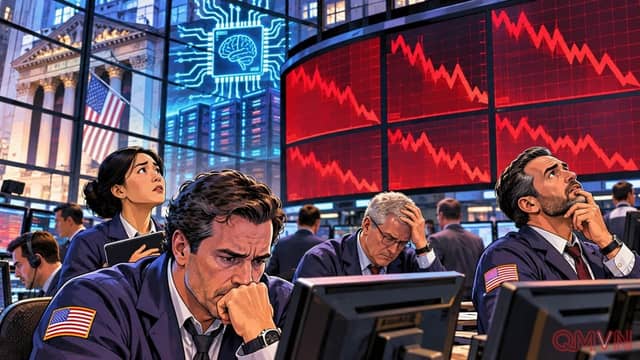
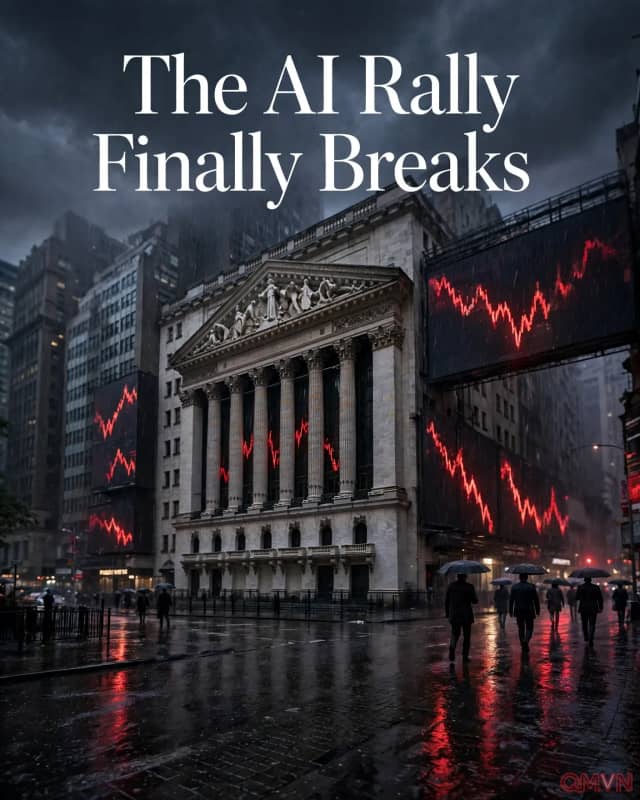
Stocks tied to the artificial intelligence boom lifted major indexes to all-time highs in October, but converging pressures have led investors to question whether enthusiasm outpaced reality. Investors worry that artificial intelligence valuations climbed too far and that demand for memory, processors, and data-center hardware could cool if returns fall short, while technology firms increasingly issue bonds to fund multi-billion-dollar infrastructure buildouts ahead of an expected Federal Reserve interest rate hike next month.
Regulatory worries have also intensified after newly elected Democrats in Congress vowed tougher oversight amid backlash against data centers — including Democratic governors elected in major data-center states Texas and Georgia pledging to halt new construction — alongside the sudden departure of Nvidia co-founder and former chief executive officer Jensen Huang, with even Anthropic's blockbuster market debut this week failing to halt selling.
"Jensen Huang's departure may have been the catalyst for this sell-off, but the underlying concerns in the technology sector have been building for some time." Karan Ramchandani
Debate over a popping tech bubble versus a constructive reset
Wall Street has long anticipated a pullback in richly valued artificial intelligence shares, though strategists differ sharply on how far the downturn will go:
David Trainer, head of investment research firm New Constructs, argued that the artificial intelligence bubble is popping and still has much further to fall as markets reconcile with heavy over-investment.
Financial analyst Dan Ives of Yorkville Ives & Co. compared the drop to corrections in March 2020 during the pandemic and April 2025 amid trade-war escalation, calling it panic-driven selling rather than a repudiation of multi-year technological transformation.
Post Oak Group managing partner Karan Ramchandani framed the move as a reevaluation favoring companies that deliver measurable earnings, while Nationwide chief market strategist Mark Hackett said an artificial intelligence-led flush could reset sentiment and improve odds for a sustainable year-end rally.
"If this evolves into a true flush, it may serve as the reset needed to improve positioning, sentiment, and the odds of a more sustainable rally into year-end." Mark Hackett
What CFRA data since 1946 shows about corrections and bear markets
According to research firm CFRA, 10 percent corrections occur every couple of years on average; even during the nearly 11-year bull market from March 2009 to February 2020, the S&P 500 experienced five corrections triggered by interest rates, trade disputes, and European debt worries. The previous United States correction occurred in March 2025, while the last correction to become a bear market was in 2022, when the S&P 500 dropped 25.4 percent from January 3 to October 12.
Across the 25 corrections since 1946 that stabilized before reaching bear-market territory, the S&P 500 took an average of 130 days to bottom — losing an average of nearly 14.1 percent — and an average of 112 days to recover its losses, whereas the 14 declines since 1946 that became bear markets inflicted an average loss of 32 percent.