MAIN STORY
Fourteen years to a signature
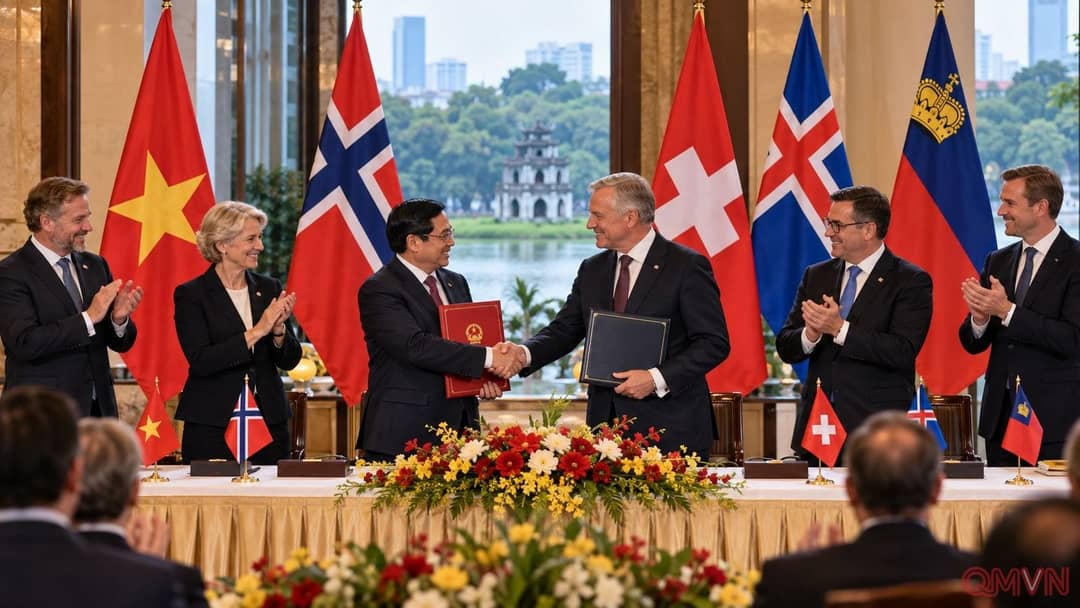
Vietnamese General Secretary and President To Lam witnessed the ceremony in Hanoi, where Trade Minister Le Manh Hung signed alongside representatives of EFTA's four member countries. Formal negotiations began in 2012, went through 21 official rounds and reached their conclusion in July 2026 after renewed diplomatic momentum.
EFTA is distinct from the European Union. Its four members bring their own investment strengths and trade networks, so the new accord complements rather than replaces Vietnam's existing arrangements with the EU. That distinction matters for businesses assessing market access rather than treating Europe as a single set of tariffs.
What each side sells and buys
Vietnam's trade ministry identifies seafood, footwear, textiles, machinery, equipment and electronics among its principal exports to EFTA economies. Vietnam imports industrial machinery, chemicals, pharmaceutical products and raw materials in return. These flows can support both consumer sales and industrial modernization, especially if local producers build stronger relationships with specialist suppliers.