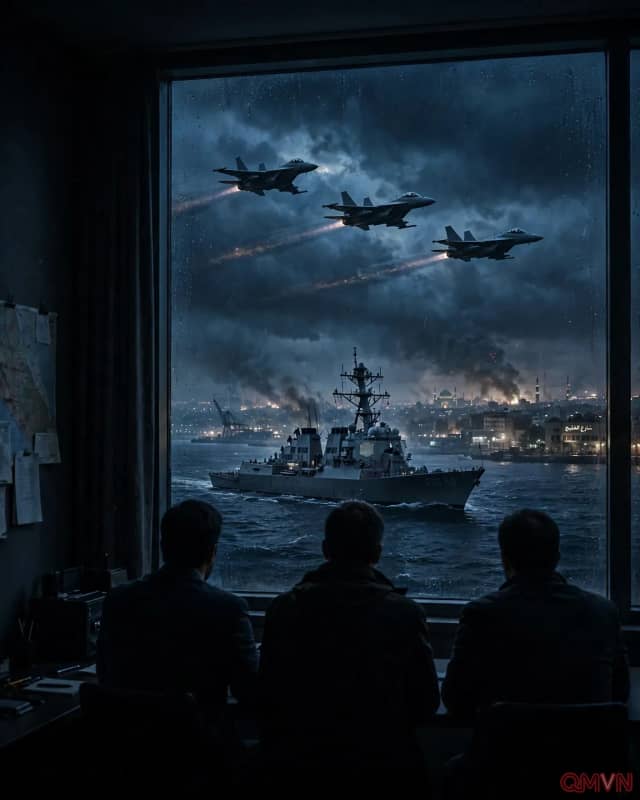
The asymmetric war and the impact of Iran's geography
Firstly, the recent U.S.-Iran confrontation has not been a conventional military victory. Reports indicate that approximately 3,500 Iranian soldiers were killed, along with property losses potentially reaching 150-270 billion USD due to airstrikes by the U.S.-led coalition. However, President Donald Trump's decision to halt the 13-night air strikes in the summer as a recognition of the reality that the U.S. cannot accomplish its objectives solely through military strength.
Middle East regional expert from Royal United Services Institute, HA Hellyer, stated that Iran's initial criteria were simply to survive. In fact, Tehran has remained unbroken and significantly altered the strategic situation at the vital Strait of Hormuz, which is crucial for trade and regional security.
The U.S. used many expensive missiles but failed to achieve its objectives
According to estimates from the CSIS research institute, the United States has spent over 38 billion USD and launched more than 1,000 Tomahawk missiles along with approximately 1,100 Jassm missiles, each costing around 2.6 million USD, targeting objectives in Iran. This is equivalent to nearly one-third of the Tomahawk missile stockpile and a quarter of the total missile reserves of the United States. Notably, these missiles may not be replenished until 2031, indicating that the U.S. has rapidly depleted its military resources.