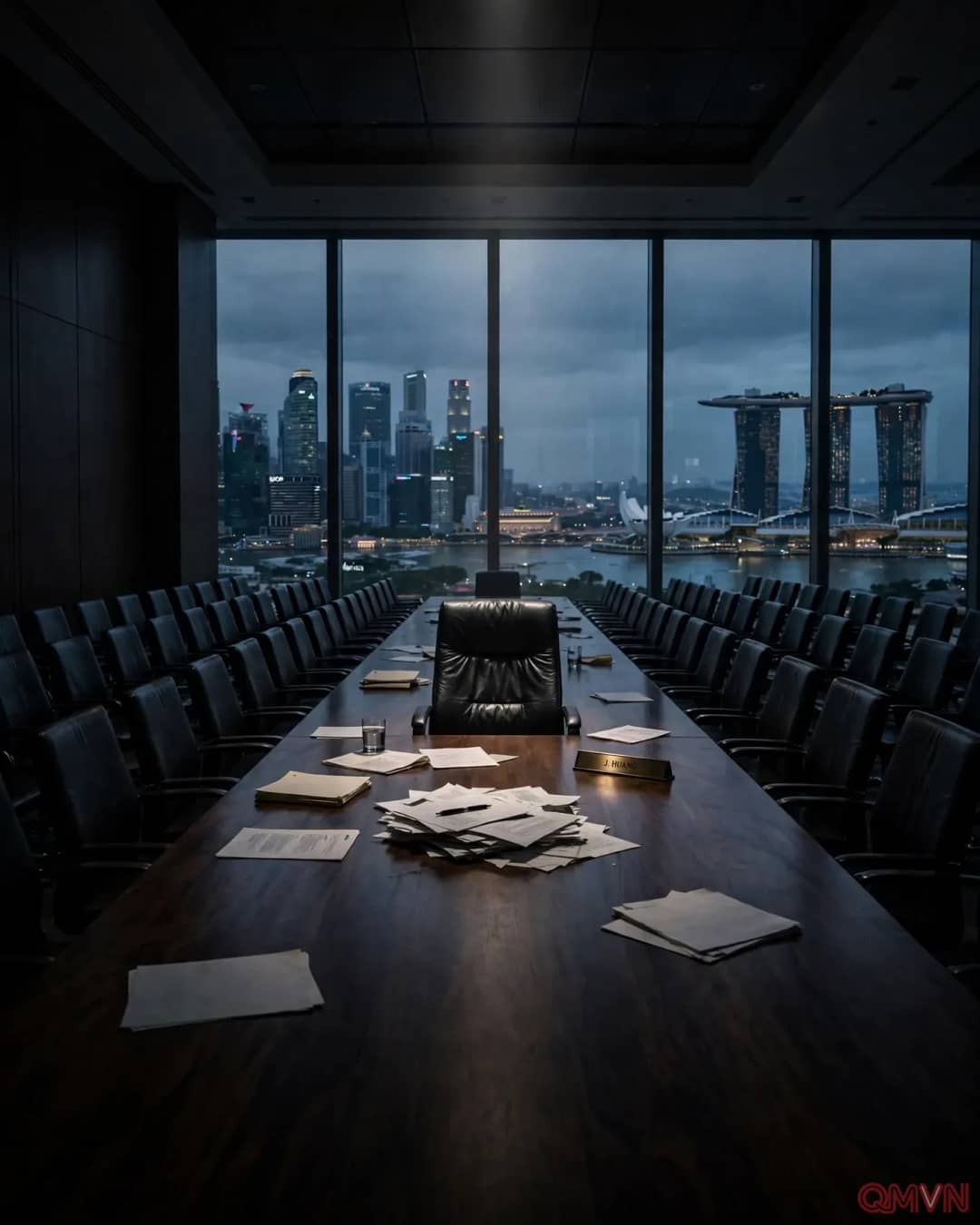
A leadership vacuum at Nvidia
Huang, who co-founded Nvidia in 1993 and built it into one of the world's most valuable companies, resigned as chief executive and director on November 12 following reports about his personal relationships and their potential security implications. Nvidia appointed its chief financial officer, Colette Kress, as interim chief executive while it searches for a permanent successor.
Gerald stresses that the issue is neither Huang's private life nor his remarkable achievements, but whether Nvidia's board had prepared for the possibility that its central figure might suddenly become unavailable. With so much authority and knowledge concentrated in one person, he asks how effectively the board could exercise oversight.
Hyflux: a cautionary tale close to home
Singapore has its own warning. Hyflux, a water treatment company founded by Olivia Lum, was once celebrated as a symbol of local entrepreneurship and attracted strong public and investor confidence.
Yet it ultimately collapsed under debts, leaving thousands of shareholders and some 34,000 holders of preference shares and perpetual securities with nothing. At the heart of its troubles was the Tuaspring integrated water and power project, whose viability depended on electricity prices that later fell sharply.
Gerald suggests that excessive faith in a founder's reputation may have reduced scrutiny of the risks, raising questions about whether directors challenged management's assumptions sufficiently and whether shareholders were properly informed.
Rules exist, but are they followed?
Singapore's Code of Corporate Governance already requires listed companies to have nominating committees that review succession plans for directors, the chairman, the chief executive and key managers. Guidance from the Singapore Exchange also calls for contingency planning for sudden and unforeseen changes, such as:
- the death, serious illness or incapacity of a chief executive or key director;
- unexpected resignations, dismissals or disqualifications;
- business crises, regulatory actions or governance disputes that force a rapid leadership change.
The problem, Gerald argues, is not a lack of rules but weak implementation. Companies can comply on paper without having a credible successor ready. He proposes that firms, especially those dominated by founders, should disclose their succession and contingency plans, or at least whether potential successors have been identified. He also suggests companies discuss internally how they would handle personal misconduct by top leaders, in line with their values.
Independent directors and active shareholders
Succession planning must be backed by directors who are genuinely independent and willing to challenge the status quo. Gerald warns that long-serving directors may meet formal independence criteria yet find it hard to question a powerful founder, which is why regular board renewal and independent evaluations matter. He adds that while his association can engage companies and, in serious cases, consider legal action, the primary responsibility for questioning boards lies with shareholders themselves, at annual general meetings and through other channels.