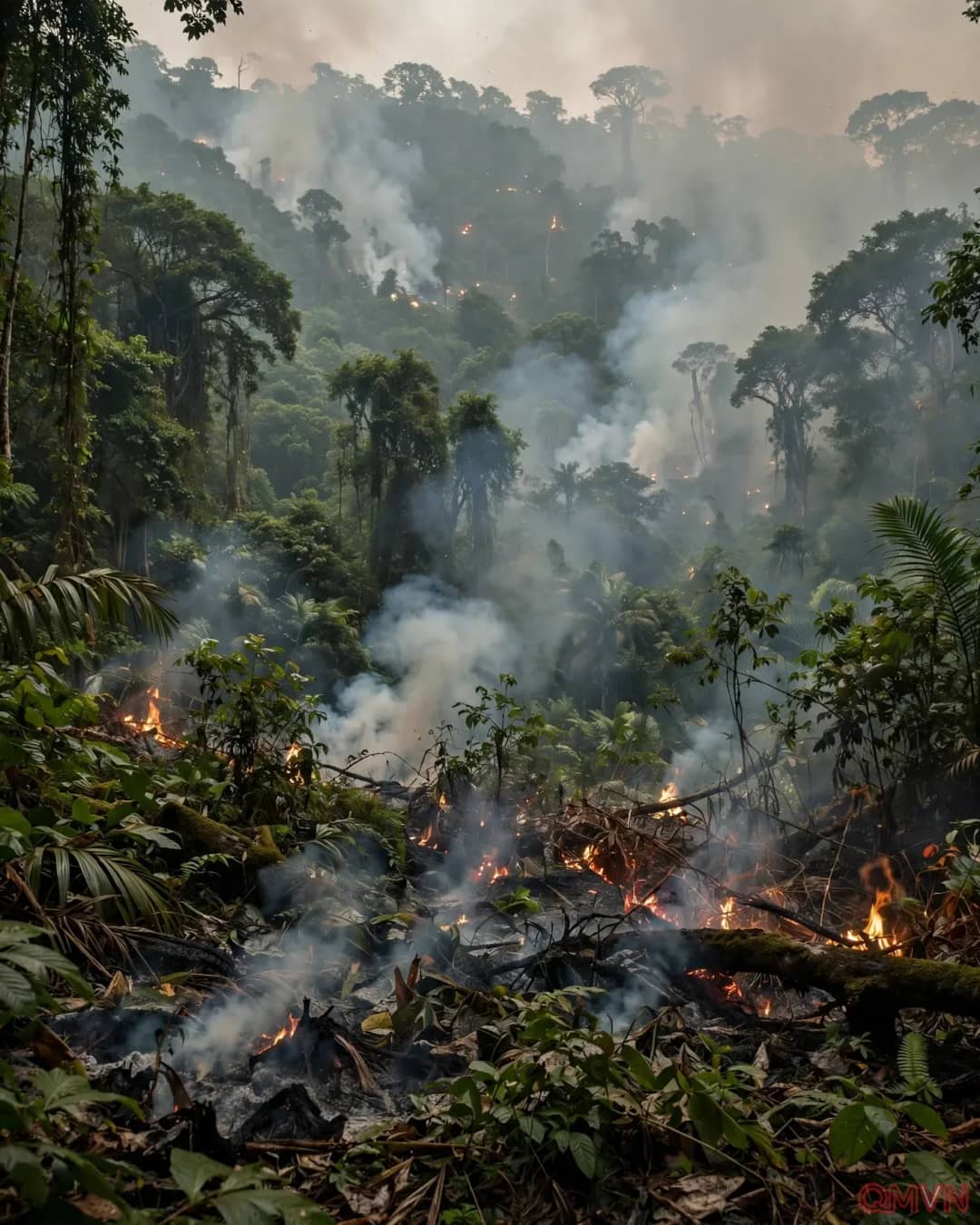
Fires spreading across tropical Africa
Data from Greenpeace’s Global Mapping Hub, based on modelling of satellite-detected fire hotspots, shows that between 2001 and 2025 far more areas in Africa’s tropical forest regions saw significant increases in fire activity than saw declines.
Dr Jean Bakouma, country manager for the World Resources Institute (WRI) in the Republic of Congo, says forest loss remains stubbornly consistent in parts of the Congo Basin and fire is an increasingly important driver. When primary forests and peatlands burn, the carbon they store can be released.
The Congo Basin at risk
The figures show the seriousness of the situation:
- The Congo Basin is the world’s best-preserved major rainforest and the largest remaining net carbon sink in the tropics, removing an average of 160 million tonnes of CO2-equivalent a year in 2015–2024, roughly equal to Nigeria’s emissions.
- In the Democratic Republic of the Congo, which holds about 60% of the basin’s forests, around a third of the country shows a significant rise in fires; forest loss there hit a record in 2024, and in Cameroon in 2025.
- The Guinean forest of West Africa has lost about 90% of its original cover to logging, agriculture, mining and climate change, and Liberia and Guinea also show rising fire trends.