MAIN ARTICLE
A sweep larger than any single campaign
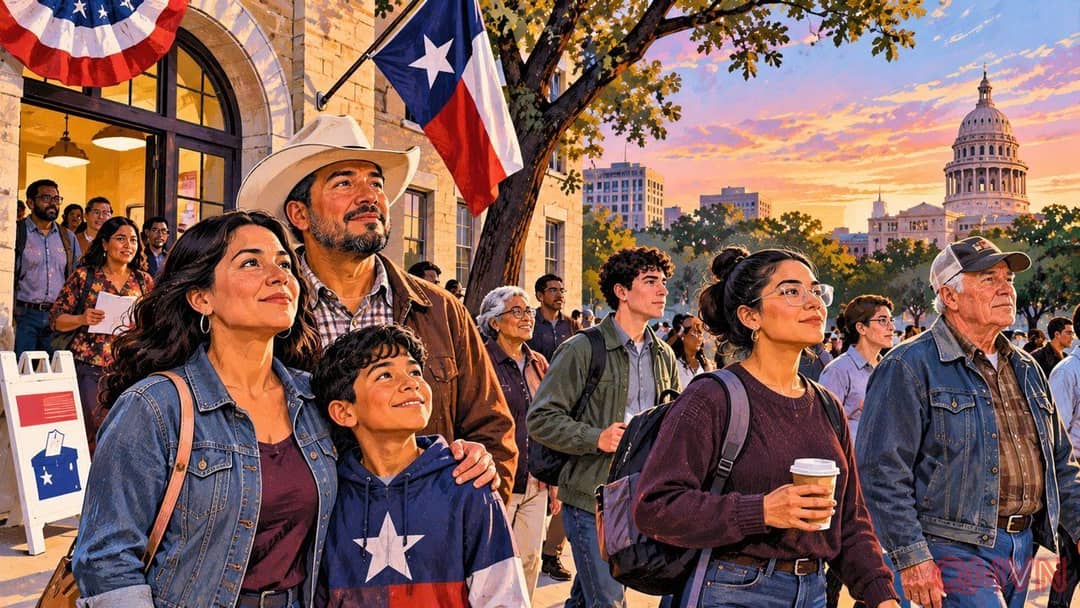
James Talarico became the first Democrat elected to a U.S. Senate seat from Texas since 1988. Gina Hinojosa simultaneously unseated Greg Abbott, ending a statewide-office drought for Democrats dating back to 1994. Taking the Texas House was equally consequential: the party gained not just a symbolic victory but a greater ability to influence spending decisions, school policy and the state legislative agenda. The results recast a state that both parties had treated as central to Republican national strength.
The breadth of the sweep does not mean Texans collectively adopted a new ideology overnight. Reporting and county-level analyses from the Texas Tribune and local newsrooms point instead to a coalition responding to concrete frustrations. Different voters may have been motivated by household prices, immigration, schools or simply distrust of those in power. That makes the election politically historic without making every underlying dispute disappear.
Cities and suburbs changed the arithmetic
Texas Tribune analysis estimated roughly 9.8 million ballots cast, with particularly strong increases in major population centers and border counties. Dallas remained firmly Democratic, but important North Texas counties including Tarrant, Collin and Denton moved much further left. The suburban electorate, shaped by rapid population growth and concerns about housing, schools and public services, was particularly important to the result.