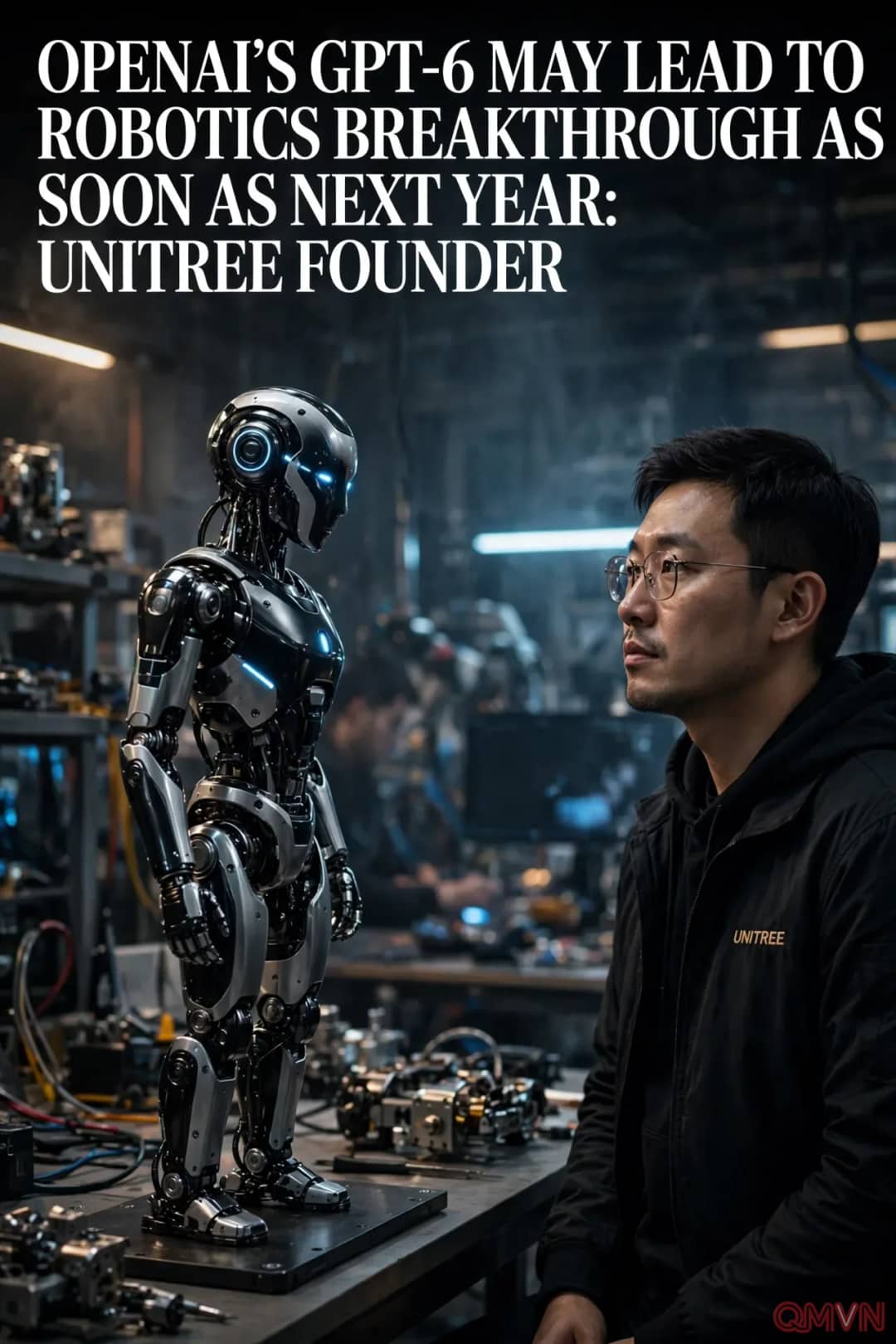
From “a decade” to “one or two years”
In August, before GPT-6 was released, Wang predicted the industry would need two to three years at the fastest, or up to ten years, to reach its “ChatGPT moment”, a critical threshold of technological maturity. He defined it as robots being able to complete around 80% of tasks in 80% of unfamiliar environments using only voice or text commands.
But after OpenAI unveiled its flagship GPT-6 Astra model in September, demonstrating powerful capabilities in robotic manipulation, he changed his assessment.
“It’s possible that a GPT-7 model released next year could directly crack the problems of embodied intelligence.” — Wang Xingxing
A candid admission
Speaking on the fair’s opening day, the CEO said the whole embodied intelligence industry had been shaken up by GPT-6. Unitree had also tested the new model on its robots and achieved good results.