MAIN ARTICLE
An emergency response in contested waters
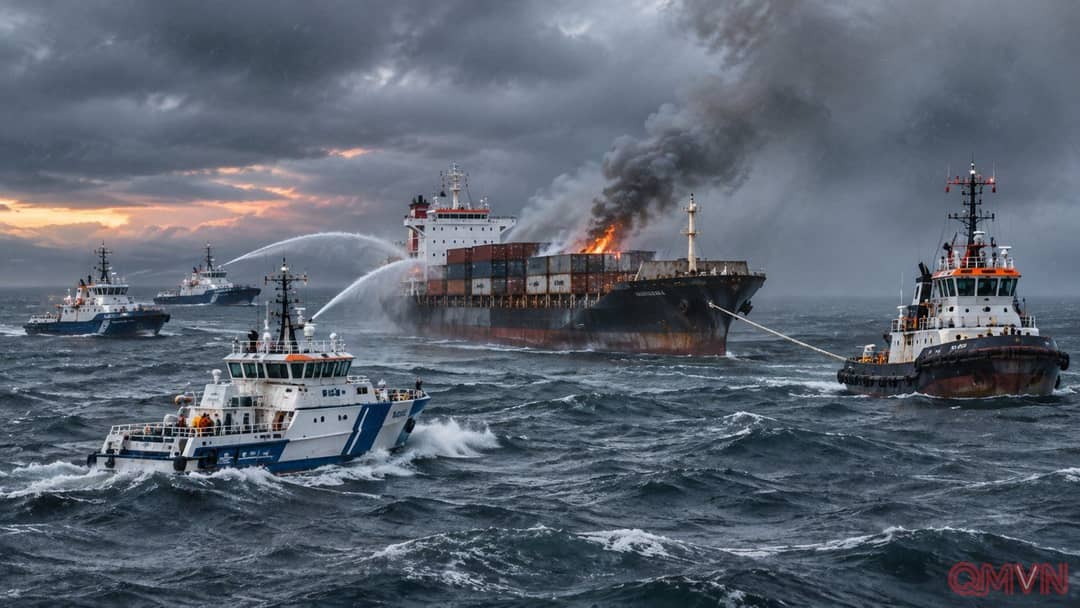
Images released by Finnish authorities showed rescue vessels using water cannons to cool stacks of containers aboard the Sparta II while smoke and residual heat remained visible. Thermal cameras indicated that some containers were still warm, but officials judged the ship stable enough for towing. That decision required careful risk assessment: the fire was not completely extinguished, and forecasters expected stronger winds, rain and sleet to complicate operations overnight.
According to Reuters, seven vessels took part in the response: three Finnish, two Estonian and two Russian. All 16 crew members were evacuated to a nearby Russian ship; one was slightly hurt. Once the freighter exited Finnish territorial waters, Russia was to assume responsibility for the rescue operation. A clear handover was essential to avoid confusion over command while a damaged ship still posed hazards.
The roughly 121-metre vessel was struck in international waters west of Russia’s Gogland island before drifting into Finnish waters. For Helsinki, the immediate challenge was an emergency at sea: protecting the crew, monitoring risks to nearby vessels and ensuring that a busy stretch of water remained navigable.