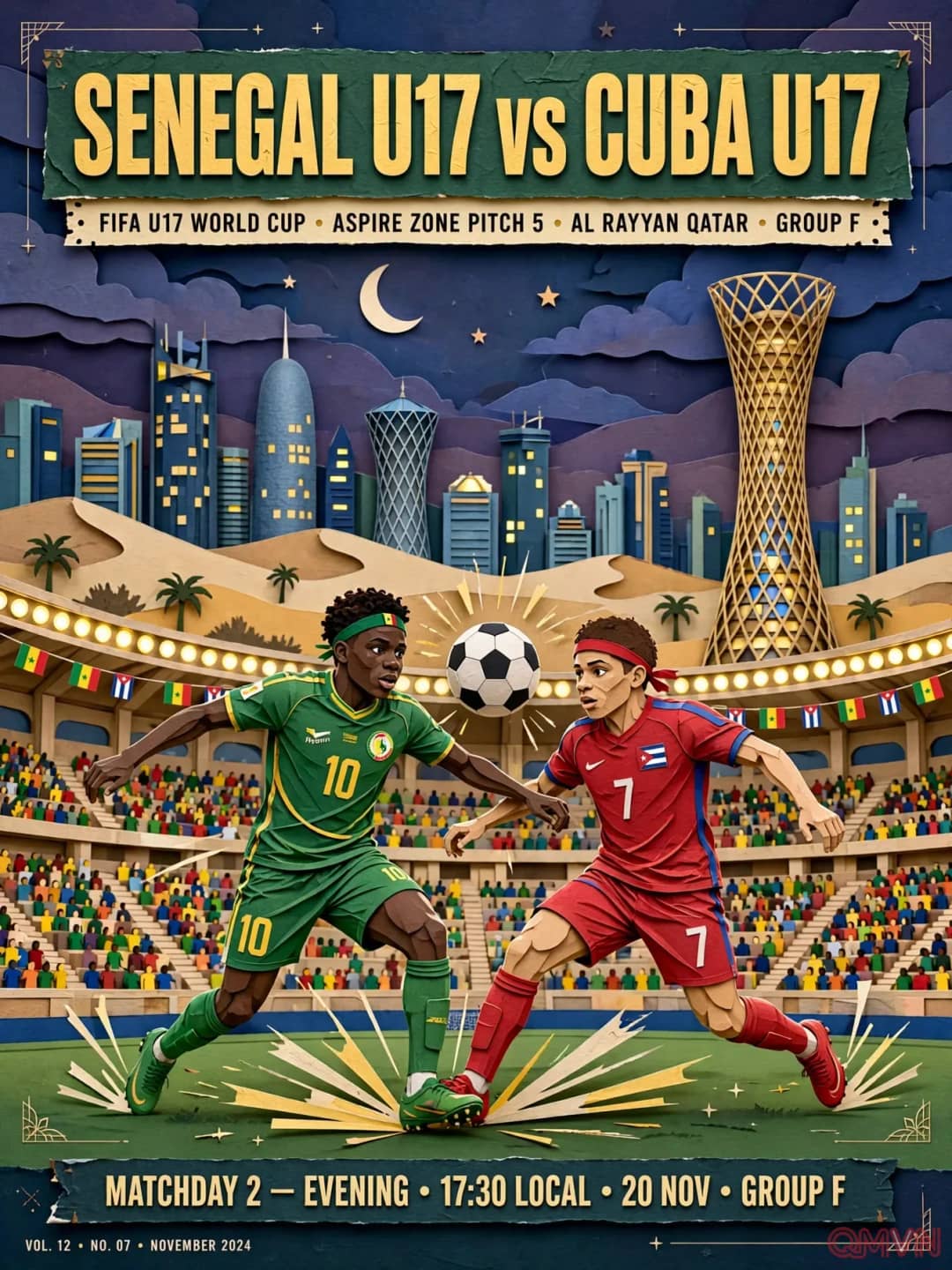
MAIN CONTENT
A Group F meeting with real consequences
FIFA places Senegal and Cuba alongside Croatia and Tajikistan in Group F. Senegal entered the second round of fixtures with one point and Cuba with none. With another group match still to come, neither side can determine its entire tournament here, yet a victory would make qualification prospects considerably more manageable.
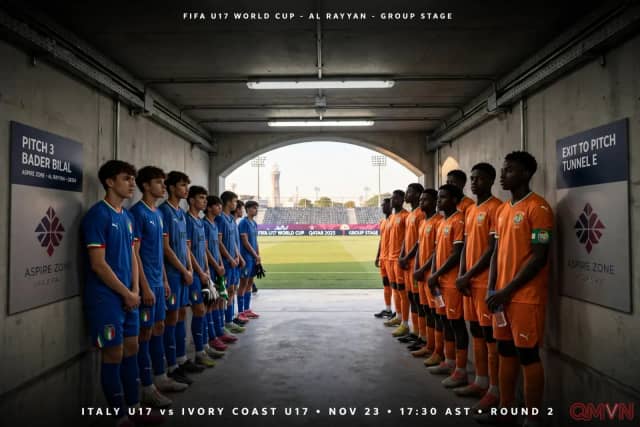
The tournament runs in Qatar from 19 November to 13 December 2026, with group fixtures centered on the Aspire Zone complex. Some third-party listings differ over the individual pitch, so the exact field should not be presented as confirmed without a final organizer designation.
Senegal seek precision without losing balance
Senegal’s 1-1 draw against Croatia provided evidence of a side capable of competing in an organized, demanding contest. FIFA identified it as the only draw in the set of matches played on 20 November.
Yet the solitary point leaves little room for complacency against an opponent that has already demonstrated its scoring potential.
A plausible Senegal plan would combine compact lines, early ball recoveries and faster decisions in the attacking third. Rapid transitions might expose Cuba, although committing too many players forward could invite a counterattack. These are tactical possibilities rather than claims about a confirmed starting eleven or instructions from the coaching staff.
Cuba’s attacking promise meets a defensive test
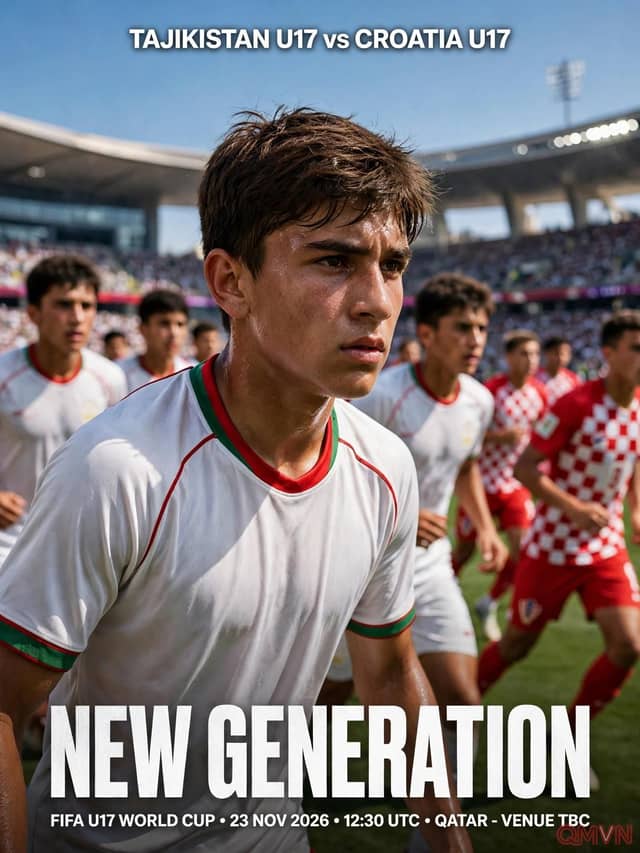
Cuba’s opening 3-5 loss to Tajikistan was among the most dramatic games of the early tournament, according to FIFA’s matchday review. Scoring three goals at world level provides encouragement, but conceding five also raises practical questions about protection of the defensive line, transitions and decision-making when the momentum swings.
A second open contest might suit Cuba’s attacking instincts, but it could also provide Senegal with space between and behind the lines. A measured approach would require fewer turnovers in dangerous zones, well-timed pressing and reliable defensive cover when wide players advance. The challenge is not to abandon ambition but to give it a stronger framework.
What may decide the match
The first twenty minutes, set-piece execution and the response to a conceded goal may prove decisive. Senegal possess the better starting position in the table, whereas Cuba have the more urgent need to recover points. Neither possession figures nor attacking intent alone guarantee control: the ability to manage space and the moments between phases is likely to be crucial.
Senegal appear marginally better balanced on the evidence of the first match, but Cuba’s three goals warn against an easy prediction. No verified starting lineups, dependable betting figures or certain scoreline are available for this preview. Readers should consult FIFA’s latest official match information close to kickoff rather than treat speculation as fact.