A garden on a vacant lot
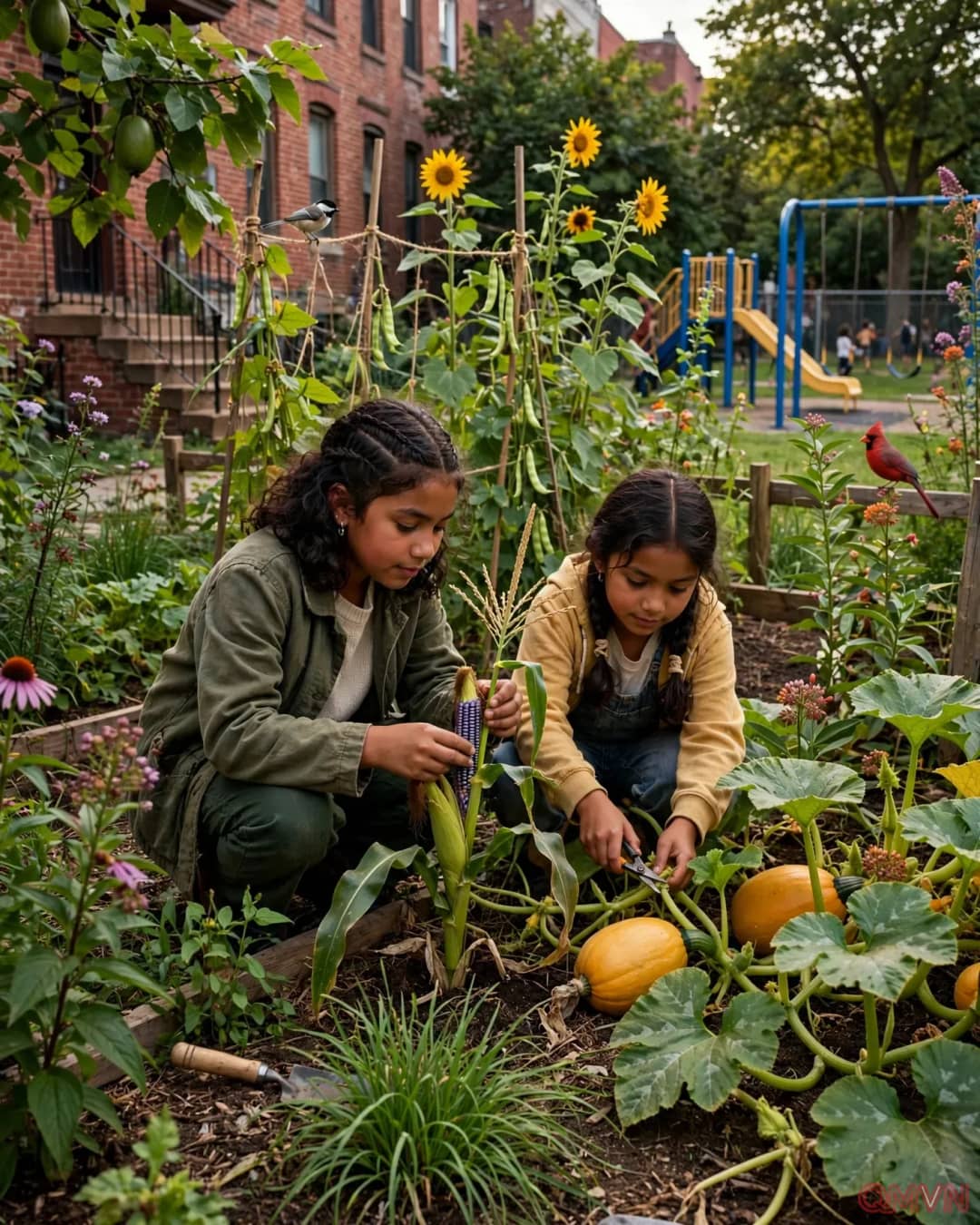
In late summer, Xiao Hui Star knelt with her hands in the soil, planting a flowering perennial. Around her stood golden sunflowers, beans, squash, pawpaw and corn. She ruffled tufts of sweetgrass that gave off a vanilla-like scent, while birds swooped into a small bath filled with clam shells.
The roughly 2,250 sq ft garden sits on a city-owned lot that had long stood empty. We Are the Seeds began planting there in April as an act of the LandBack movement.
Star says these are rare, endangered varieties being returned to the soil. She wonders how many centuries have passed since Lenape corn or Nanticoke squash last grew in this ground.
Seeds returning home
The garden is built on principles rooted in nature and community:
- Native plants provide food and shelter for the insects and birds that evolved alongside them over thousands of years, and they need less water than exotic species.
- Seeds such as maypop and garden phlox come from organisations that preserve heirloom varieties, including Experimental Farm Network, Truelove Seeds and Seed Savers Exchange.
- The garden is tended by Indigenous people themselves: Star and her father Tchin, an artist and educator.