Alarming Numbers
According to Malaysia’s Education Ministry, bullying cases recorded between March and August 2026 fall into four main categories:
Physical bullying: 2,480 cases.
Verbal bullying: 1,386 cases.
Non-verbal bullying: 243 cases.
Cyberbullying: 180 cases.
The ministry said any case involving criminal elements must be reported to the authorities for investigation under the law. The figures were released in response to a question from MP Muhammad Fawwaz Mohamad Jan about bullying since the Anti-Bullying Act came into force.
More Than Discipline
The Education Ministry stressed that bullying must be handled through a full process – from receiving complaints and investigating to disciplinary action, intervention and follow-up monitoring – under Professional Circular No. 12 of 2023.
The figures show that efforts to eradicate bullying must be continuous and not only limited to disciplinary action. Each complaint must be given the appropriate attention and investigated in accordance with the set procedures and followed by the necessary intervention measures.
This approach reflects an understanding that punishment alone is not enough to change behaviour; schools must work with both victims and those who bully.
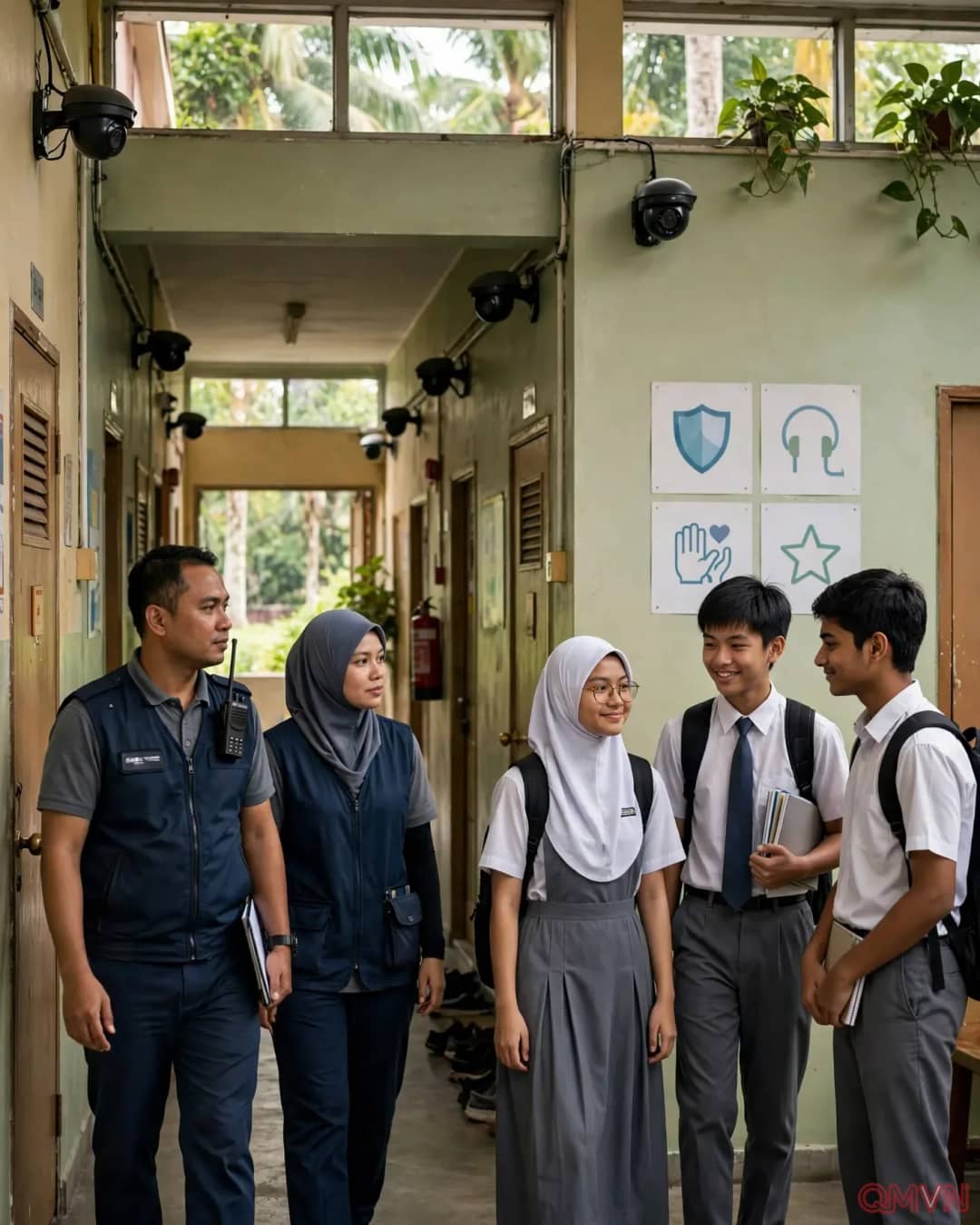
Eyes in the Dormitories
In 2025 the government spent RM3 million installing CCTV in 200 boarding schools; in 2026 the programme expanded to 333 schools. Phase 3 next year has been allocated RM15 million to install cameras in 1,000 schools nationwide.
In addition, since 1 April, 300 hostel warden assistants have been deployed to support more than 10,000 existing wardens, especially with night-time supervision, and the ministry has carried out hostel safety audits in 850 schools.
Yet the ministry also admits that physical facilities cannot be relied on alone. Supervision by school staff, awareness of changes in pupils’ behaviour and prompt action on complaints are the key elements in ensuring a safe hostel.
A Voice for the Silent
The ministry’s bullying complaint portal has been upgraded with an anonymous reporting function. It is an important step, since many victims and witnesses stay silent for fear of retaliation or isolation.
This provides students, witnesses and other relevant parties with a channel to lodge complaints more confidently, without compromising the need for proper investigations.
When pupils believe their voices will be heard and protected, bullying can be detected earlier, before it leaves serious harm.
Building a Culture of Empathy
The ministry says tackling bullying requires behavioural change. The School Anti-Bullying Framework for Empowerment (SAFE) and the Generasi Madani programme are under way and will continue in a more structured form through the 2027 School Curriculum, emphasising values, courtesy, good character, integrity and empathy.
These initiatives are important in building a school culture that rejects violence, respects differences and encourages students to seek help when faced with unsafe situations.
The message is a reminder that a safe school is protected not just by cameras, but by hearts that care for one another.