Why economy still pinches
Economy class carries the large majority of the world's air passengers, and its design is shaped by a constant trade-off. Airlines want happier customers, but they also need to fill as many seats as possible to stay profitable. Seat pitch on many long-haul economy cabins sits roughly between 76cm and 81cm, leaving little room to stretch, shift or sleep upright.
Over several hours, that confinement adds up. Pressure builds on the lower back and thighs, legs swell from sitting still, and the neck strains when sleep finally comes. Small accessories cannot change the seat, but they can change how the body meets it.
What the road test looked at
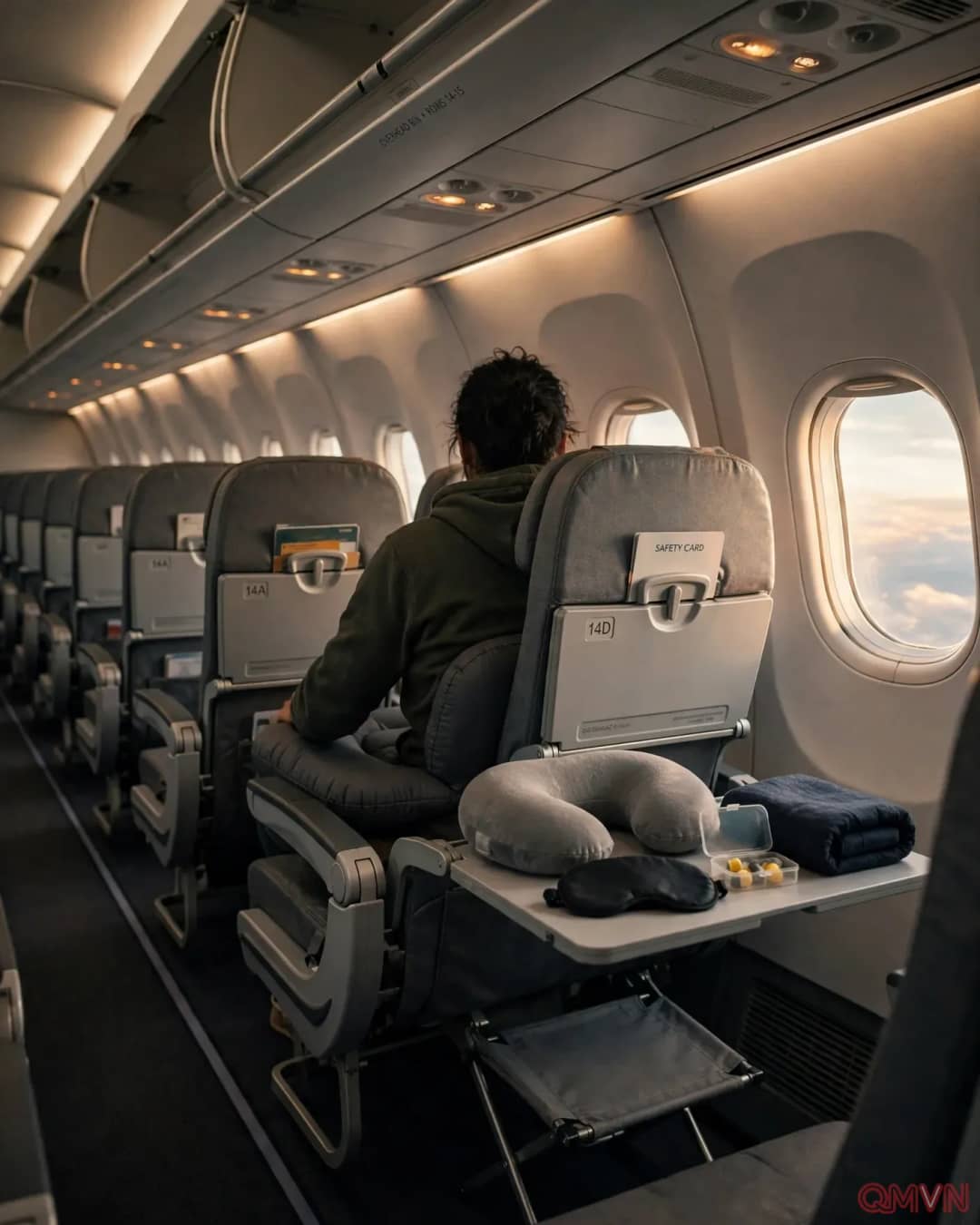
The Straits Times tried out six items that each cost less than S$35, a price point meant to show that comfort need not be a luxury purchase. Inflatable seat cushions and portable footrests were among those tested.
These belong to a wider family of low-cost aids that travellers commonly reach for:
- Inflatable cushions that add padding and help redistribute pressure on a firm seat.
- Portable footrests or foot hammocks that raise the legs slightly and ease strain on the lower back.
- Neck pillows that support the head and reduce the sideways slump of upright sleep.
- Simple sleep aids, such as eye masks and earplugs, that block out cabin light and engine noise.
Because inflatable items deflate to a fraction of their size, they suit travellers who are keen to keep carry-on luggage light.
Comfort with courtesy
Not every gadget is welcome on every flight. Some airlines limit devices that extend over the seat or affect the passenger in front, and a few restrict inflatable leg rests during certain phases of flight. Checking the carrier's rules before boarding avoids an awkward conversation with cabin crew.
There is also a question of etiquette. A footrest hung from the tray table should not jostle the person in front, and anything that blocks the aisle or an exit path can create a safety risk. The best accessory is one that makes a passenger more comfortable without making anyone else less so.
Beyond the gadgets
Accessories work best alongside simple habits. Standing and walking when it is safe, drinking water, stretching the calves and choosing loose clothing all help circulation on long flights. Seat selection matters too: aisle seats make movement easier, while window seats offer a surface to lean on. Small purchases and small routines together can make a long journey feel shorter.