MAIN CONTENT
Two distinct strengths, one potential corridor
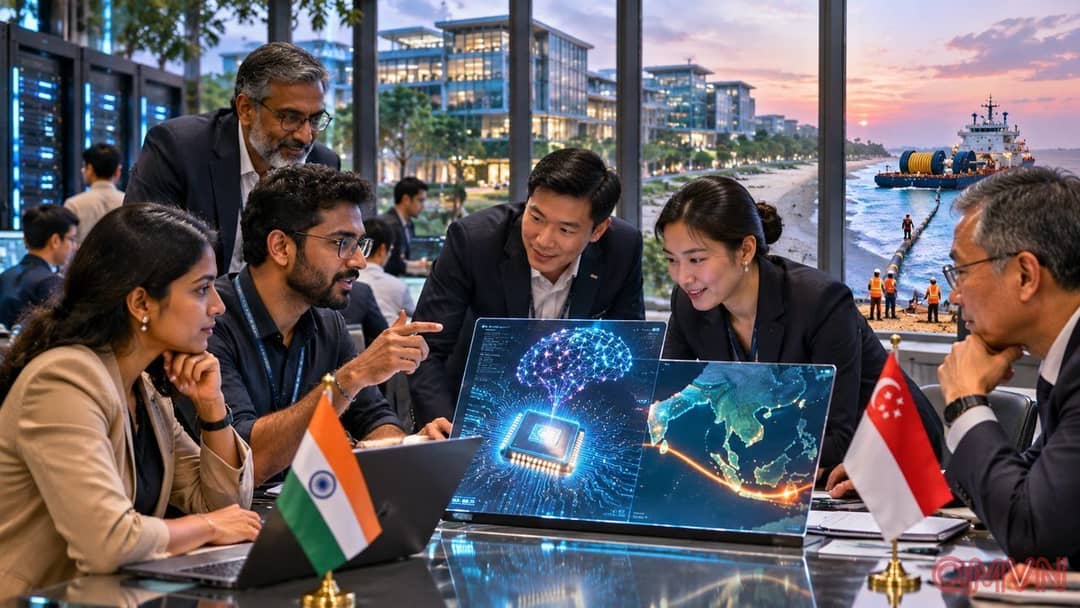
In Bengaluru, Mumbai and Chennai, India has deep pools of programmers, engineering firms and businesses capable of applying digital tools at scale. Singapore offers investors, banks, cloud infrastructure, multinational customers and a gateway into Southeast Asia. As South China Morning Post reported on November 23, the complementarity could offer India another route into the AI economy, even if it struggles to match the frontier-model budgets of the United States and China.
Yet the two economies are not interchangeable puzzle pieces. A strong software labour force does not automatically confer access to advanced chips, while financial depth does not guarantee a commercially successful product. A genuine AI corridor must join research, training, procurement, governance and customers; announcements alone cannot supply any of those missing connections.
The invisible foundation beneath the sea
On June 30, 2026, Tata Communications announced about $152 million of investment to strengthen subsea connectivity between India and Singapore. Company statements and industry reporting describe an additional 20 terabits per second associated with its Mumbai route and about 78 Tbps on a Chennai–Singapore project, roughly 98 Tbps combined.