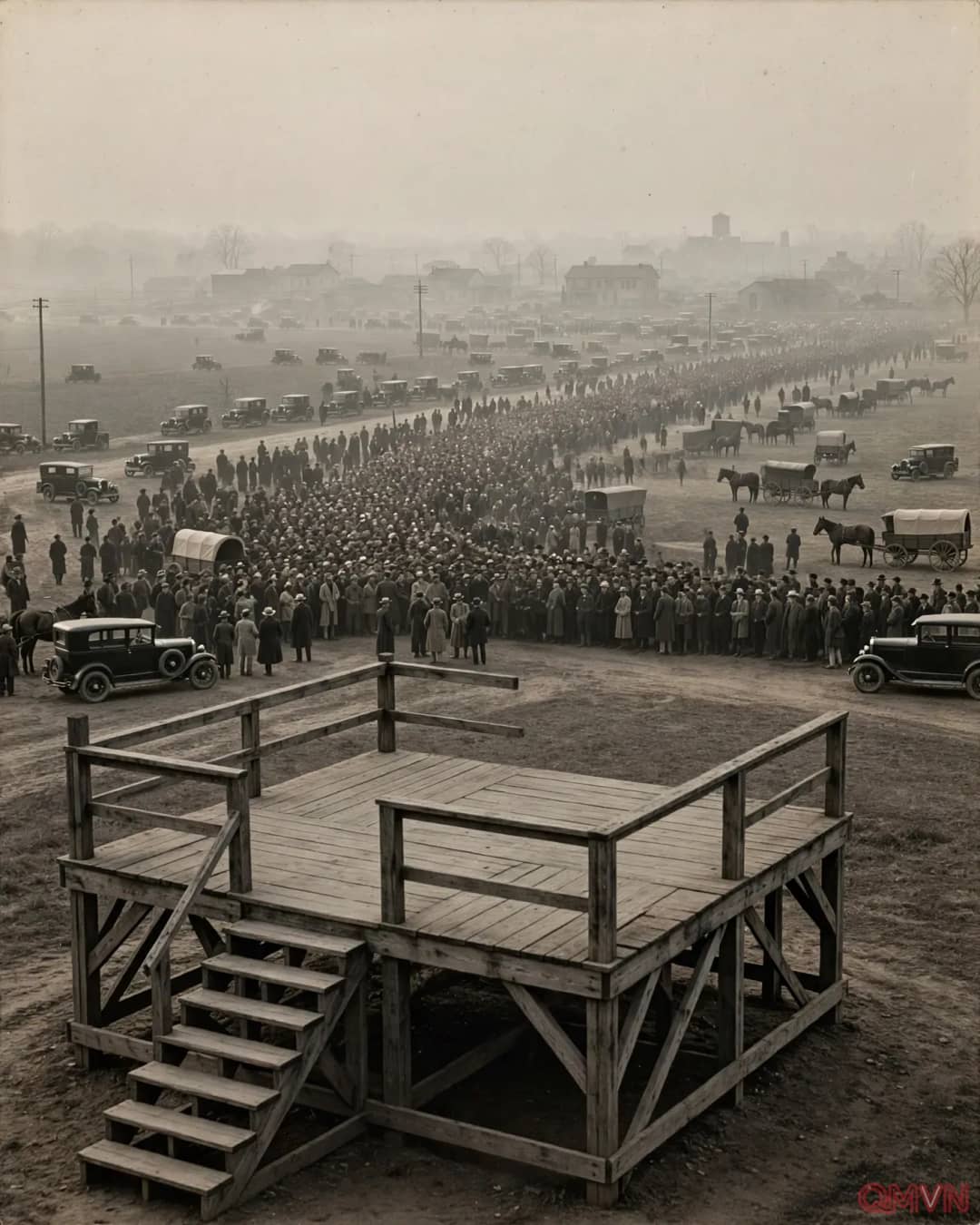
Memories revived
Last week the Pentagon announced plans to livestream the execution of Nidal Malik Hasan, the former US Army psychiatrist who shot and killed 13 colleagues at Fort Hood, Texas, in 2009. The plan revived stories of the era when executions took place in front of crowds.
On October 15, President Donald Trump reversed course and said the government would not broadcast the event publicly. Even so, the debate led many to look back at a dark chapter in America's judicial history.
The hanging of Rainey Bethea in 1936
The hanging of Rainey Bethea in Owensboro, Kentucky, on August 14, 1936, is widely considered one of the last high-profile public executions in the United States. Bethea, a Black man in his 20s, was sentenced to death for raping Lischia Edwards, a 70-year-old white woman; he also confessed to killing her.
Notable details of the legal process include:
- Bethea confessed five times, each time without a lawyer present.
- Kentucky did not prosecute him for murder, punishable by the electric chair, but chose the rape charge, then punishable by hanging.
- A grand jury indicted him after one hour and 40 minutes, the trial lasted three hours, and an all-white jury deliberated for less than five minutes.