MAIN ARTICLE
An Election Day announcement with foreign-policy consequences
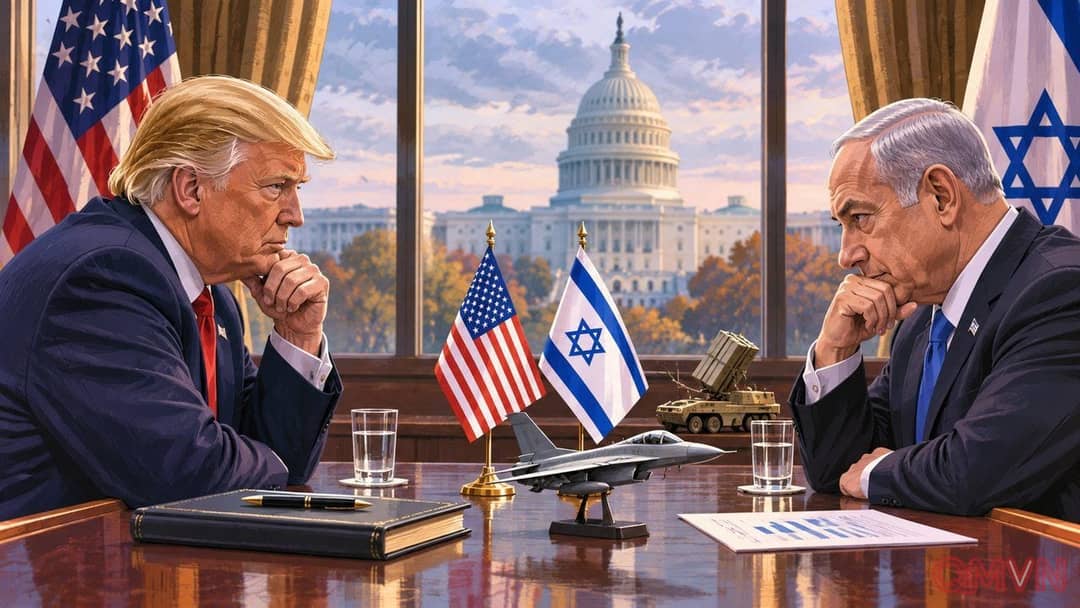
During a November 3 appearance on Fox & Friends, Trump said he and Netanyahu had decided months ago to stop the annual payment, which he described in rounded terms as $4 billion. He argued that Israel had become economically successful and no longer required that subsidy. He simultaneously left open the prospect of future emergency help and continued arms purchases, distinguishing financial grants from the broader security relationship.
The timing was impossible to miss. Voters were choosing the composition of both chambers of Congress, and Trump explicitly referred to Abdul El-Sayed, a Democratic Senate candidate in Michigan who opposes unconditional aid to Israel. Trump framed the announcement as removing an issue his political opponents had used against Republicans. His comments establish an electoral dimension, although they do not by themselves prove that the underlying policy decision was invented for the campaign.
Why a presidential pledge is not a budget decision
The Congressional Research Service describes the current ten-year memorandum as a $38 billion framework covering fiscal years 2019 through 2028. Its annual baseline includes $3.3 billion in Foreign Military Financing and another $500 million for cooperative missile defense. Thus Trump's $4 billion description is an approximation, not a comprehensive inventory of exceptional aid packages, commercial transactions or all defense-related spending.