MAIN CONTENT
A knife guided by knowledge
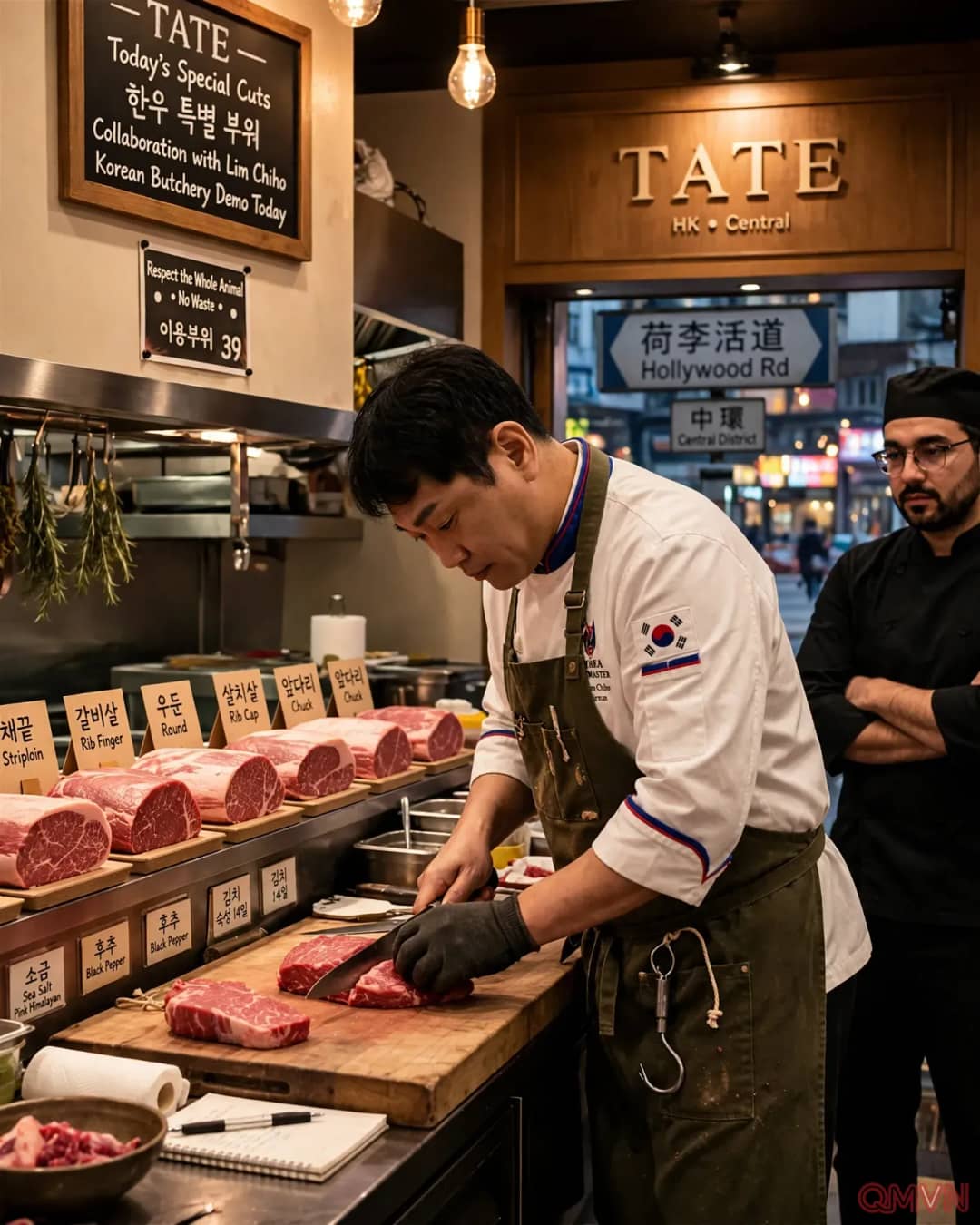
At Tate in Sheung Wan on October 26, 2026, Lim Chi-ho showed why butchery starts with anatomy rather than presentation. Muscle direction, fat distribution and connective membranes influence how a piece behaves under heat. One cut may reward a quick sear; another needs slow cooking or very thin slicing. Understanding those differences before choosing a recipe can turn a neglected ingredient into something desirable.
South Korea formally divides beef into 10 major cuts and 39 sub-cuts. Peer-reviewed Hanwoo studies use the same categories when comparing tenderness, composition and eating quality. Claims that Korean cooks use as many as 120 parts include offal and other edible components; that broader culinary estimate should not be mistaken for an official classification containing 120 equivalent retail cuts.
A detailed cutting system does not magically make tough meat tender. It helps cooks match technique with structure. Connective-tissue-rich muscles may reward braising, while highly marbled sections require careful temperature control. Precision in the butcher’s hands therefore needs an equally considered response at the stove.