MAIN CONTENT
How emissions trading systems operate and who is covered
An emissions trading system sets a gradually declining cap on total emissions that a sector or group of sectors may produce and issues carbon permits that companies must buy or hold for each tonne of carbon dioxide emitted. Europe's system launched in 2005 and included Britain until the end of 2020 after its departure from the European Union; the European Union scheme also covers Iceland, Liechtenstein, and Norway as well as electricity generation in Northern Ireland under the Brexit protocol, while Britain launched its own replacement system in 2021.
Both carbon markets regulate emissions from power generation, heavy industry, aviation, and shipping, with the European Union system covering roughly 40 percent of the bloc's emissions and the British scheme covering about 25 percent of Britain's emissions.
What linking the schemes means for trade and carbon border levies
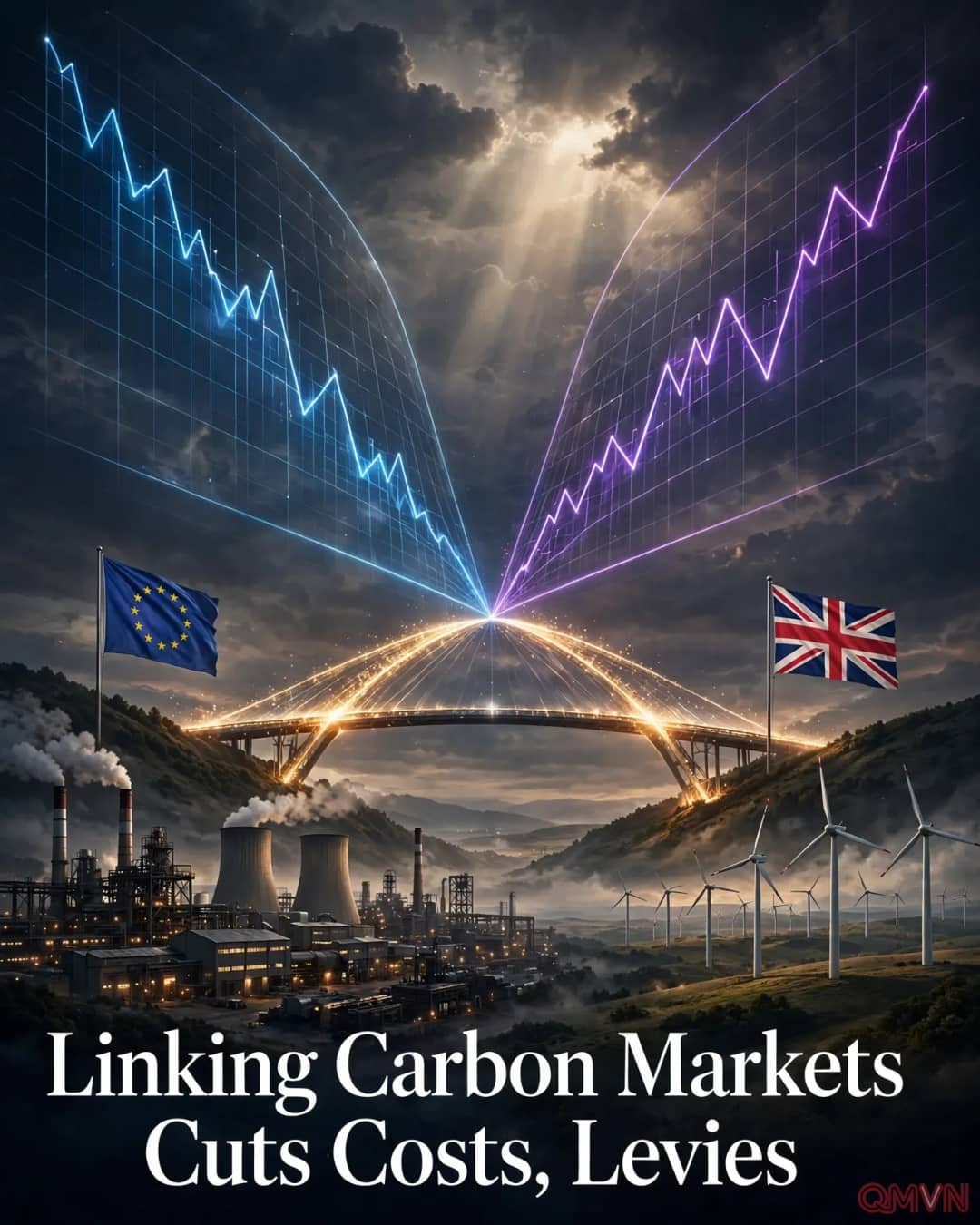
Connecting the British and European Union carbon markets reshapes compliance flexibility, market depth, and cross-border trade costs across several key dimensions:
Carbon allowances issued in either market can be used for compliance in either system, boosting liquidity across both markets.