MAIN CONTENT
From plant signals to practical breeding
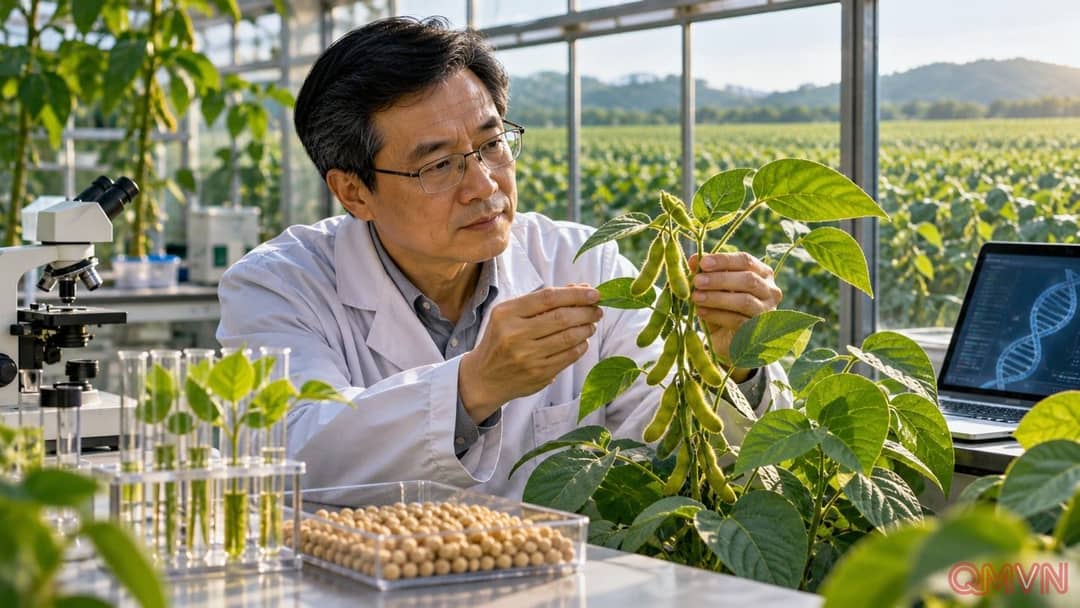
Zhang's research examined the molecular processes that allow plants to respond to changing environmental conditions. Unlike animals, crops cannot move away from drought or salty soil. They must adjust their growth and metabolism, often through networks of genes and chemical signals. Understanding these networks gives researchers a way to identify useful traits before developing new varieties.
One example is a 2023 study reported by the Chinese Academy of Sciences. Zhang's team investigated GmZF351, a transcriptional regulator associated with oil accumulation, and found that it also contributed to tolerance of salt and drought stress in genetically modified soybean plants. The findings appeared in the Journal of Integrative Plant Biology. They suggest that the regulation of seed composition and environmental adaptation can intersect in ways that are valuable for breeding research.
The distance between discovery and the farm
The institute's publication record also identifies research on a PLATZ regulator associated with soybean seed size and weight, published in 2023. Such work helps explain how characteristics that matter to farmers emerge from the activity of genes.