Chinese institutions sign multibillion-dollar investment deals with Oman’s sovereign wealth fund as Beijing turns to a safe gateway into the Middle East
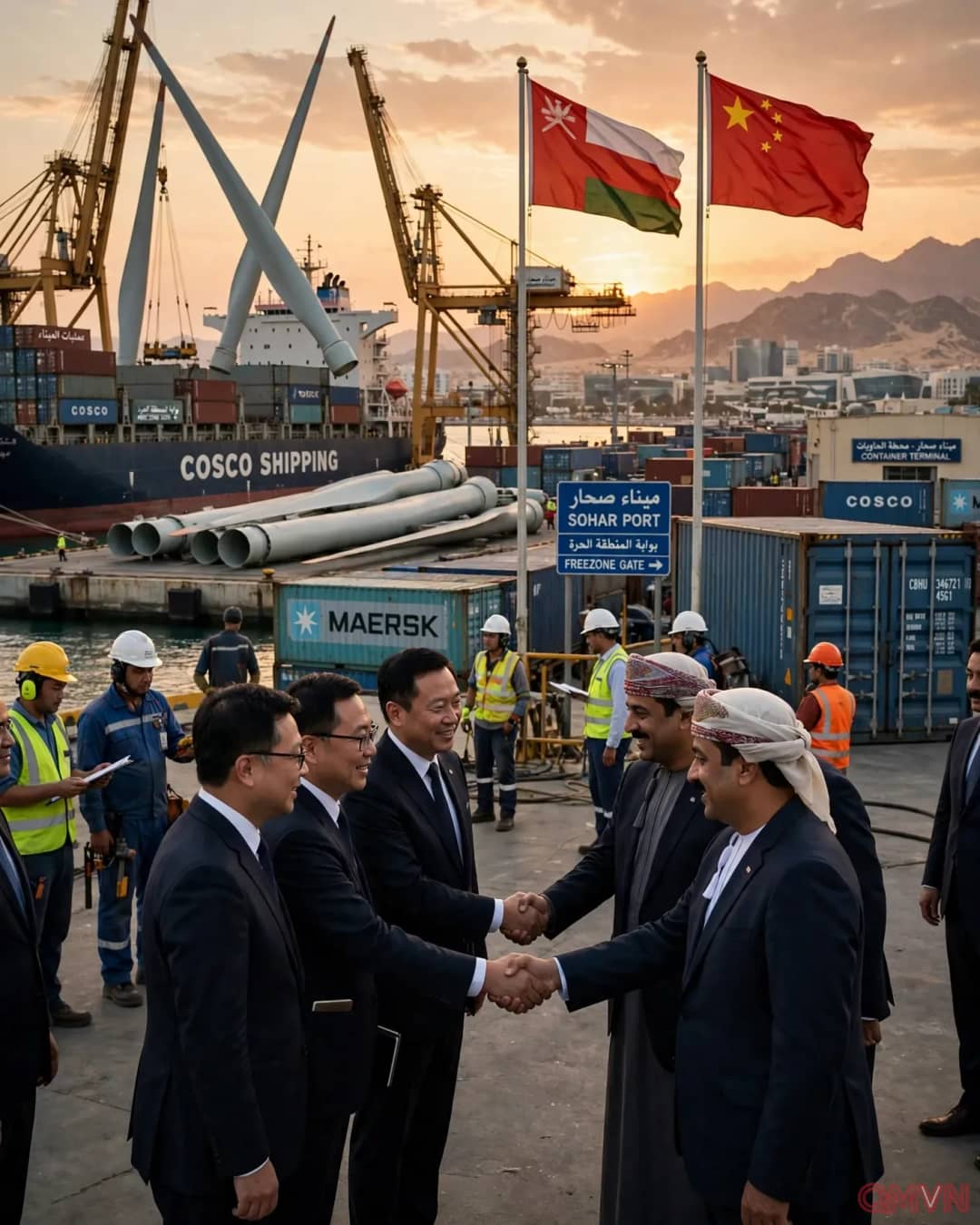
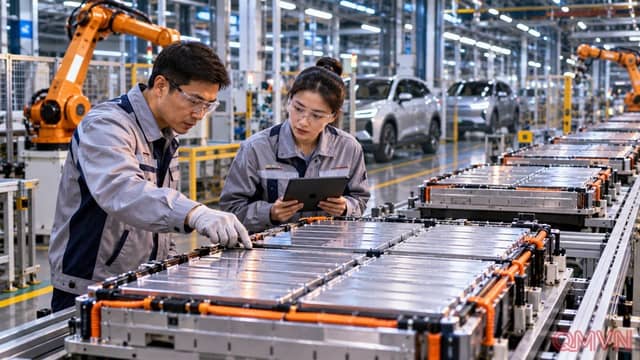
Chinese funds, banks and companies have signed a multibillion-dollar package of investment deals with the Oman Investment Authority, the Gulf sultanate’s sovereign wealth fund, marking a sharp upgrade in economic ties as Chinese firms look to Oman as a stable entry point into a lucrative but conflict-prone region. Signed during Sultan Haitham bin Tariq’s first state visit to China, the agreements span renewable energy, battery storage, mining, logistics, digital technology and space, including an $800 million joint fund with the Silk Road Fund, a $1 billion energy-storage project with State Grid and a satellite programme. The fund described the deals as a shift from traditional trade towards joint investment, industrial localisation, technology transfer and long-term capital partnerships. For Oman, they support efforts to diversify away from oil; for China, they secure a foothold in a neutral state whose ports lie outside the war-scarred Strait of Hormuz. Turning signatures into factories, however, remains the real test.
Tiếng Nói QUANG MINH·2 min read · 4 min listen·14 November 2026, 03:15 EST·
AI-generated illustration
A historic visit and a long list of deals
Sultan Haitham’s visit to Beijing on 1 and 2 November was the first by an Omani head of state in the 48 years since the two countries established diplomatic relations. President Xi Jinping called deeper ties a shared strategic choice and described the two nations as stable and reliable energy partners with great potential in investment and high-tech innovation.
In a statement released on Friday, the Oman Investment Authority said it had signed its largest-ever investment package with Chinese partners.
Advertisement300 × 250
The authority’s president, Abdulsalam Al Murshidi, said the agreements reflected the evolution of relations from trade towards investment partnerships, and stressed their role in economic diversification, job creation and knowledge transfer.
What was signed
The package brings together state funds, private investors and some of China’s best-known companies. Among the main agreements:
An $800 million joint fund with the Silk Road Fund, mostly invested in Oman, plus a $300 million fund with China Merchants Bank and $735 million from IDG Capital, Templewater and EW Partners
About $1 billion in battery energy storage with 1 gigawatt of capacity, by Nama Holding and State Grid International Development
A 10-year, $418.7 million contract with Hongda International for the Mazoon copper and gold project
Logistics hubs with JD.com, wind-energy research with Shanghai Electric, AI computing infrastructure with Omantel and a space programme to launch seven satellites
The itemised amounts add up to about $3.35 billion, and several deals carry no disclosed value. Officials have described the overall package only as worth billions of dollars.
Why Oman?
Oman’s appeal lies partly in geography and partly in diplomacy. Its main ports at Duqm, Sohar and Salalah sit on the Arabian Sea, outside the Strait of Hormuz, where attacks on shipping have surged since the war involving Iran began in February. That makes the sultanate an attractive base for supply chains seeking to avoid the region’s most dangerous chokepoint.
Oman has also long cultivated a reputation for neutrality, acting as a quiet mediator between rivals, including Iran and the United States. Analysts say Beijing sees the country as a safe gateway to the wider Middle East. Xi said during the visit that the Gulf should not become an arena for great-power rivalry, a message that resonates with Muscat’s own balancing act.
From oil buyer to investment partner
Trade has long anchored the relationship, reaching $36.73 billion in 2024, with China buying the bulk of Oman’s crude oil exports. The new deals aim to move beyond that, building factories, energy projects and digital infrastructure in Oman itself and creating jobs for young Omanis.
Challenges remain. Earlier Chinese pledges, such as the industrial park in Duqm, have advanced more slowly than promised. Technology agreements, including AI chips and satellites, may draw scrutiny from Western partners. And regional instability could deter investors. Sultan Haitham has also proposed a preferential trade and investment agreement with China, signalling that Muscat wants the momentum to last.
BACKGROUND.
This partnership has deep roots. Oman and China established diplomatic relations in 1978, and for decades the sultanate has been one of China’s steady oil suppliers. Since taking power in 2020, Sultan Haitham has pursued Oman Vision 2040, a plan to reduce dependence on hydrocarbons by attracting foreign investment in industry, logistics, tourism and green energy, including hydrogen. China, meanwhile, has expanded its presence across the Gulf through the Belt and Road Initiative and brokered the 2023 rapprochement between Saudi Arabia and Iran.
The Middle East’s upheavals have raised the stakes. The war that began on 28 February 2026, with US and Israeli strikes on Iran, disrupted shipping and energy markets and highlighted the risks of relying on the Strait of Hormuz. Supporters of closer ties say Chinese capital can accelerate Oman’s diversification and give Beijing a reliable partner; sceptics warn of debt, slow delivery and the danger of being drawn into rivalry between China and the United States. The core knot is whether Oman can deepen economic ties with Beijing while preserving the neutrality that makes it valuable to all sides.
Key takeaways
In turbulent regions, stability itself becomes a country’s most valuable export.