MAIN ARTICLE
A familiar community crosses a new line
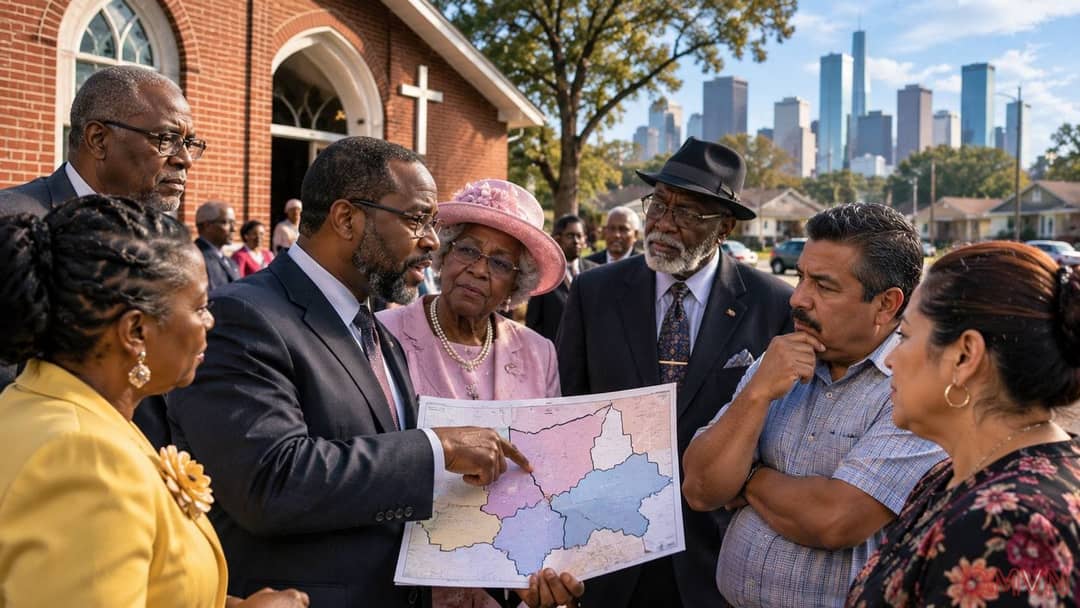
At Mount Hebron Missionary Baptist Church in Sunnyside, a predominantly Black Houston neighborhood, a congregation's ordinary Sunday gathering acquired unusual weight before the election. For two decades, many residents in the area helped elect Democrat Al Green to Congress. The Texas legislature's 2025 mid-decade map moved the church from the Ninth District into the Eighteenth, changing which politicians residents could directly hold accountable.
Green subsequently competed for the Democratic nomination in the Eighteenth against incumbent Christian Menefee and lost. This consequence made the political stakes tangible. Redistricting can influence not only which party has an advantage but also which longstanding relationships between representatives and neighborhoods survive. Moving a community across a line can concentrate its votes while reducing the number of districts in which it has influence.
Speaking to Al Jazeera, Pastor Max Miller connected voting rights to the civil-rights history of his congregation. Alice Jefferson, a 97-year-old resident, expressed disappointment that the representative she had followed for years was no longer on her ballot. Those personal reactions illuminate something electoral data cannot easily capture: political trust often grows through years of service, contact and familiarity.