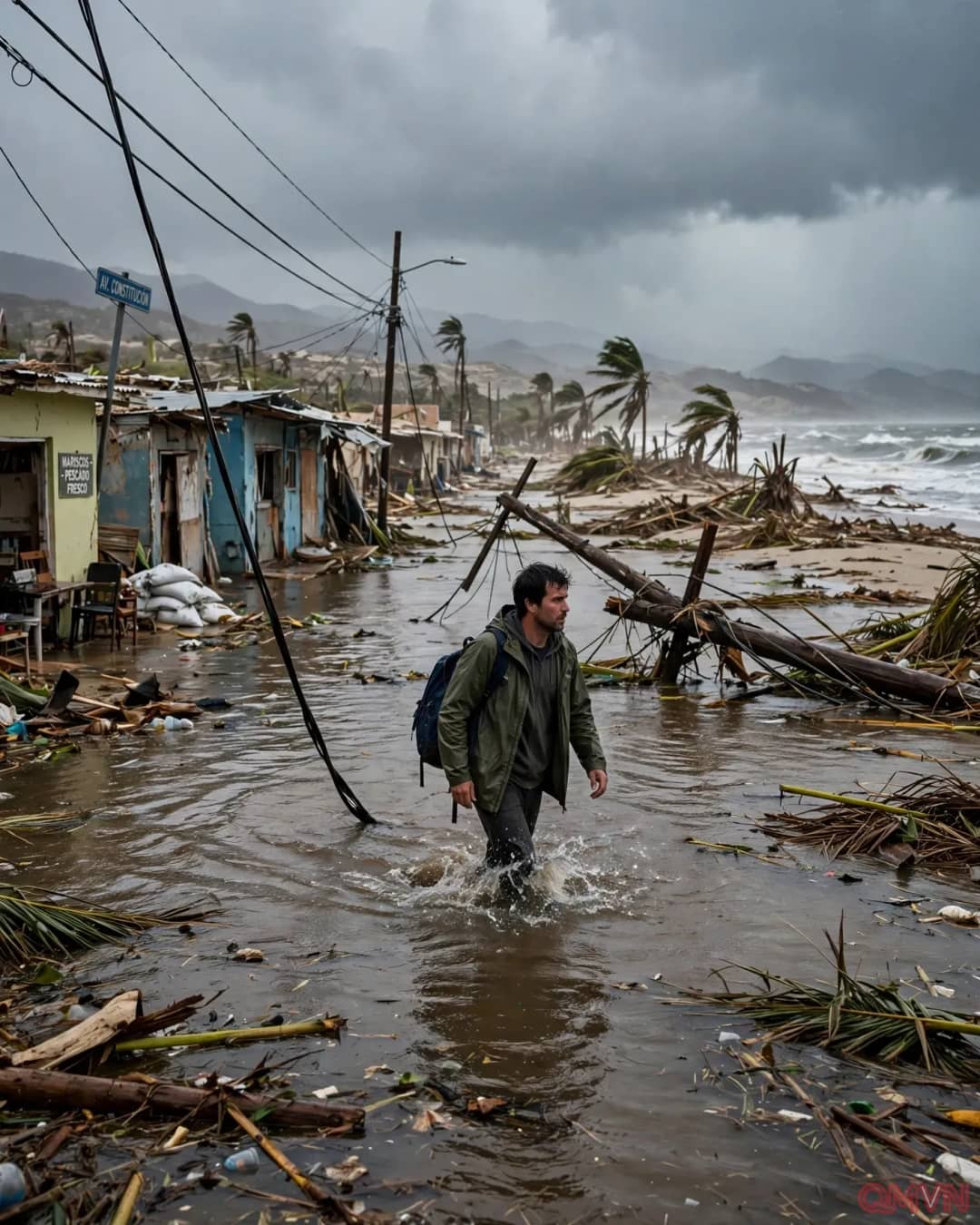
A record-breaking storm
Hurricane Polo stood out in several ways:
- It was the longest-lasting Category 5 storm in the Pacific, spending two and a half days at that level.
- It intensified from a tropical storm to Category 5 in about 24 hours.
- It was fuelled by waters as warm as 31.2 degrees Celsius, up to 2 degrees Celsius above normal.
- It weakened considerably before hitting a sparsely populated part of Mexico.
The joint study by World Weather Attribution and Climate Central, published on Thursday, found that climate change added about 6 mph to the storm's winds, while El Niño – the natural, temporary warming of parts of the Pacific – contributed about 5 mph. Climate change made the conditions that fuelled the hurricane 23 times more likely, and El Niño 14 times more likely.
"El Niño comes and goes"
Climate scientist Friederike Otto, who coordinates World Weather Attribution, said both El Niño and climate change made the hurricane stronger, but the effect of climate change was bigger. From now on, she said, every hurricane in the East Pacific carries at least this climate change signal, and it will only grow as long as fossil fuels keep being burned.