Vietnam Speaks on the China-Laos Training Center: Military Cooperation Must Contribute to Peace and Stability in the Region
More than a month after China and Laos opened a joint training center at Ban Keun airport near Vientiane, Vietnam has cautiously made its position known. Speaking on November 5, foreign ministry spokesperson Pham Thu Hang said Vietnam always hopes Laos will develop in a peaceful, independent and self-reliant manner, and stressed that cooperation between countries must follow international law and contribute positively to peace, security and stability. Beijing insists the facility only helps Laos train pilots and targets no third party. Yet observers are still debating whether it is a flight school or China’s first overseas air base. The story has therefore moved beyond a 2,000-meter runway to become a measure of the shifting security landscape in Southeast Asia.
Editor QMVN·2 min read · 4 min listen·5 November 2026, 06:39 EST·
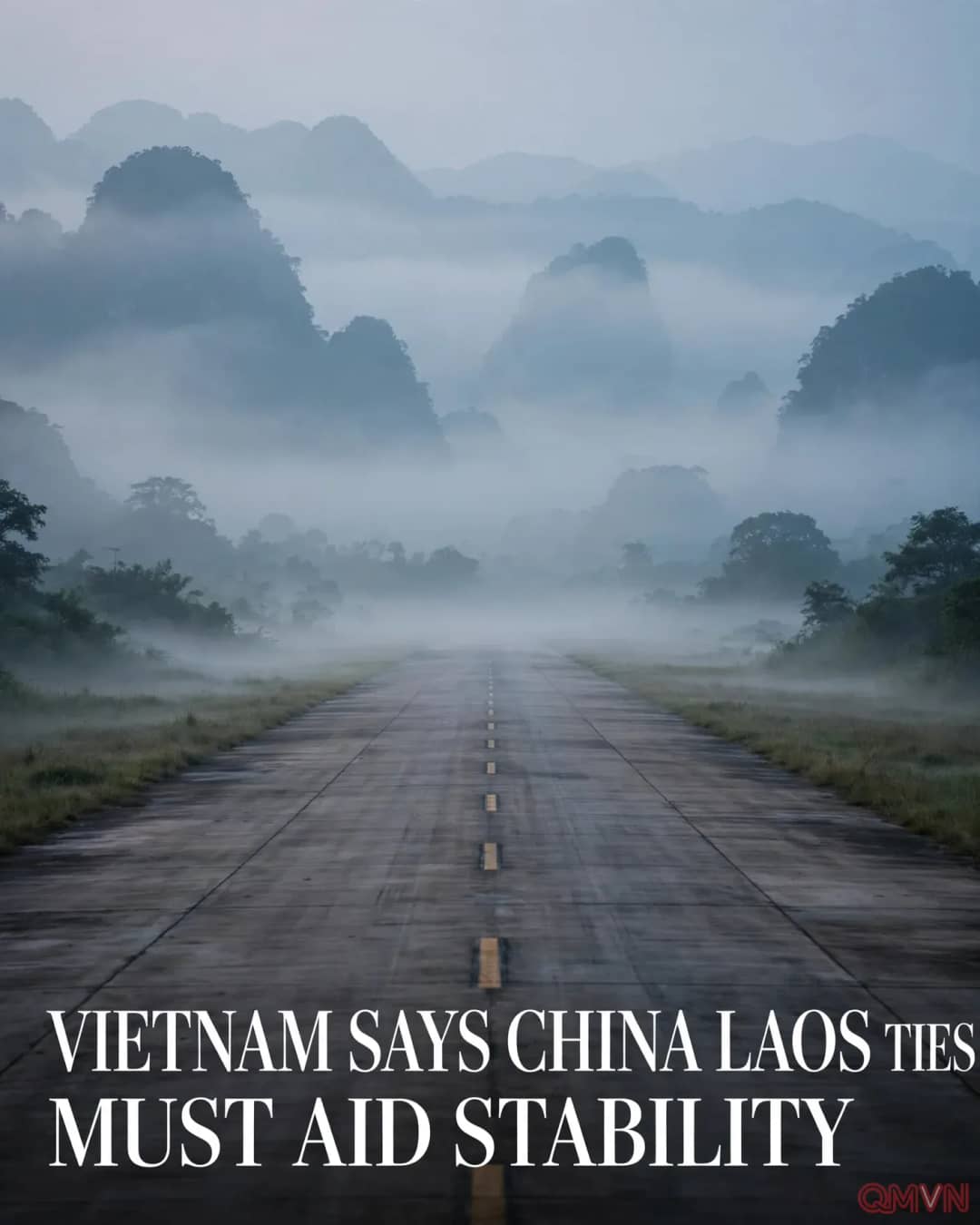
AI-generated illustration
MAIN CONTENT
A Measured Message from Hanoi
Speaking at a regular press briefing, Hang did not criticize any country by name. She set the issue on a foundation of principles: international law, the Treaty of Amity and Cooperation in Southeast Asia and the United Nations Charter.
Advertisement300 × 250
That wording reflects Vietnam’s familiar diplomatic style, maintaining ties with Beijing while treasuring its special bond with Vientiane.
“Vietnam always hopes Laos will develop in a peaceful, independent and self-reliant manner.” Pham Thu Hang
She also underlined the standard that, in Hanoi’s view, all cooperation should meet.
“Such cooperation must at the same time be a positive contribution to peace, security, stability and prosperity in the region and the world.” Pham Thu Hang
What Is Known About Ban Keun
China’s defense ministry announced the center at the end of September. According to public sources, its main features are as follows:
Name: the China-Laos Joint Support and Training Center, alongside the China-Laos Friendship Aviation Academy.
Location: Ban Keun, about 40 to 50 km north of Vientiane.
Infrastructure: a runway of about 2,000 meters, an apron and hangars.
Stated purpose: helping Laos train its air force pilots.
Satellite imagery obtained by Reuters showed eight aircraft on site, probably JL-8 trainers of a type both countries operate. Neither side has disclosed details of staffing or equipment.
Flight School or Base?
Beijing says the arrangement complies with both countries’ laws and international practice and is “not directed against any third party.” Chinese expert Song Zhongping, quoted by the Global Times, said the site belongs entirely to Laos, with no independent Chinese garrison. By contrast, Joshua Kurlantzick of the Council on Foreign Relations described it as the first air force base China has abroad.
Many analysts take a more cautious view. David Vallance of the Lowy Institute says the runway is too short for bombers, and Olli Pekka Suorsa wrote that the airfield is too small for sustained power projection. Alexander Neill notes, however, that it appears designed to allow a possible runway extension.
“It could cause the US to reconsider hosting large multinational security exercises in Thailand.” Hunter Marston
The Neighbors Keep Watch
Thailand says Laos has a sovereign right to allow the facility and that Bangkok will keep monitoring it. According to AP, an unnamed Vietnamese official viewed the center as primarily for training and humanitarian relief, but also as meant to boost Chinese influence in Laos.
Meanwhile, Hanoi and Vientiane continue to nurture their defense ties. In October, during Prime Minister Le Minh Hung’s visit to Laos, Defense Minister Phan Van Giang met his Lao counterpart and discussed greater strategic cohesion. That may be Vietnam’s quietest reply of all: sustaining a neighborly bond through concrete action.
BACKGROUND TO THE EVENTS
This story begins on ground that has already known war. During the Vietnam War era, Ban Keun was Lima Site 44, an airstrip used by Air America, the airline secretly owned by the CIA. More than half a century later, a facility jointly run by China and Laos has risen there. Work began late last year on the site, which sits along the China-Laos railway corridor. Laos is a landlocked country with heavy debts to China, and it has long been tied to Vietnam in a relationship both sides call special.
Before Ban Keun, China already had a base in Djibouti and helped expand Cambodia’s Ream naval base, which Phnom Penh says is open to all friendly nations. The central knot is transparency: because the two countries have disclosed few details, the same facility can be read as a flight school or as a military foothold. Regional states therefore respect Laos’s sovereignty while watching each step closely.
USEFUL LESSONS FROM THIS ARTICLE
In diplomacy, a carefully weighed sentence can sometimes carry more than a protest.
Where transparency ends, suspicion takes flight.
A small nation keeps its independence not by choosing sides but by keeping many friends.
Subscribe to the QMVN newsletter
A daily morning digest - only stories worth reading, no spam.