MAIN ARTICLE
An emergency ruling, not a final judgment
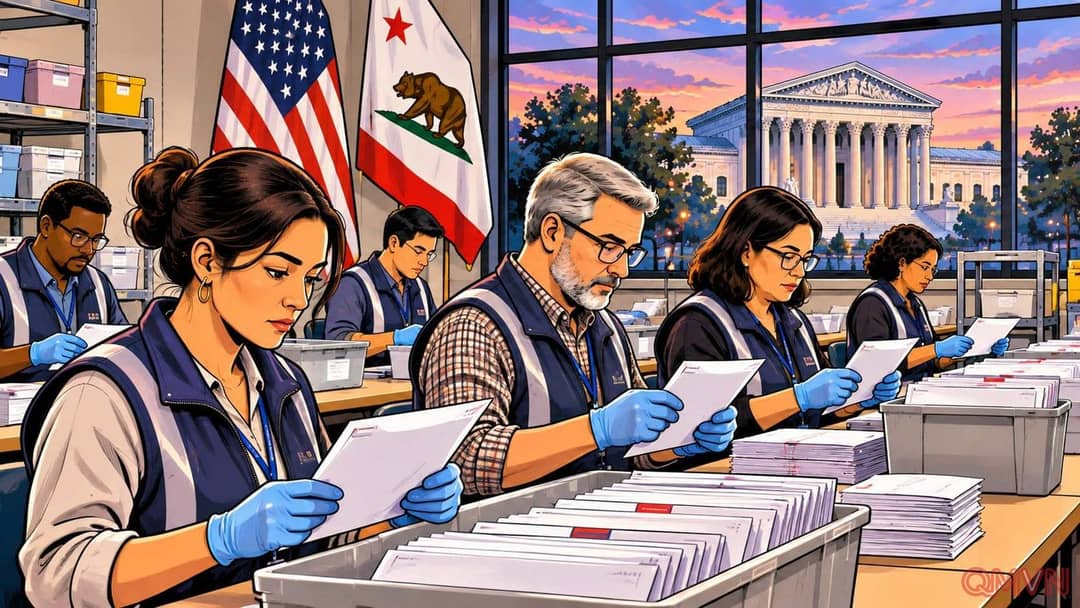
The Supreme Court rejected the Justice Department's application only hours after it was filed. The one-line unsigned order offered no legal reasoning and identified no dissenting justice. Earlier, federal judge David O. Carter in Los Angeles and a divided Ninth Circuit panel had refused to make election officials isolate the challenged ballots. The rapid sequence unfolded immediately before voting concluded in a politically consequential national election.
That outcome does not prove every person on the federal list was eligible, nor does it finally resolve the case. It addresses what the government could compel California to do on an emergency basis. Lower-court judges warned that a last-minute alteration to established procedures might disenfranchise lawful voters and destabilize tabulation, even while legitimate eligibility checks remain necessary under existing law.
A list of names is not proof of an illegal vote
Federal officials said they compiled a list of more than 20,000 suspected noncitizens using government records and commercially available information. Their lawyers argued that ballots could no longer be identified separately once processed together, making a later judicial remedy harder.