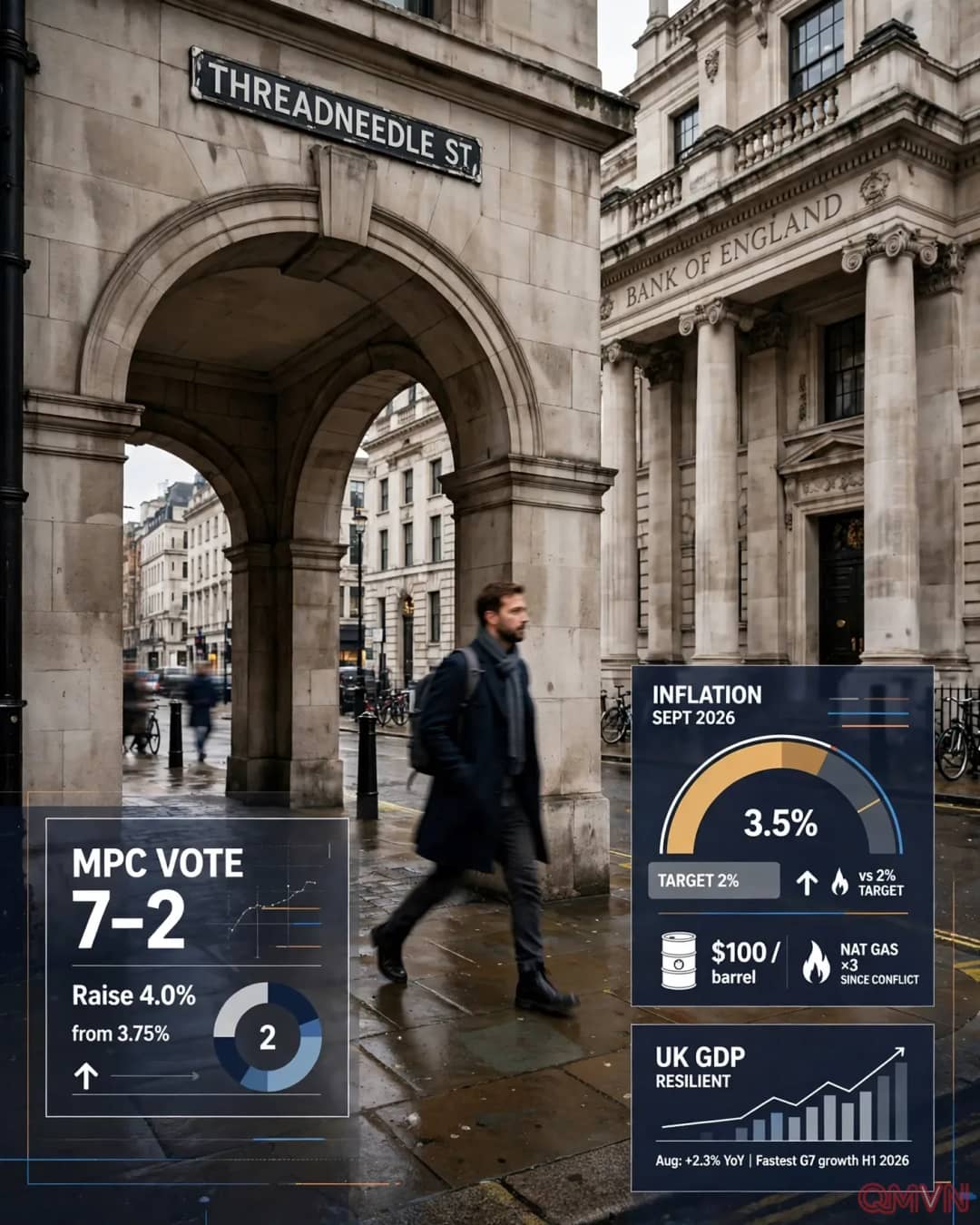
A turning point after three years
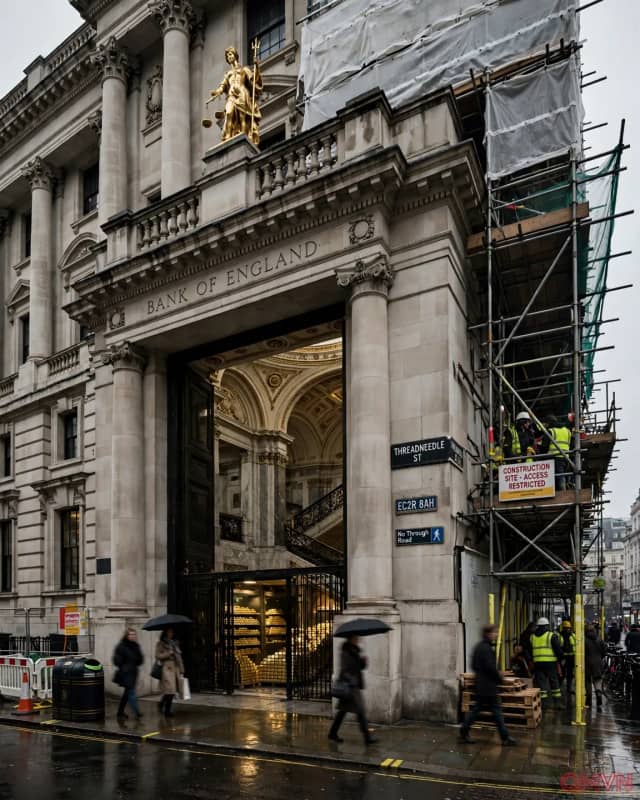
Thursday's decision marks the BoE's first change in rates since a cut last December and its first increase since August 2023, when inflation was above 6%. Economists polled by Reuters had expected a 7-2 vote, but in the end all nine members agreed to tighten, with one even seeking a half-point rise.
Just two months earlier, at the September meeting, a 6-3 majority had favoured holding rates. That swift shift reflects mounting pressure from energy prices, as the drawn-out war keeps gas prices at triple their pre-conflict level. With this move, the BoE becomes the last major developed-economy central bank to start raising rates, after the US Federal Reserve and the European Central Bank (ECB).
Inflation and an economy more resilient than expected
September inflation rose to 3.5%, above economists' forecasts and well beyond the 3% the BoE had predicted in July. Under its new projections, inflation could reach about 5% by mid-2027 as higher energy costs filter into household and business bills.