Wagers on US midterms exceed $1.4 billion as prediction markets enter mainstream financial spotlight
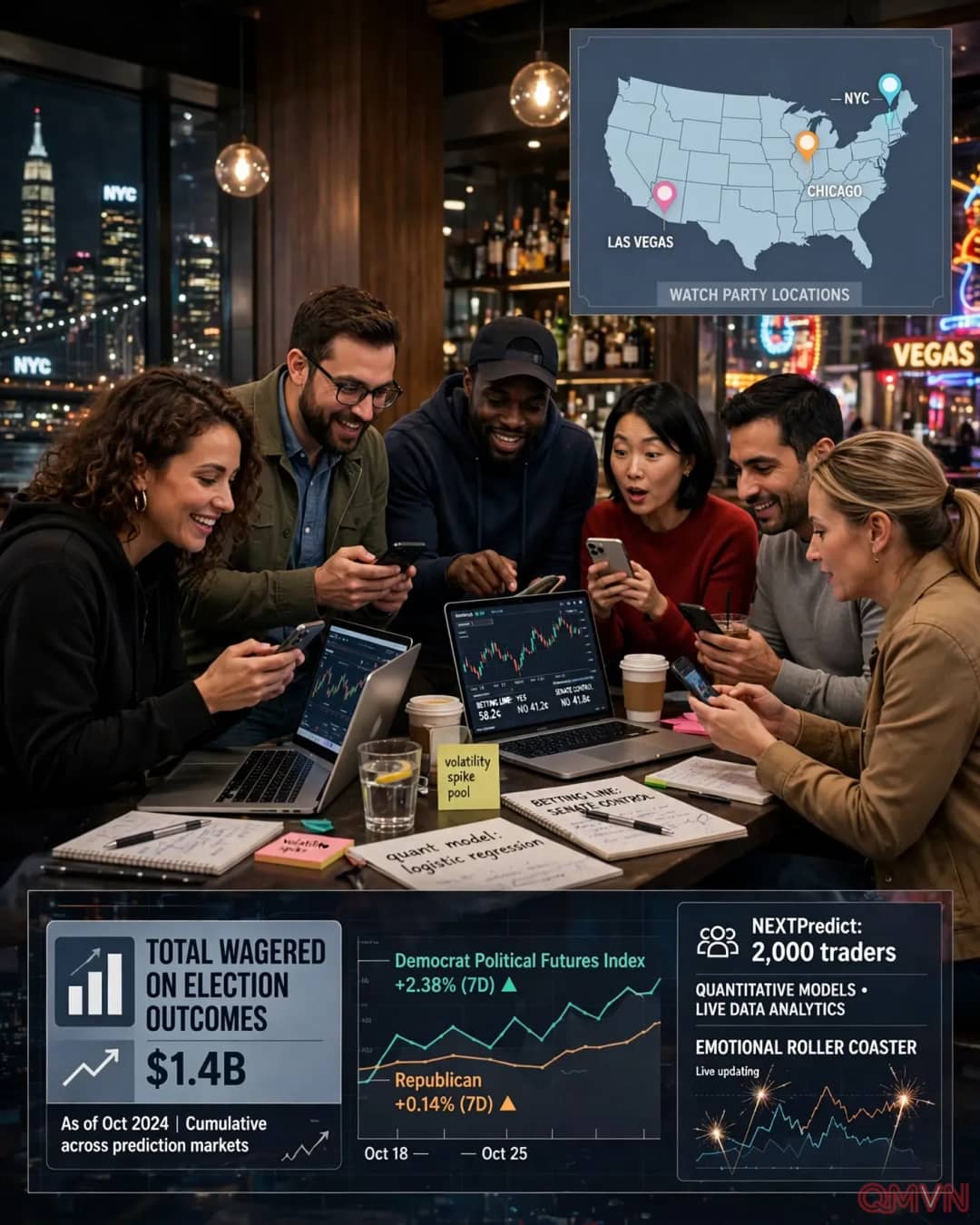
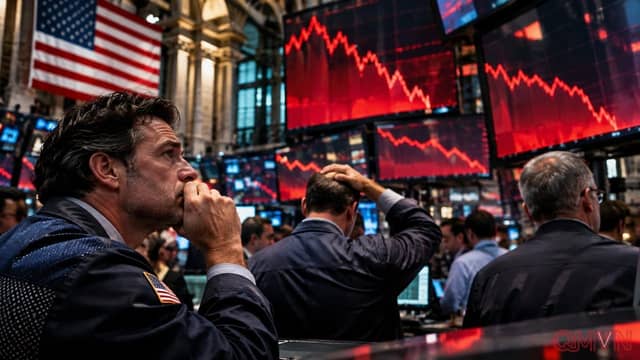
As voting concluded across the United States in the 2026 midterm elections on Tuesday evening, November 3, serious capital hung in the balance across decentralized and regulated prediction exchanges, marking a decisive stress test for election wagering’s mainstream credibility. Aggregate volume wagered on midterm race outcomes surged past a historic $1.4 billion benchmark, according to platform figures and independent industry research. From high-energy election watch parties in New York City and Chicago to viewing venues along the Las Vegas Strip, quantitative algorithmic traders, financial technology professionals, and retail punters experienced acute psychological pressure as live ballot counts caused sharp repricing across binary "yes" or "no" candidate contracts.
Edite QUANG MINH·2 min read · 3 min listen·3 November 2026, 08:19 EST·
AI-generated illustration
MAIN BODY
A $1.4 billion trading milestone and the emotional volatility of election contracts
Prediction platforms cemented widespread public adoption following their 2024 performance, when contract prices accurately bucked traditional polling methodologies by anticipating Donald Trump’s presidential victory. By empowering participants to trade binary contracts tracking specific candidates and vote margins, platforms such as Kalshi and Polymarket attracted more than $1.4 billion in collective capital.
Advertisement300 × 250
*
"It’s a numbers game; you have to strip your emotions out of it." — Noah Poser, Financial Technology Professional and Prediction Market Strategist
*
However, managing high-stakes political exposure introduces acute psychological friction. Whether managing six-figure quantitative portfolios positioned on Democratic congressional retention or deploying contrarian strategies to exploit mispriced Republican odds in Florida, market participants must resist the urge to panic-sell as localized reporting fluctuations roil contract valuations.
Total wagered capital across election prediction markets surpassed $1.4 billion for the 2026 midterms.
Platforms enable liquidity around binary "yes" or "no" contracts tied to federal congressional races.
Traders experience intense psychological strain and liquidity shocks as real-time ballot counts fluctuate.
Institutional maturation and expanding market presence from Manhattan to Las Vegas
The explosive volume expansion has catalyzed institutional engagement across the alternative asset ecosystem. Venture-backed platform Adjacent Markets recently secured $2.5 million to engineer tradable political benchmark indices, while industry conferences like New York’s NEXTPredict convened over 2,000 specialized traders and financial institutions.
*"This time, prediction markets seem to have joined the mainstream." — Lucas Kohorst, Co-founder of Adjacent Markets*
Even within the traditional gaming capital of Las Vegas—where casino operators have historically opposed digital wagering exchanges—enthusiasts gathered at venues like Prediction Vegas to track live political outcomes. Industry architects emphasize that long-term institutional legitimacy depends upon structural integrity and market transparency rather than isolated cyclical spikes.
Regulated platforms like Kalshi gained prominence as corporate sponsors at major institutional futures conferences.
The Democrat Political Futures Index rose 2.38% over the seven days leading into Election Day.
Venues across Las Vegas hosted dedicated election prediction gatherings despite regional state regulatory limits.
EVENT BACKGROUND
This financial and cultural milestone materialized on Tuesday, November 3, 2026, against the backdrop of the high-stakes United States midterm elections determining the balance of legislative authority during President Donald Trump’s second administration. Traditionally, electoral forecasting relied almost exclusively on telephone polling and demographic modeling; however, recurrent survey discrepancies in previous cycles paved the way for financial prediction markets to establish themselves as dynamic, real-time forecasting alternatives driven by collective market intelligence and capital commitments. Throughout 2025 and 2026, judicial rulings and regulatory approvals by federal agencies integrated firms like Kalshi into mainstream financial infrastructure, attracting institutional liquidity. The central crux of the phenomenon lies in the tension between speculative gambling risks versus the predictive utility of crowd-sourced price discovery, compelling federal regulators to assess whether event contracts represent a durable new asset class or an unregulated gambling frontier.
KEY LESSONS LEARNED
Real-money prediction markets frequently synthesize dynamic information more accurately than traditional sociological polling.
Emotional detachment and disciplined execution are essential when trading hyper-volatile event-driven binary derivatives.
The integration of financial technology into civic events creates powerful new forecasting mechanisms for systemic macro risks.
Subscribe to the QMVN newsletter
A daily morning digest - only stories worth reading, no spam.