MAIN STORY
A bath that reveals an entire social world
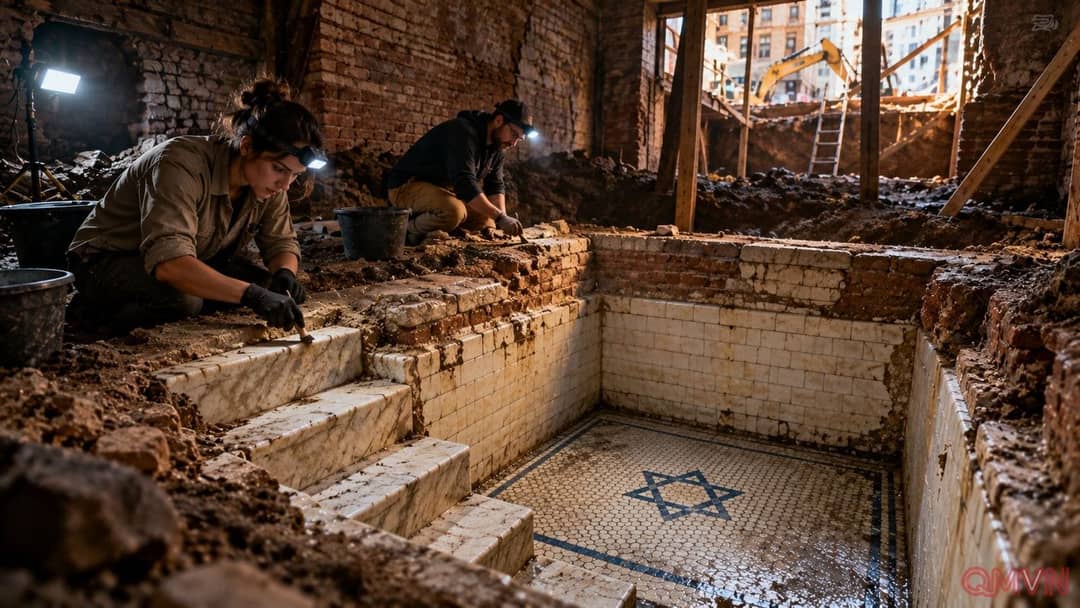
In 2003, construction work on Manhattan’s Lower East Side exposed a white-tiled wall. Careful excavation revealed marble steps descending into a rectangular basin, with a blue Star of David tiled into the floor. Historical records connected the property with Congregation Moshcisker Chevrah Gur Arye, suggesting the structure was a mikveh used for religious immersion.
A mikveh is not merely an ordinary bathtub. Requirements concerning naturally sourced water and the layout of ritual space make surviving structures unusually revealing historical evidence. During the great immigration waves of the late nineteenth and early twentieth centuries, New York mikvehs operated within synagogues, public bathhouses, tenement basements and crowded courtyards.
Sites identified around Allen Street, East Third Street and East Seventh Street indicate that other examples might remain beneath later construction. But an archival reference is not proof that an intact bath survives: excavation and physical assessment are needed to confirm a structure’s condition.