MAIN ARTICLE
A faint signal over an immense volcano
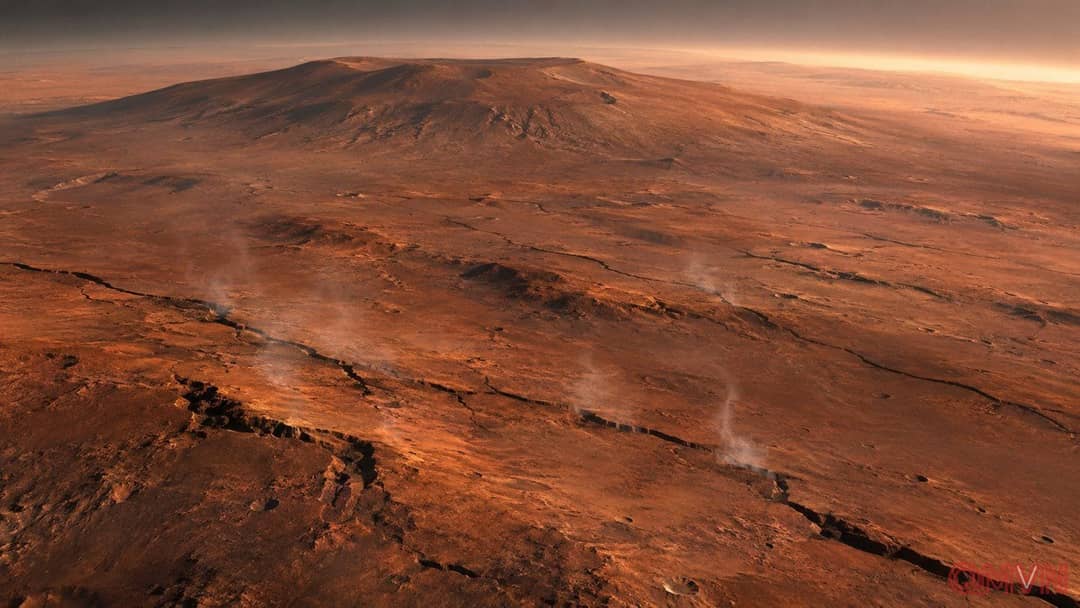
Alba Mons stretches across an extraordinary area of the northern Martian hemisphere, although its slopes are gentler than those of many familiar terrestrial volcanoes. Fracture systems crossing the ancient terrain have long attracted planetary geologists. Now the atmosphere may offer another piece of the puzzle: unusual concentrations of hydrogen chloride, or HCl, detected low above the network of cracks.
On Earth, HCl is a corrosive, pungent component of some volcanic emissions. Chlorine-bearing compounds dissolved in magma can be released as pressure falls during magma ascent. The apparent geographical association between the gas and the fractures therefore offers a plausible explanation: magma or hot volcanic material at depth could still be releasing gases that move through pathways in the crust.
Planetary scientist Daniel Mège, affiliated with the Polish Academy of Sciences and the University of Bern, told Reuters that volcanic seepage was the most likely origin identified by the team. But “most likely” is not the same as established fact. A chemical trace cannot by itself substitute for direct measurements of magma movement, subsurface temperature or an observed eruption.