US intelligence sharing fractures under Trump administration as interagency turf wars impede critical security assessments
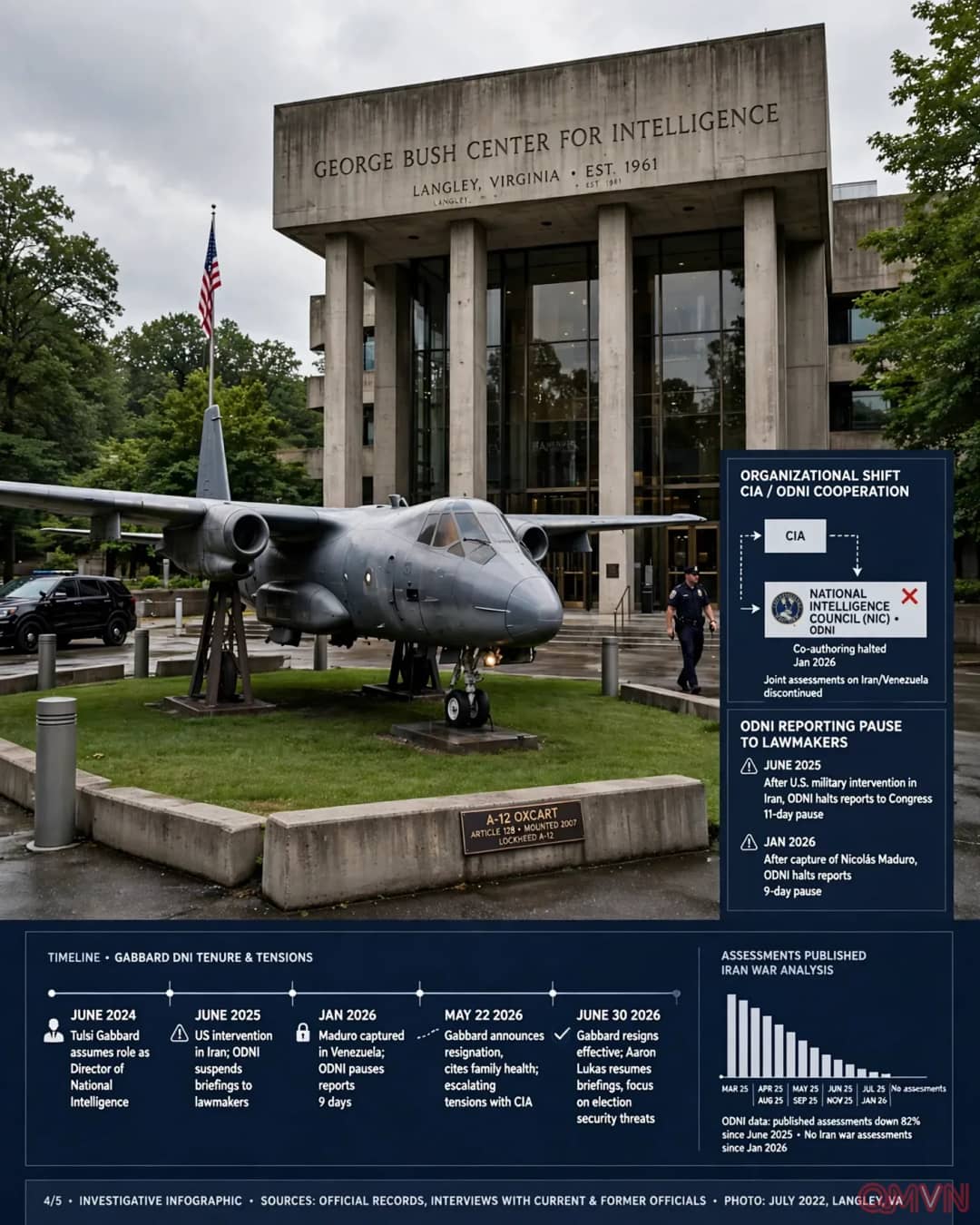
Crucial intelligence sharing on Iran and evolving global national security threats across the United States federal government and Congress has slowed significantly and suffered temporary halts under President Donald Trump’s second administration, according to an exclusive investigation published by Reuters on Tuesday, November 3, 2026, citing eight current and former senior intelligence officials. Deep institutional friction between the Central Intelligence Agency (CIA) and the Office of the Director of National Intelligence (ODNI)—culminating in the CIA refusing to co-author strategic intelligence assessments with the National Intelligence Council (NIC)—has severely fractured coordinated analytical flows. Former intelligence leadership and outside experts warn that these institutional ruptures risk leaving foreign policy decision-makers dangerously blind to emerging threats, echoing the catastrophic systemic failures that preceded the September 11, 2001, terrorist attacks, just as the White House deliberates whether to resume active military strikes on Iran following the midterm elections.
Edite QUANG MINH·2 min read · 4 min listen·3 November 2026, 08:25 EST·
AI-generated illustration
MAIN BODY
CIA-ODNI bureaucratic conflict and congressional intelligence blackouts
The operational dysfunctions escalated during Tulsi Gabbard’s tenure as Director of National Intelligence prior to her resignation in June 2026, sparking intense institutional battles with CIA leadership. Interagency hostilities—ignited when Gabbard’s office revoked security clearances for seasoned personnel—became so acute that White House Chief of Staff Susie Wiles intervened multiple times to de-escalate disputes.
Advertisement300 × 250
*
"All of these things are adding up in a really complex world where policymakers need to have a more sophisticated, nuanced, and integrated view of the world, and they are getting less." — Beth Sanner, Former US Deputy Director of National Intelligence
*
The CIA subsequently ceased co-authoring analytical estimates with the National Intelligence Council, which historically synthesized assessments across all 18 intelligence agencies. Furthermore, congressional leadership and specialized national security committees were temporarily cut off from ODNI threat briefings in the immediate wake of the June 2025 military intervention in Iran and the January 2026 capture of Venezuelan leader Nicolás Maduro over White House leak allegations.
The CIA halted co-authoring strategic intelligence products with the National Intelligence Council (NIC).
Congress faced temporary intelligence cutoffs following US operations in Iran and the detention of Nicolás Maduro.
Current DNI Jay Clayton has restored critical congressional briefings regarding foreign election interference threats.
Analyst self-censorship and re-emerging barriers across federal agencies
Systemic personnel cuts and political loyalty purges executed across the ODNI and CIA have created a climate of intimidation among career analysts. Sources confirm that intelligence analysts routinely avoid drafting conclusions that contradict White House foreign policy narratives due to fears of professional reprisal or abrupt termination.
*"The problem is that by taking actions which have the effect of hollowing out institutions where there’s actual intelligence community coordination, you’re creating little lily pads, and then everybody can pick their own lily pad to listen to." — Morgan Muir, Former Deputy Director of National Intelligence*
New institutional barriers have compromised domestic counterterrorism coordination as well. Late last year, the FBI suspended intelligence sharing with the National Counterterrorism Center (NCTC) for multiple weeks after NCTC leadership under Joe Kent attempted to investigate the shooting of conservative activist Charlie Kirk, with the bureau alleging jurisdictional overreach.
Career analysts practice self-censorship to avoid publishing assessments at odds with executive branch viewpoints.
The FBI froze intelligence sharing with the NCTC over jurisdictional disputes concerning domestic shooting probes.
Bipartisan national security veterans at Stanford’s Hoover Institution are formulating plans to restructure the community.
EVENT BACKGROUND
This investigative report was released on November 3, 2026, coinciding with the United States midterm elections, revealing structural decay within the US intelligence architecture established under the Intelligence Reform and Terrorism Prevention Act of 2004. In the aftermath of the September 11, 2001, terrorist attacks, Congress established the ODNI specifically to dismantle the bureaucratic silos and institutional rivalries that historically prevented the CIA, FBI, and military intelligence from sharing critical threat data. However, throughout 2025 and 2026, the Trump administration’s skepticism toward career national security personnel, combined with significant budgetary reductions and ideological vetting, reignited aggressive turf wars across the executive branch. The fundamental crux of the crisis lies in the confrontation between the intelligence community’s statutory mandate to deliver objective, unvarnished threat assessments to Congress versus the executive branch’s demands for political alignment; by fracturing interagency consensus and withholding vital files on the ongoing war in Iran, the system has created dangerous analytical blind spots at a moment of acute international instability.
KEY LESSONS LEARNED
Uninhibited, horizontal intelligence sharing across agencies is the foundational requirement for preventing catastrophic national security surprises.
Politicizing threat assessments and punishing objective analysis deprives executive leadership of necessary operational reality.