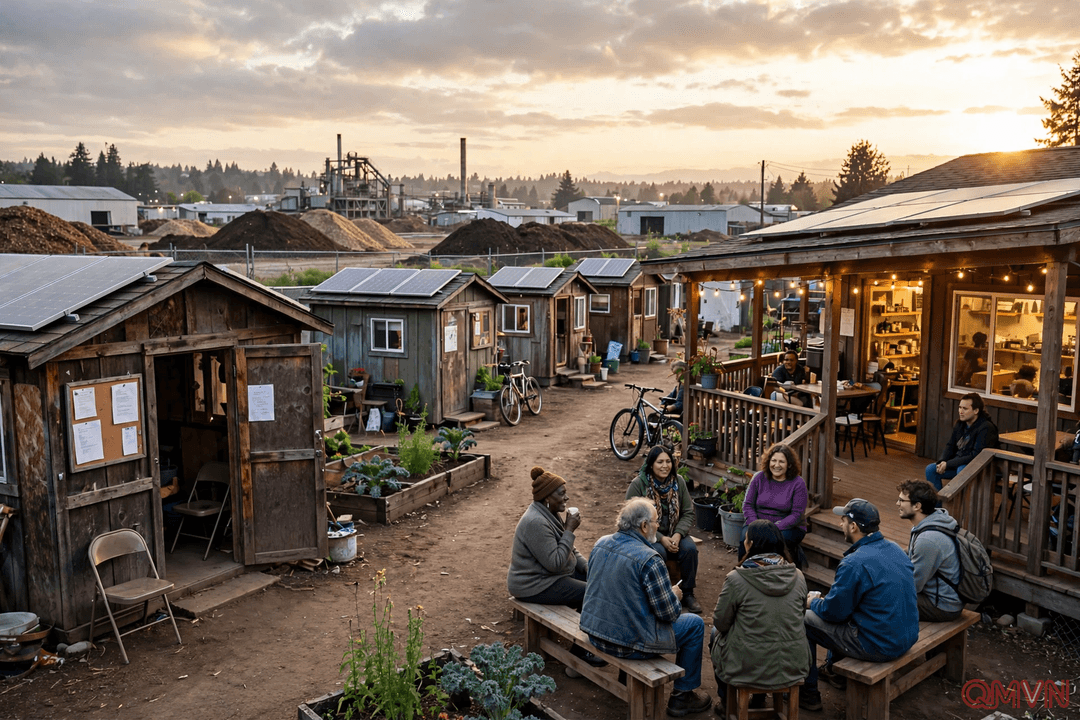
A Courtroom Inside a Communal Kitchen
On a recent evening, the Commons — Dignity Village's dim, cluttered kitchen, living room and courtroom — hosted a council meeting that felt part bureaucratic procedure, part family argument. A love triangle dispute had been reported to village security. There were no case managers in uniforms, no eviction forms, just neighbors who had once lived on the streets negotiating a compromise: stop excessive texting, avoid each other for a while.
That is the core of the Village Model, documented by Reuters and The Guardian as a radical experiment in collective self-empowerment. Residents contribute 10 hours of work weekly to maintain the village, guard the entrance, and run micro-enterprises like firewood sales and gardening services. Substance use is restricted to private spaces. Rules on sanitation, hoarding and fire prevention are enforced only to satisfy the fire marshal and environmental regulators. Most violations are handled through peer pressure and formal incident reports.
According to city records, taxpayer cost is minimal — mainly an annual fire safety inspection.
10 hours of community labor per week replaces professional staff
$100 membership fee covers utilities and security