MAIN STORY
What the damage shows—and what remains uncertain
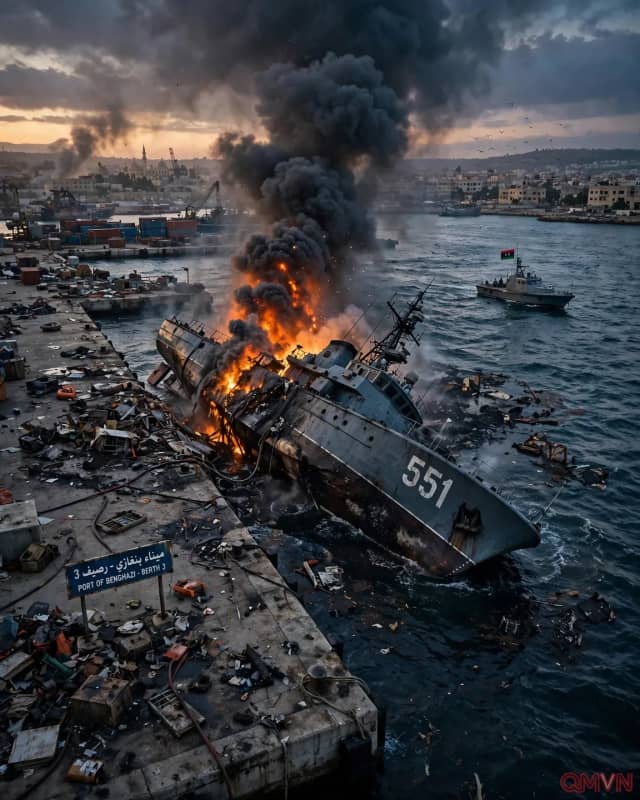
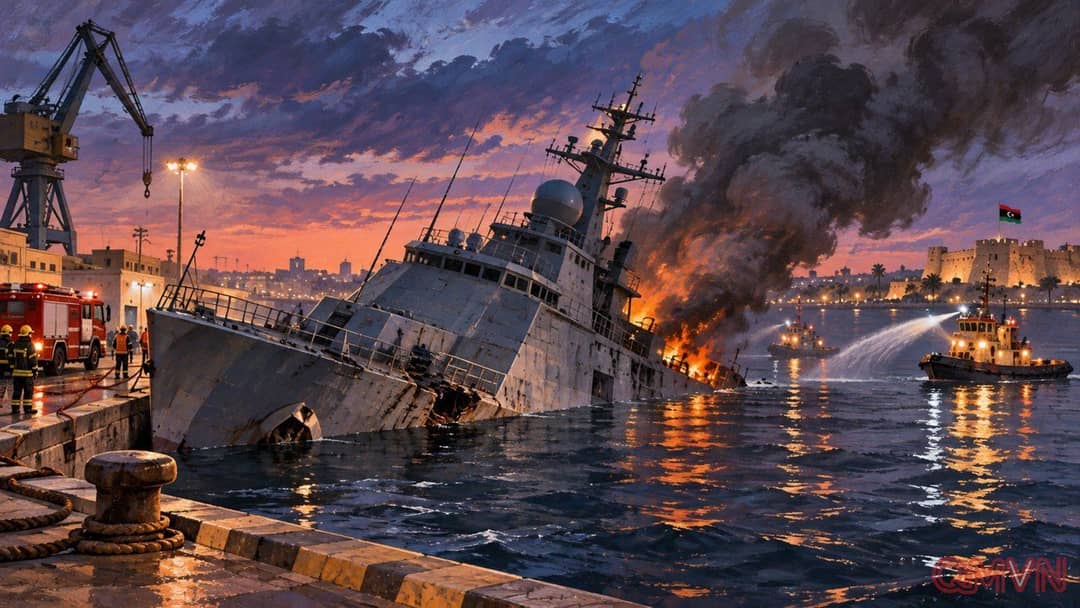
Reuters and the Associated Press, citing authorities in eastern Libya, reported an explosion and fire aboard a Russian ship at the Benghazi naval base. Libyan military officials identified the heavily damaged ship as Merkury, a Russian naval corvette. Satellite imagery supplied by Vantor showed the ship listing and partly submerged. Those pictures provide significant evidence of physical damage but cannot, by themselves, establish the identity of the attackers.
Two Libyan officials told AP that several sea drones approached the vessel; early accounts said four were intercepted and two hit the ship. These figures remain statements attributed to officials rather than independently published forensic findings. A comprehensive, independently verified account of casualties aboard Merkury had not emerged in the initial reporting. The scale of a filmed explosion should not be confused with proof of a particular death toll or the precise method used.
A second ship and the safety of the harbor
Later the same day, Libyan sources and open-source analysts reported another strike on a merchant vessel off Benghazi. Accounts identified it as Ascalon, a cargo ship linked to Russian logistical activities. Reuters reported that Libyan naval personnel rescued crew members, although the details of injuries and identities were not fully established in the first accounts.
The apparent succession of incidents presents a challenge for a port used for trade, resupply and military activity. Even when a vessel is suspected of military significance, explosions near fuel facilities and commercial berths can threaten civilian seafarers, emergency workers and surrounding communities. Eastern Libyan authorities condemned the prospect that their territory and territorial waters could become a theater for settling an overseas conflict.
Why analysts are looking toward Ukraine
Ukraine has spent years developing maritime drones and missiles capable of striking Russian vessels in the Black Sea. Its operations altered Moscow’s naval deployment patterns, with major assets moving away from Sevastopol in occupied Crimea toward Novorossiysk.
That history makes the suspected technique and location of the Benghazi attack noteworthy. Similarity of tactics, however, is not proof of responsibility.
AP and military analysts discussed the possibility that sea drones were launched from western Libya. Russia had not provided a full public assessment, and Ukraine had not claimed this operation in the initial reports. Three separate propositions should therefore stay separate: the vessel suffered damage; sea drones are a suspected cause; and the point of origin and command responsibility remain subjects for investigation. These distinctions are especially important when brief clips circulate faster than verified reporting.
Why Benghazi matters beyond one warship
Benghazi sits on the Mediterranean coast in territory controlled by forces aligned with General Khalifa Haftar. Moscow has maintained logistics and security links in Libya as part of its wider activities in Africa. Eastern Libyan authorities said the Merkury had stopped for fuel and supplies. Damage to a ship using that network could therefore carry strategic implications beyond the loss of one vessel.
The United Nations mission in Libya voiced serious concern and called for an independent, transparent investigation. In a country already marked by divided authority, foreign military conflict reaching a port could further complicate sovereignty and public security. Determining responsibility is essential, but so are emergency response, pollution prevention and safeguards for people with no role in the fighting.
A warning extending from the Mediterranean to the Baltic
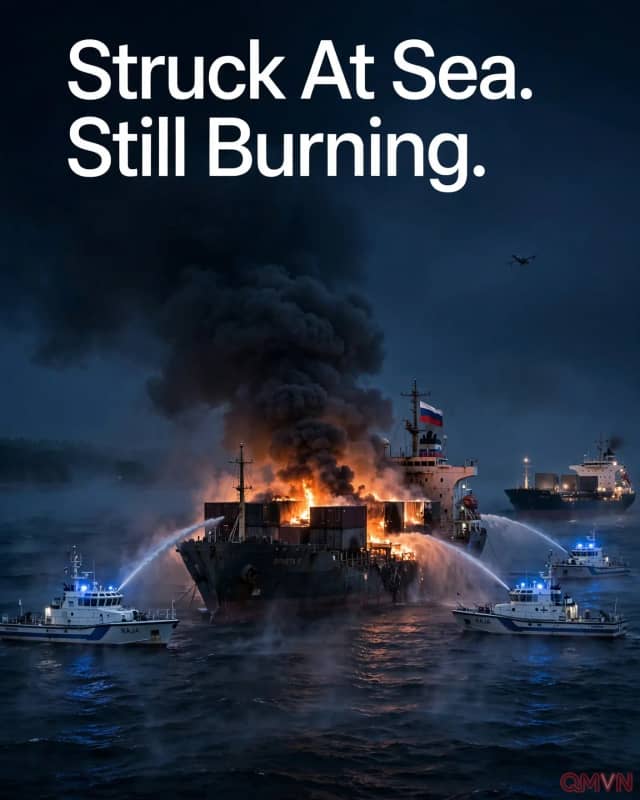
During the same weekend, the Russian cargo ship Sparta II caught fire following a suspected drone strike in the Baltic region. Finnish, Estonian and Russian vessels took part in the emergency response. The two incidents do not establish a coordinated campaign, but together they illustrate how risks involving Russian shipping are appearing across several seas and prompting cross-border rescue efforts.
Coastal states have an interest in preserving shipping routes, verifying evidence and communicating during emergencies, regardless of political disagreements. Readers, meanwhile, have a reason to resist turning suspicion into certainty. When war reaches logistical hubs in third countries, the potential cost extends from naval inventories to civilian livelihoods and the stability of international trade.