Growing food, not just trees
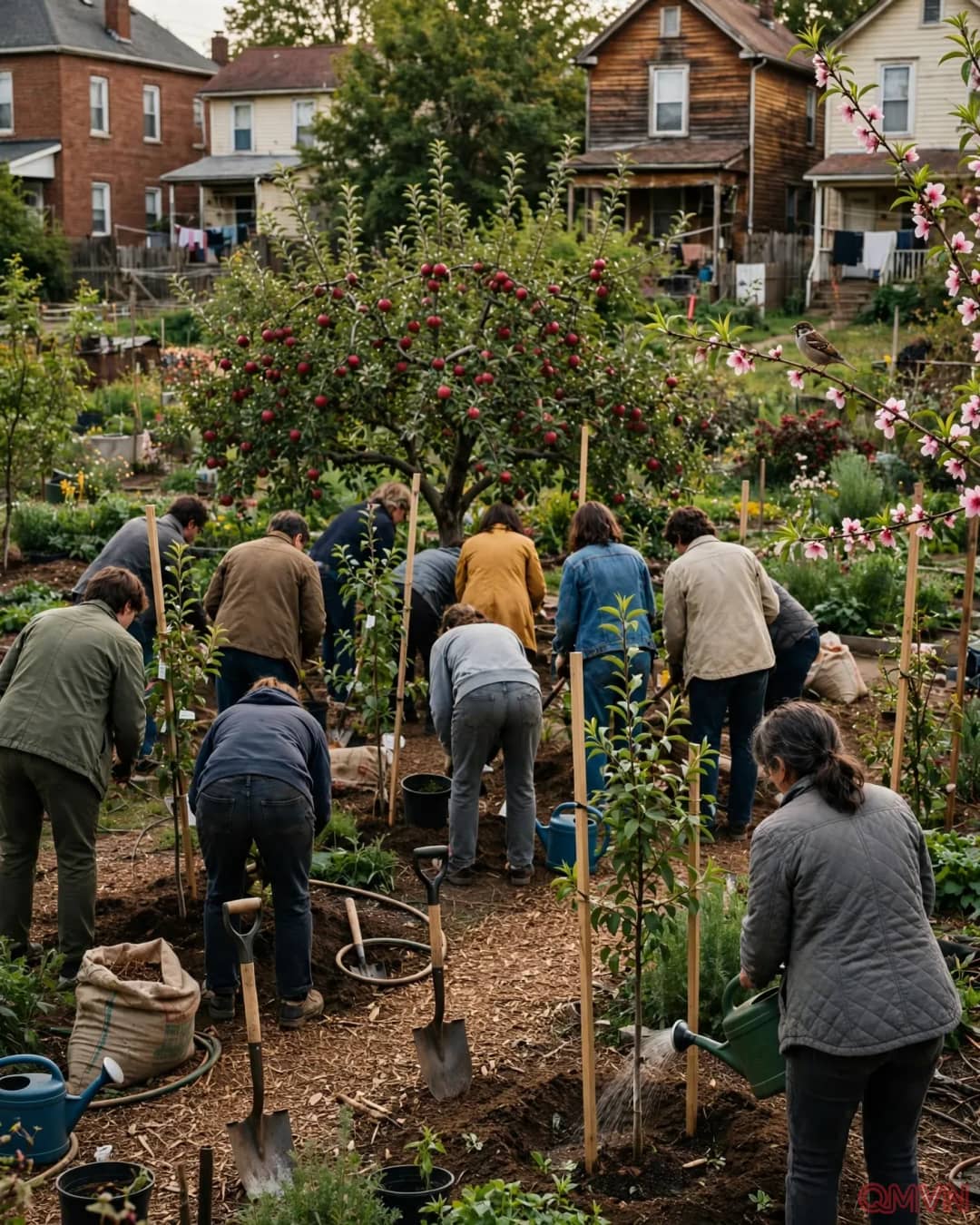
In Newport, Kentucky, about a dozen volunteers leaned on their shovels as Smyth gave them a pep talk before work began. By afternoon, a small green corner surrounded by densely packed houses was home to new fruit trees.
Smyth believes that when food grows right in a neighbourhood, people can see it and trust it is safe and healthy, and that this may remind them they can trust each other in a world full of suspicion.
At the end of the day, we get apples. And that's enough.
What is a food forest?
A food forest is a group of edible plants, occurring naturally or designed to mimic nature, with layers of perennials ranging from fruit trees to plants that support native pollinators. They require less maintenance than conventional crop systems.
Professor Anne C. Bellows of Syracuse University describes it as an idea of mutual nurture: people nurture the environment and the environment nurtures them. In many orchards, animals forage on fruit, pollinators move between flowers and herbs fill the spaces between trees.