MAIN ARTICLE
A crash renews a difficult safety question
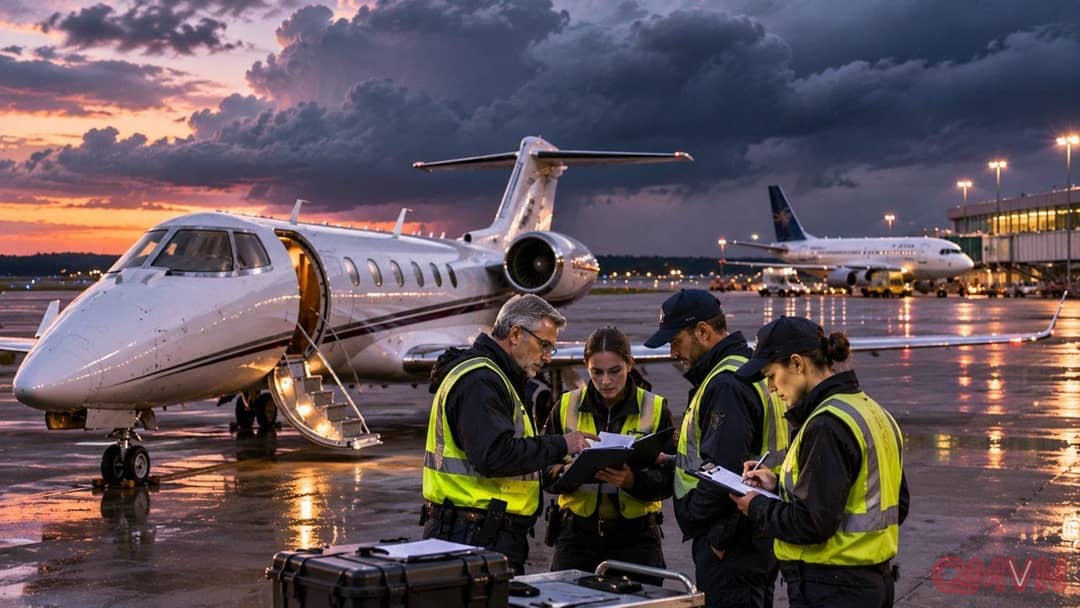
The Learjet 60, operated by Aurora Aviation under the Upper Jets name, departed Austin, Texas, for the Bahamas. It crashed in Palm Beach County amid severe weather, killing everyone aboard. The NTSB is examining meteorological records, maintenance history, flight communications, flight path and wreckage recovered away from the main impact point. Preliminary indications that parts separated before impact have not established what initiated the sequence. Weather, equipment and crew decisions are matters for investigation, not conclusions that can responsibly be announced now.
One devastating accident cannot itself establish the relative risk of an entire industry. Data examined by The Wall Street Journal indicate that in 2024 the accident rate per 100,000 flying hours for commuter and on-demand operations was around five times that of passenger and cargo airlines. The airline category recorded no fatal accidents that year. Rates also reflect different aircraft, missions, airports, weather exposure and sample sizes; they should inform questions rather than serve as an automatic judgment on every charter operator.
Two regulatory systems, not one standard
Part 121 typically governs large scheduled airlines; Part 135 governs many commuter and on-demand commercial operations, including private charters. Part 135 is not an exemption from professional oversight. Licensed operators must meet extensive maintenance, operational and pilot-training requirements. The rules nonetheless differ according to aircraft characteristics and business models. A legitimate charter flight is therefore not required to replicate every organizational layer of a nationwide airline, even though passengers may encounter similarly sophisticated jets.