MAIN CONTENT
One dinner, two financial realities
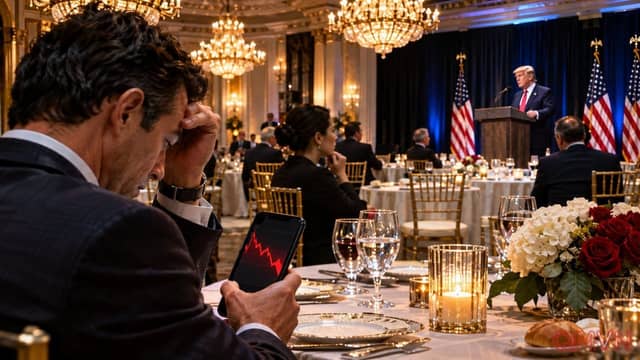
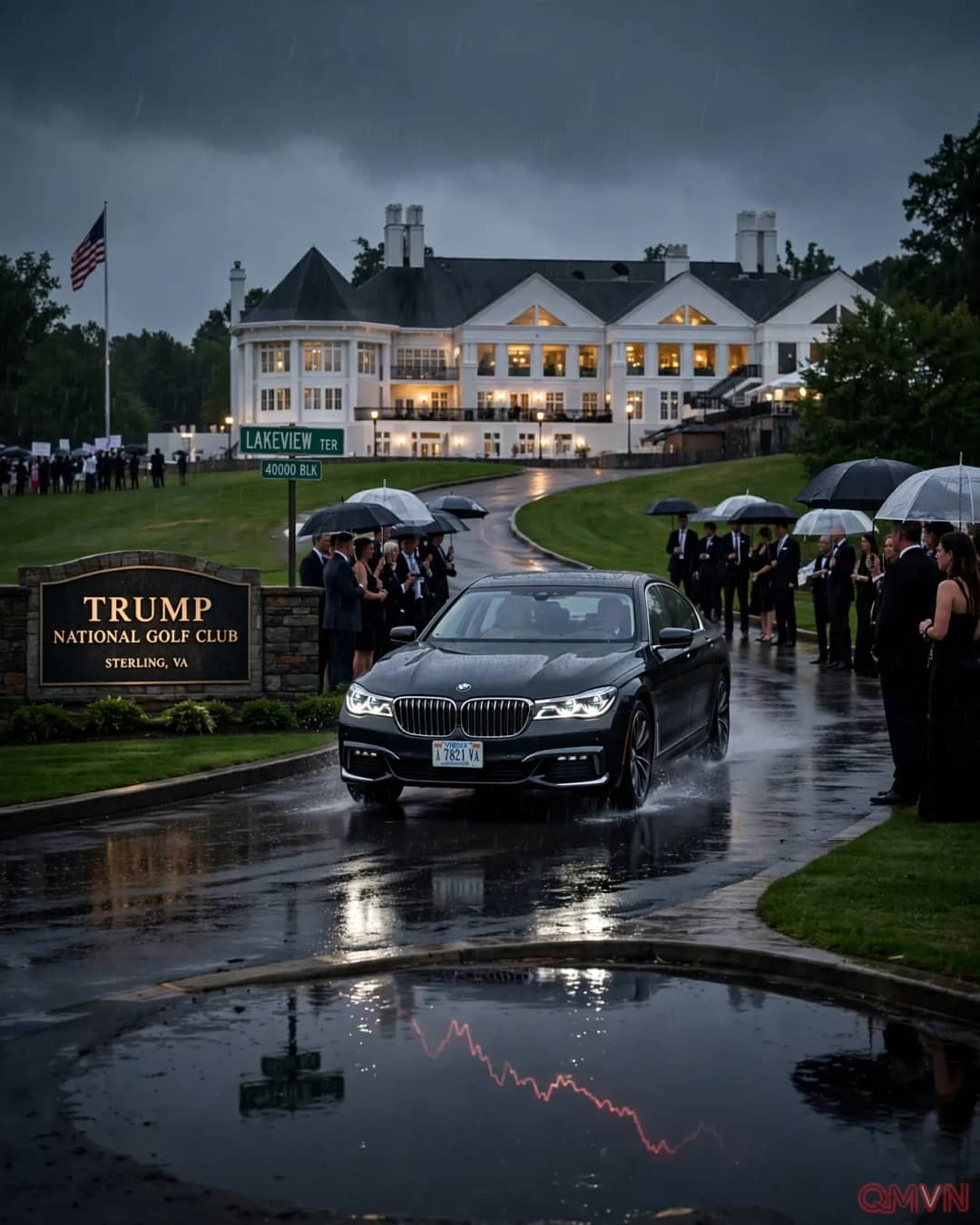
Sunday’s gathering at Trump National Golf Club in Sterling, Virginia, was the president’s third dinner for leading $TRUMP holders. Reuters reported that guests were served filet mignon and halibut and heard appearances by investor Kevin O’Leary and former basketball player Tristan Thompson. Rain greeted arrivals, and attendees characterized the mood as markedly quieter than at the first gala, which had featured luxury vehicles, demonstrators and the spectacle of the presidential helicopter.
The numerical contrast was sharper. The $TRUMP token had approached $75 during 2025 but traded below $1 around the November 2026 gathering. At the November 16 cutoff, 130 wallets on the public leaderboard held roughly $8.6 million combined, compared with $148 million displayed for the May 2025 dinner. These figures describe the market value of listed holdings, not total project revenue or a verified accounting of every purchaser’s losses.
Organizers said 185 wallets qualified even though only 130 appeared on the public ranking. Eligibility depended on time-weighted token holdings between September 30 and November 16. The top 29 contestants were offered a VIP reception and branded merchandise, while the four leading holders were promised 18-karat gold Trump-branded watches. Ownership thus served two purposes at once: an exposure to a volatile asset and a mechanism for entering an exclusive political-social event.
Wallet rankings and the limits of transparency
A blockchain can make token transfers visible without revealing who actually controls a wallet. An analysis by consumer advocacy organization Public Citizen for Reuters associated more than half of the publicly listed wallets with crypto exchanges that do not serve US customers.
This suggests foreign participation may be considerable, but the trail of exchange transactions cannot conclusively establish any individual holder’s nationality or intentions.
That uncertainty transforms a crypto promotion into a question of public accountability. On November 18, a coalition including Transparency International U.S. and Public Citizen urged cancellation of the dinner, arguing that access tied to token balances creates ethical concerns. Its members called for clearer separation between private cryptocurrency businesses and government power. Their statements identify a risk of conflicts of interest; they do not, by themselves, establish that any guest received official favors.
The evening also produced a dispute over access within the event. Morten Christensen, founder of Airdrop Alert, told Reuters that a hedged trading strategy had secured him a top-29 place, but that he did not receive the expected VIP wristband. He described asking several staff members for assistance and said he was later removed after speaking with reporters. Reuters said neither the $TRUMP project nor the White House responded to requests for comment on the incident.
Where crypto policy meets private interests
In remarks to guests, Trump presented his support for cryptocurrencies as a way to strengthen US competitiveness, especially against China. It is a recognizable economic-policy argument in a global technology market. Yet the existence of financial ties between the president’s family and businesses benefiting from attention to crypto raises a separate governance test: public policy deserves evaluation independently of the personal interests of its advocates.
Reuters reported that Trump’s June financial disclosure showed at least $635 million earned by his family from the meme coin. Its broader analysis estimated at least $2.3 billion in earnings through April from four main crypto ventures. Those are reported receipts over specific periods and categories; they should not be confused with audited after-tax profit or mechanically compared with a single day’s token-price movement.
Regulatory status adds complexity without settling the ethical debate. A February 2025 staff statement from the US Securities and Exchange Commission’s Division of Corporation Finance expressed the view that certain meme coin transactions of the kind it described generally do not involve securities. It was a staff position, not a blanket binding rule. Commissioner Caroline Crenshaw publicly challenged the reasoning. Even where a token falls outside securities registration, questions about marketing, disclosure and officials’ private interests remain.
What unequal losses reveal
When token prices collapse, late buyers and parties collecting issuance-related proceeds can have radically different outcomes. Reuters calculated that outside investors had lost more than $5 billion across five major Trump-family crypto and crypto-linked ventures. The total is an estimate using the news organization’s methodology rather than an audited loss statement for each investor, and it should be interpreted accordingly.
Meme coins generally confer neither ownership of a productive enterprise nor a guaranteed income stream. Their prices can depend heavily on online attention, collective sentiment and promotional events. A high-profile gathering may create a brief media moment, but that attention cannot substitute for a durable valuation case. The contrast between a continuing presidential dinner series and a record-low token price makes the distinction particularly visible.
For citizens, the important questions concern how eligibility is verified, whose identities remain hidden and what safeguards separate official decisions from private commercial gains. For investors, token supply, concentrated ownership, market liquidity and the terms of a promotional contest deserve closer scrutiny than promises of proximity to a celebrity. Access may be memorable; financial exposure remains real.