MAIN CONTENT
Initial unemployment claims drop below economist forecasts
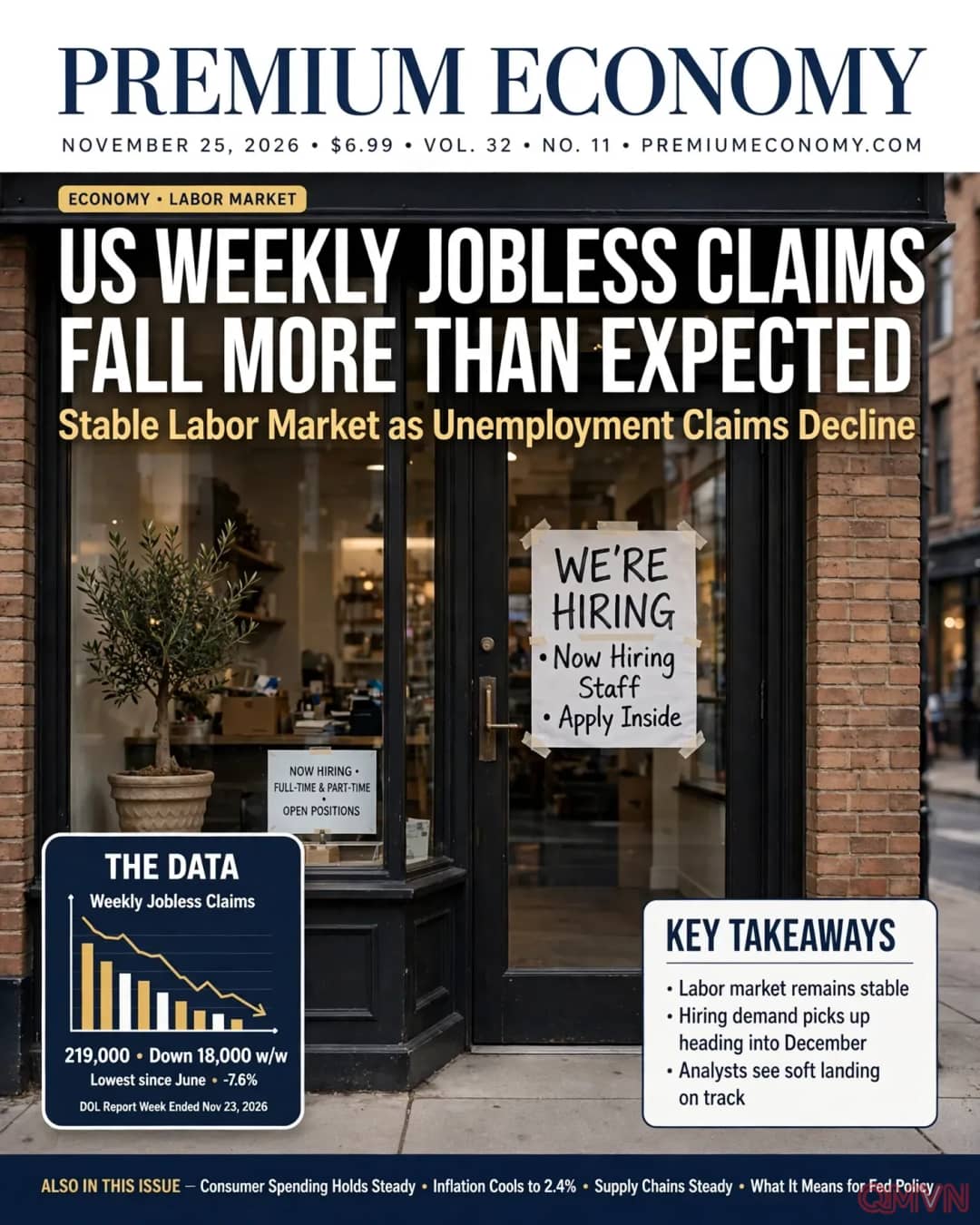
According to Labor Department figures published on Wednesday, November 25, 2026—a day ahead of schedule due to Thursday's Thanksgiving holiday—initial claims for state unemployment benefits fell by 13,000 to a seasonally adjusted 189,000 for the week ended November 21. The reading came in lower than the 200,000 claims projected by economists polled by Reuters.
Initial claims have remained notably low since mid-July 2026. Economists continue to characterize the US labor market as operating in a "low-hire, low-fire" state consistent with full employment.
Continuing claims decline and consumer job views improve
The number of people receiving unemployment benefits after an initial week of aid—often watched as a proxy for hiring dynamics—dropped by 95,000 to a seasonally adjusted 1.697 million during the week ended November 14, 2026. That survey week aligned with the period in which households were polled for November's unemployment rate.
Labor sentiment also drew support from a Conference Board survey released on Tuesday, November 24, which showed the share of consumers describing jobs as "plentiful" rose in November to its highest level since May 2025, while the share viewing jobs as "hard to get" fell to its lowest point in just over a year.
Unemployment rate projections and Federal Reserve policy room
On the unemployment rate outlook, the Federal Reserve Bank of Chicago projects the rate ticking up to 4.16%—which would round to 4.2%—from 4.14% in October 2026. The US jobless rate declined from 4.5% in November of the previous year to 4.1% in October, although part of that drop reflects a smaller labor force amid retirements and the Trump administration's immigration crackdown.
A steady labor market may clear the way for the Federal Reserve to raise interest rates again beyond December's anticipated hike as policymakers seek to bring inflation under control, keeping employment data closely tied to rate expectations.