When Britain “unlocked” sugar
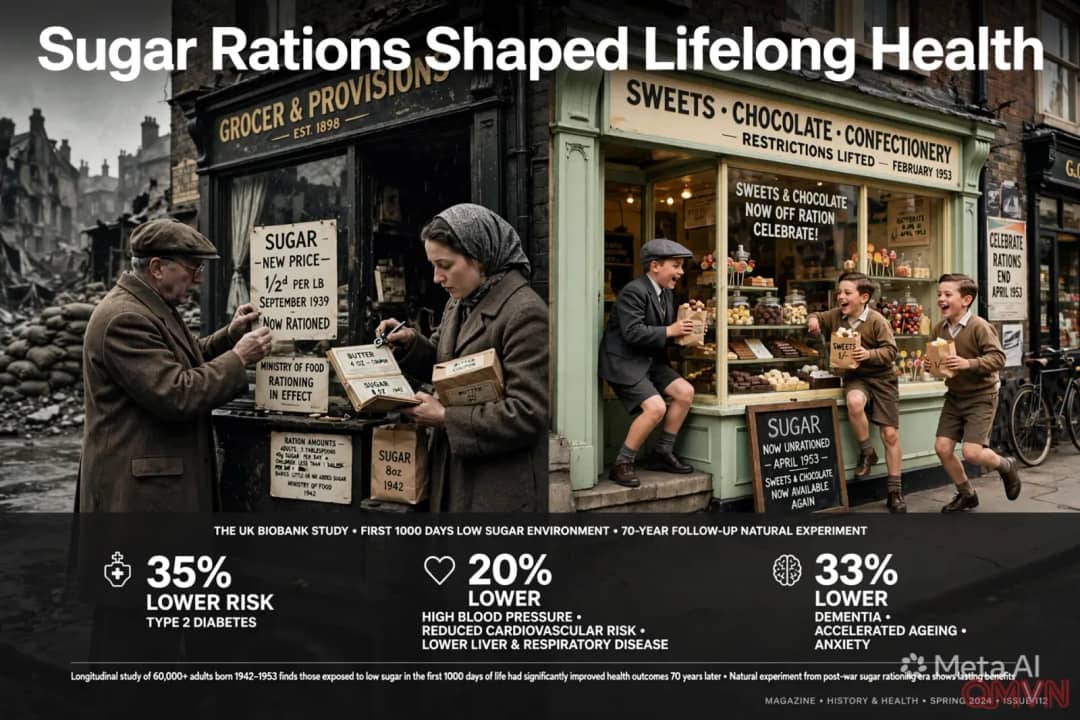
Children born into a Britain still recovering from war grew up with many foods still rationed. Adults were allowed about 40g of sugar a day, children less than a tablespoon, and babies almost no added sugar at all. In February 1953 sweets and chocolate came off ration; in September, sugar followed. By the second half of 1954, average sugar consumption had almost doubled.
According to Dr Jiazhen Zheng of the Hong Kong University of Science and Technology in Guangzhou, what makes the episode special is that the change happened abruptly across the whole population, driven by policy rather than individual choice, creating rare research conditions.
In a sense, history created an experiment that we could never deliberately run over a human lifetime.
Striking numbers
The first study, published in Science two years ago by Dr Tadeja Gračner of the University of Southern California, compared the health of people born shortly before and after rationing ended. Subsequent studies have extended the analysis to other organ systems: