Food prices bring monetary policy back into focus
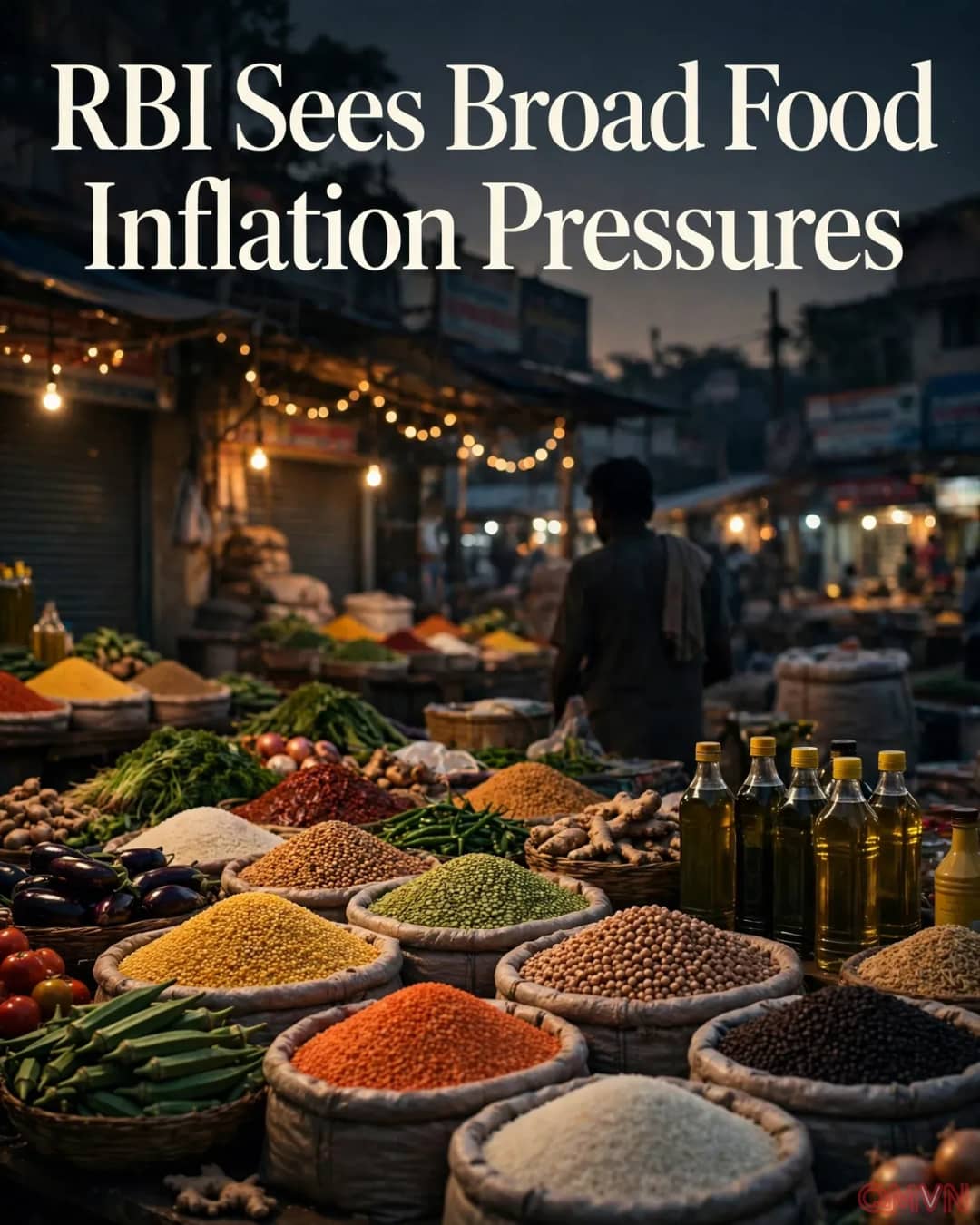
The November bulletin points to a widening increase in everyday food costs. According to Reuters, the RBI's monitoring through November 19 showed higher prices for major grains and pulses, alongside rising edible oil costs, particularly mustard oil. Weak monsoon rains have contributed to the pressure. A price shock in several essential categories simultaneously is particularly consequential for families with limited disposable income, because they cannot easily postpone these purchases. A household may therefore experience economic strain even while national output expands.
The distinction between a temporary agricultural shortage and a persistent inflationary process matters for policymakers. Higher borrowing costs cannot produce rainfall or immediately expand food supplies. They can, however, restrain demand and help prevent an initial shock from influencing wage negotiations, business pricing and expectations. The policy question is not simply whether food is expensive, but whether the increases become entrenched across the economy.
Growth offers room for a difficult decision
The monetary policy committee is due to announce its decision on December 4. Reuters' survey points to an increase from 5.5% to 5.75%, following an increase of the same magnitude in October. That is an expectation, not an announced decision.
The central bank's assessment of resilient activity and strong bank lending helps explain why analysts consider another increase plausible. The forecast for July–September GDP growth is 7.6%, with official figures scheduled for November 30.
Yet aggregate growth does not remove the costs of monetary tightening. Borrowers with variable-rate loans can face higher payments, and businesses may reconsider capital expenditure as financing becomes more expensive. On the other hand, persistent inflation can erode real incomes and discourage long-term planning. The central bank must weigh these competing risks, taking account of how much of the price pressure is likely to persist and how quickly previous decisions are working through the financial system.
Foreign exchange flows tell a separate story
The RBI's September foreign exchange figures show net dollar purchases of $6.94 billion, compared with $43.26 billion in August. Gross purchases reached $82.18 billion and gross sales $75.25 billion; rounding explains the small discrepancy in subtraction. Reuters reported on November 25 that September marked the fourth consecutive month of net purchases. The figures should not be interpreted as proof of a single motive: intervention, maturing swaps and the absorption of capital inflows can all affect the balance.
The same reporting identifies roughly $143 billion in inflows associated with measures to attract capital, primarily a zero-cost currency hedging facility for banks' overseas foreign currency deposits. Outstanding net forward dollar sales approached $240 billion at the end of September, up from $200 billion a month earlier. Forward contracts concern future settlements; they are not equivalent to an immediate sale of reserves. Understanding the distinction between spot transactions and forward commitments is essential when assessing the central bank's position.
A stronger rupee is not the end of inflation
In November, falling oil prices and renewed interest in Indian equities helped reverse the currency's fortunes as investors reduced exposure to AI-related shares elsewhere. On November 25 the rupee appreciated by 0.73% to 92.23 per dollar, according to the supplied Reuters report. Cheaper imported energy and a firmer exchange rate can ease some cost pressures, although the effects depend on contracts, taxes and the timing of price adjustments.
Domestic agricultural conditions may nevertheless keep food inflation elevated. Nor does a stronger currency guarantee that capital inflows will continue. The upcoming GDP release and December policy meeting will provide important evidence about whether the economy can maintain momentum while containing prices. The most useful interpretation of the November figures is therefore one that keeps the domestic inflation outlook separate from short-term financial market optimism.