A different direction for Asian markets
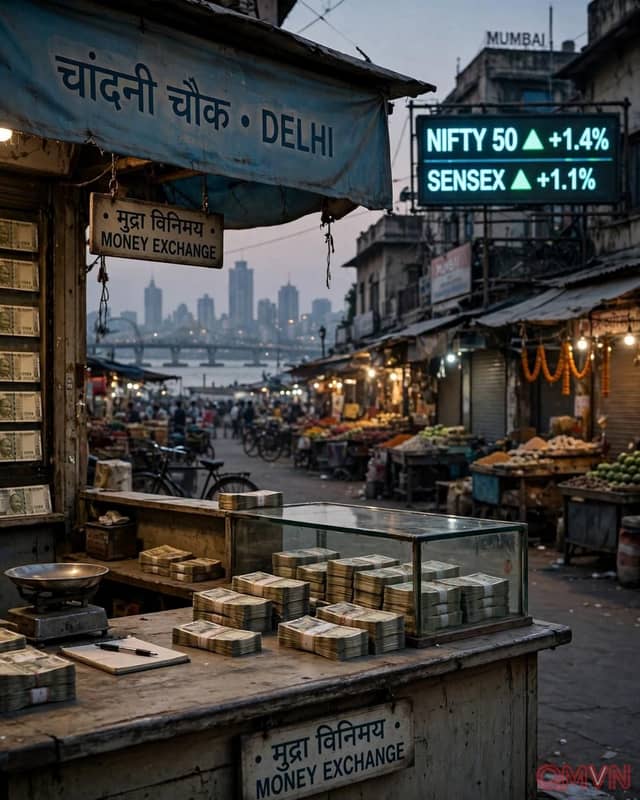
The Nifty 50 ended Wednesday at 25,819.25, up 1.85%, while the Sensex advanced 1.82% to 83,938.28. Reuters reported that both benchmarks were less than 2% below their levels at the beginning of 2026. The Financial Express independently reported the same Sensex closing level. In contrast, the MSCI Asia-Pacific index excluding Japan suffered a sharp decline. The divergence is especially striking because investors were responding to renewed uncertainty about US trade policy across the region.
The reversal of foreign investment is central to this story. Rather than assuming every Asian market offers similar exposure to technological innovation, portfolio managers can distinguish between economies whose listed companies depend heavily on semiconductor demand and those with more diversified sources of earnings. Indian banks, consumer businesses and other domestically oriented enterprises offer different exposures. That distinction can matter when valuations in a previously popular sector begin to come under pressure. It does not, however, eliminate the possibility of a broader global selloff affecting India.
Energy costs and the currency
For a country that purchases substantial quantities of crude oil abroad, cheaper energy can have effects well beyond the petrol station. Reuters reported Brent crude near US$91 a barrel, with a decline of roughly 22.5% during November.
A lower import bill can reduce demand for foreign currency and improve the external balance, while potentially easing costs for businesses that rely on transport and petroleum products. The extent of any benefit depends on exchange rates, domestic pricing policies and how long the decline lasts.
The rupee's recovery gives this process another dimension. In separate reporting on November 25, Reuters described a renewed currency rally supported by equity inflows. For international investors, exchange rates can amplify or erode gains earned in the local stock market. An appreciating currency therefore improves the dollar value of an otherwise unchanged investment. But exchange rates can reverse, particularly if commodity prices rise again or international investors become more cautious. It would be premature to treat the present combination of stronger shares and a firmer currency as permanent.
Corporate earnings provide a domestic anchor
The economic case for India also rests on the performance of its companies. Reuters reported expectations of 7.6% economic growth in the July–September quarter and described corporate earnings for the period as the strongest in four years. The growth figure was a forecast, not a confirmed official result at the time of reporting. Financial companies were particularly prominent in Wednesday's advance, while technology shares also recorded gains. That mix suggests the rebound was not confined to a single industry.
Nevertheless, the experience of smaller businesses warrants attention. Small-cap shares declined even as the major benchmarks advanced, illustrating how a rising index may conceal considerable variation among individual companies. Future earnings, borrowing costs and the prices investors pay for expected growth will determine whether the recovery broadens. A company can be financially sound and still represent an expensive investment if its valuation assumes exceptionally favourable results.
The risks behind renewed optimism
The prospect of fresh American tariffs remains a material uncertainty for exporters and internationally connected businesses. A shift in trade policy can affect demand, input prices and supply-chain investment, even for companies whose immediate revenues are mainly domestic. Meanwhile, foreign portfolio flows are inherently reversible. A record month of buying says something about current investor preferences, but cannot establish how those preferences will evolve.
The coming months will therefore test the distinction between a tactical reallocation and a durable change in confidence. Important indicators include actual corporate results, the final details of any trade measures, oil prices and the distribution of gains across the market. A broader recovery would require more than enthusiasm for the largest listed companies. The November rally is evidence of renewed interest, not proof that India is insulated from international financial instability.