MAIN ARTICLE
The household budget becomes the battleground
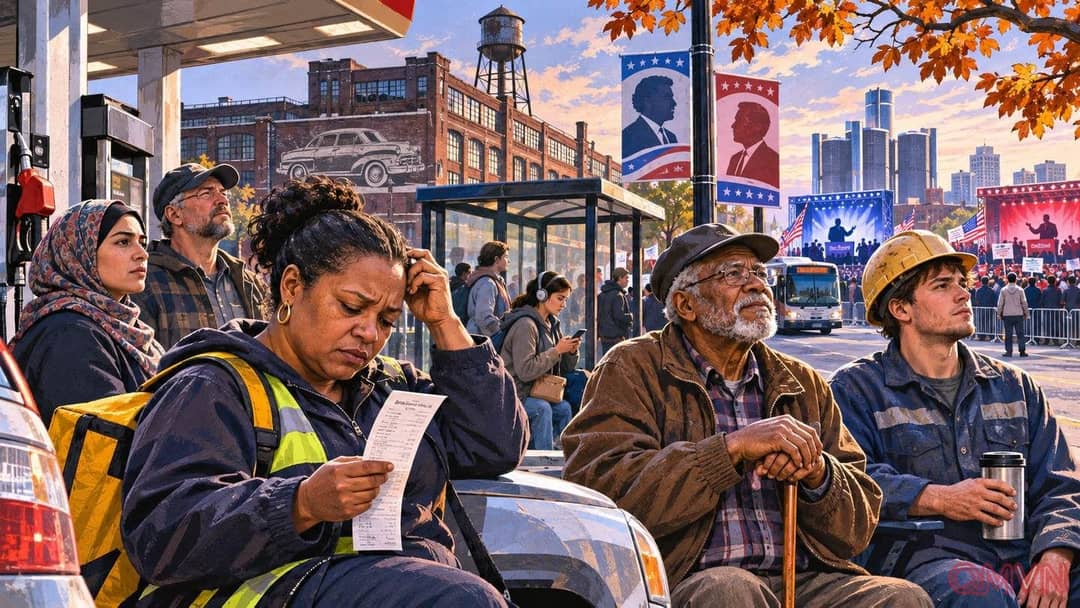
Crystal Hill, a 42-year-old Detroit resident profiled in the reference report, spends long hours delivering parcels and driving for a ride-hailing service yet struggles to afford medication for a serious kidney condition. Her circumstances illustrate why affordability has become a visceral political issue. A difference of a few dollars at the petrol station or pharmacy is consequential when a household is already close to its limits.
Michigan’s identity as an automotive and manufacturing centre adds another layer. Tariffs, production decisions, supply chains and energy prices affect jobs and household finances. Campaigns seek to translate these pressures into competing narratives: one emphasising healthcare and social protection, the other stressing industrial competitiveness, economic security and resistance to policies characterised by its critics as too far to the left.
Economic unease does not yield a predictable vote. A resident worried about medical bills may favour El-Sayed’s priorities, while another distrustful of higher taxes or uncertain about the implementation of his proposals may prefer Rogers. Dissatisfaction is widespread, but its political destination remains contested.