MAIN ARTICLE
A milestone larger than a party victory
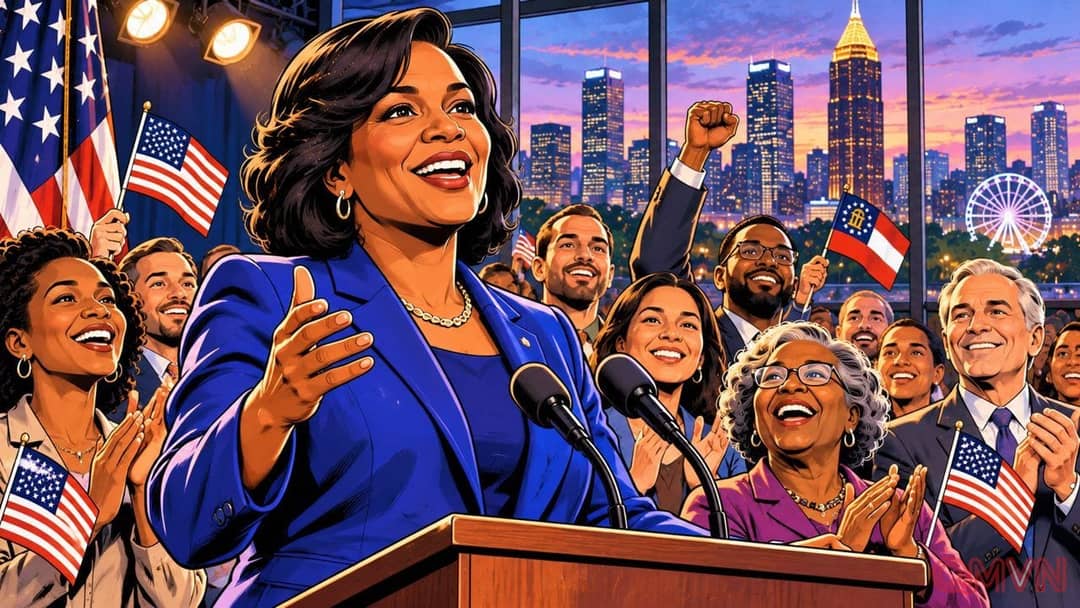
When election projections showed Keisha Lance Bottoms defeating Rick Jackson on November 3, Georgia crossed two historic thresholds. No woman had been elected governor of the state, and no Black woman had won a governorship across the 50 U.S. states. The significance lies in representation: communities that have long shaped electoral politics have rarely been reflected in the highest executive offices. The result opens a possibility that younger generations can now see rather than merely imagine.
Bottoms, 56, served as Atlanta mayor from 2018 to 2022 before taking senior roles in Joe Biden’s White House. Her leadership through the pandemic and debates over public safety and racial justice provided administrative experience, but also material for criticism. She entered the statewide race as a seasoned politician rather than a sudden outsider, asking voters to translate municipal experience into confidence in a broader governing role.
The victory also reflects Georgia’s gradual political transformation. Once considered a dependable Republican stronghold, the state has become competitive in national contests. One election does not prove a permanent partisan realignment. It demonstrates how turnout, candidate quality, shifting suburbs and household anxieties can combine to challenge assumptions about what a state will do next.