The woman who made Suzhou embroidery history
Suzhou embroidery is one of China's most celebrated traditional crafts, often called the textile equivalent of ink painting. Originating more than 2,000 years ago in Suzhou, Jiangsu province, it uses silk threads finer than human hair to depict classical gardens, mountain-and-water landscapes, lotuses and birds, reflecting the region's rich artistic heritage.
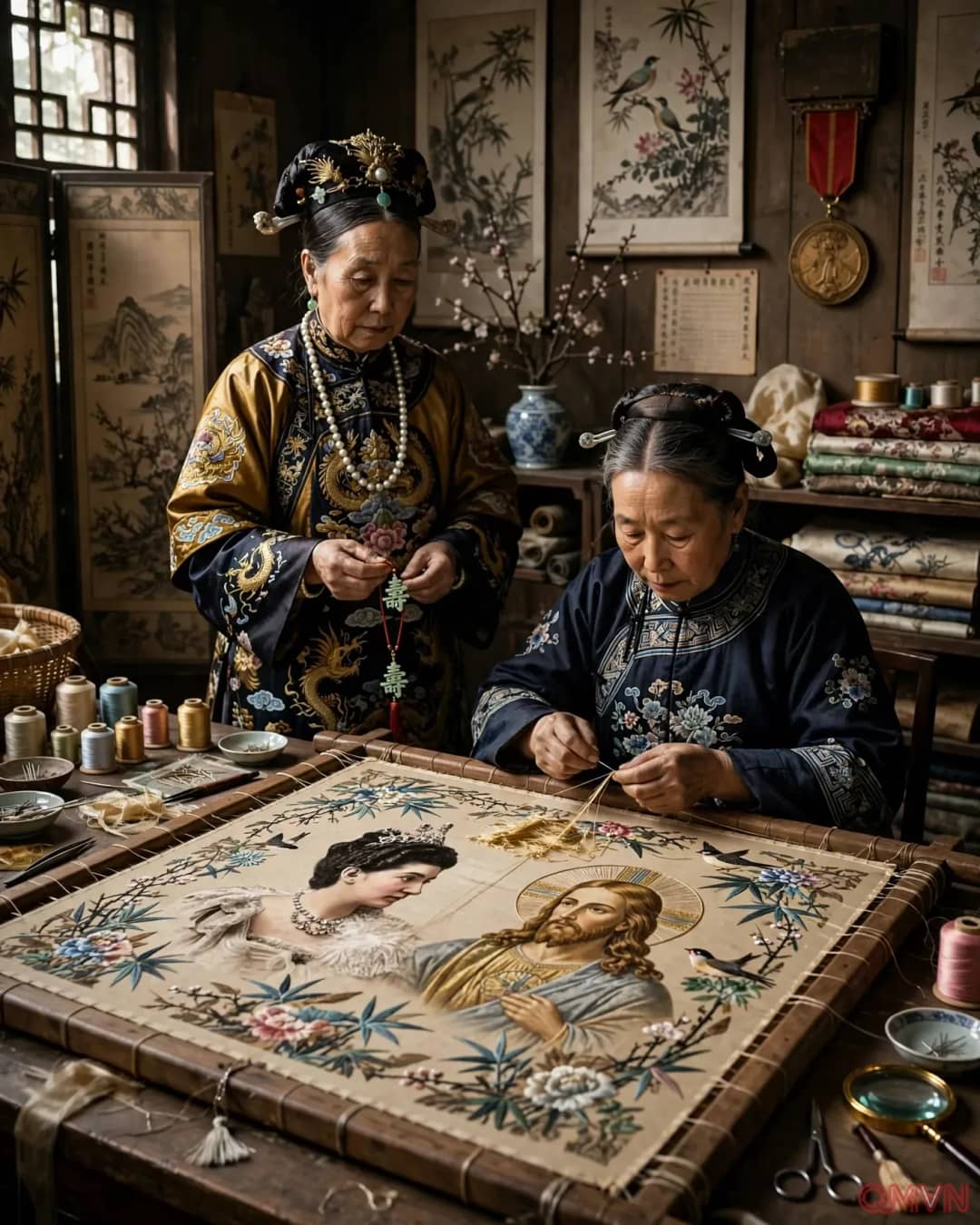
In the modern era, Shen Shou redefined Suzhou embroidery, transforming it from a traditional craft into a globally recognized fine art – an unprecedented achievement for a Chinese female artisan at the time. Her best-known works include:
- A portrait of Queen Elena of Italy (1911), which helped her forge close ties with the Italian royal family.
- A portrait of Jesus Christ (1915), which won a gold medal at the Panama-Pacific International Exposition in San Francisco and is now housed at the Nanjing Museum.
- A portrait of American stage and screen actress Janet Beecher, made between 1914 and 1916.
Named by Empress Dowager Cixi
Born Shen Yunzhi in 1874 to a merchant family, she learned to read and write from her father and needlework from her mother from the age of seven. Looking beyond conventional floral and bird motifs, she drew inspiration from her family's art collection, including works by Ming dynasty painters Shen Zhou, Tang Bohu, Wen Zhengming and Qiu Ying. By 16, her technique and innovative subjects were famous throughout Suzhou.