A day when Italy took to the streets
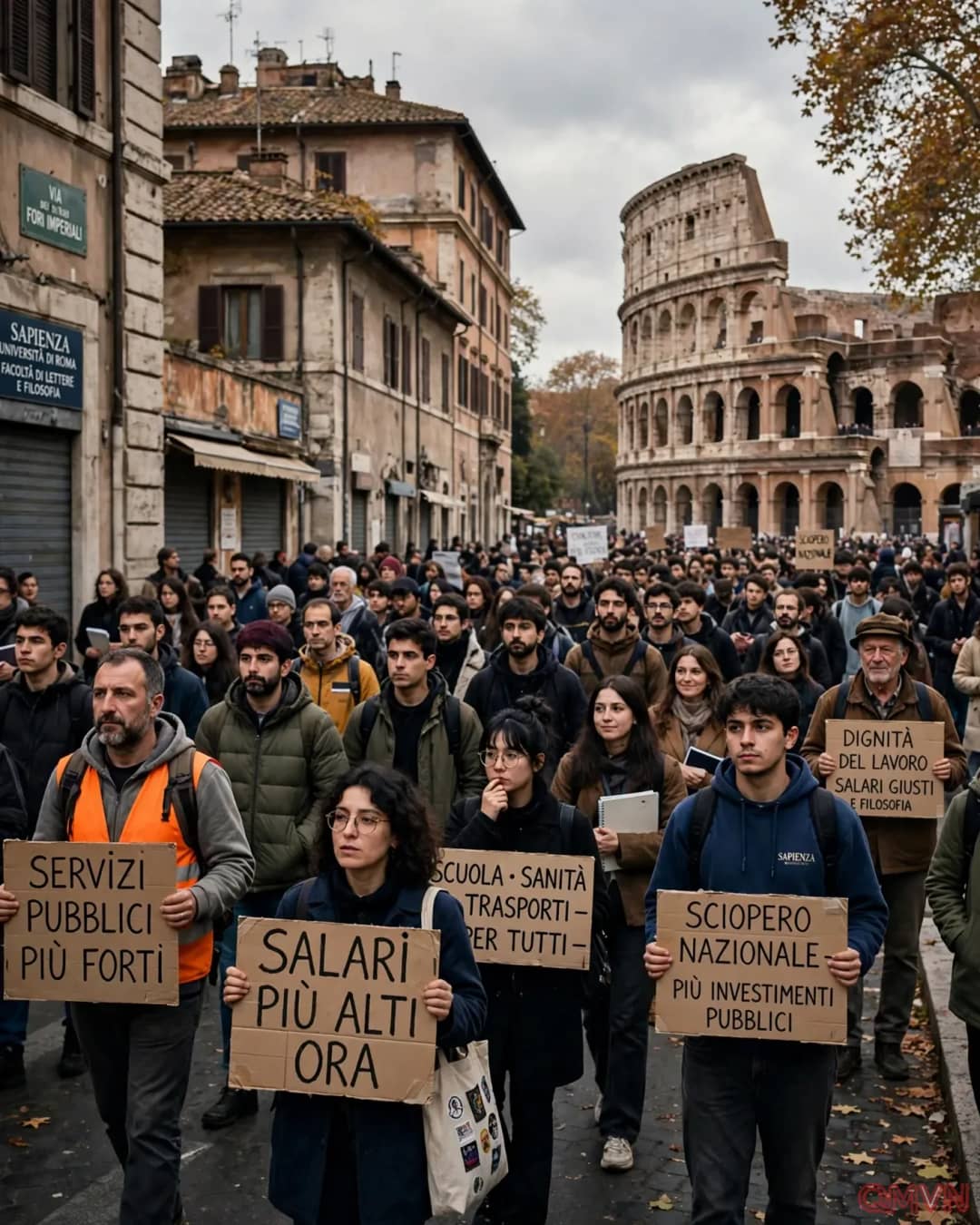
The 24-hour general strike called by Unione Sindacale di Base drew a broad response, with marches planned in more than 40 cities. Participants, mostly students and workers, brought concrete demands:
- Higher wages to keep pace with prices
- Stronger public services
- Curbs on the rising cost of living
- Opposition to increased military spending
After clashes earlier this month, when protesters fought with police, looted shops and vandalised property, these marches were largely peaceful. Even so, in Turin, police used a water cannon to push back students and left-wing activists who approached the security cordons protecting the prefecture building.
From the Colosseum to the port of Genoa
In Rome, a large march passed near the Colosseum, where protesters said they planned to set up tents and stay through the weekend. Some rubbish bins were dragged into the streets and set on fire.
In the evening, according to news agency ANSA, a large group tried to march towards parliament, prompting police to use water cannon to disperse them; eight people were detained after repeatedly trying to break through barricades.
In Milan, protesters marched onto the ring road before ending in front of the Politecnico di Milano university, carrying flares and setting objects alight. In Genoa, around 15,000 port workers, students and demonstrators entered the port, joining protests in Europe and beyond against the use of ports for arms shipments and remembering seafarers killed in conflicts from the Gulf to the Black Sea.
The aftermath of October’s days of chaos
On October 17 and 18, initially peaceful marches in Milan turned into riots as masked youths threw stones, set barricades on fire and looted shops around Piazza del Duomo. On the Sunday alone, police detained 271 young people. After an emergency meeting chaired by Prime Minister Giorgia Meloni, the government decided to send 500 more troops to Milan.
To demonstrate is a right. To lay our cities to waste is not.
With inflation at around 4.2%, discontent is not limited to students but has spread to farmers and truck drivers. Next year’s election, in which the economy, security and immigration are expected to be key issues, gives every street protest political weight.
A restless Europe
Italy is not alone. A wave of protests has swept European countries including France, Spain, Belgium and Albania, driven by shared grievances including the cost of living. In France, the mid-October protests were regarded as the most violent in years.
The cost of living is unbearable, our productive system is losing pieces every day.
Behind the slogans lies a big question facing many European governments: how to balance commitments to higher defence budgets in an unstable world against people’s urgent needs for wages, housing and public services.