MAIN CONTENT
How an unusually clean October gave way to November smog
India’s environment ministry announced on October 31 that Delhi’s average October 2026 AQI was 166, the lowest for that month in eight years. Unusually heavy rain washed particles from the atmosphere and favorable airflow dispersed remaining emissions. This was genuine relief for residents. It was not, however, evidence that vehicle exhaust, industrial combustion or building-site dust had disappeared. Meteorology can improve what people breathe without changing the amount society emits.
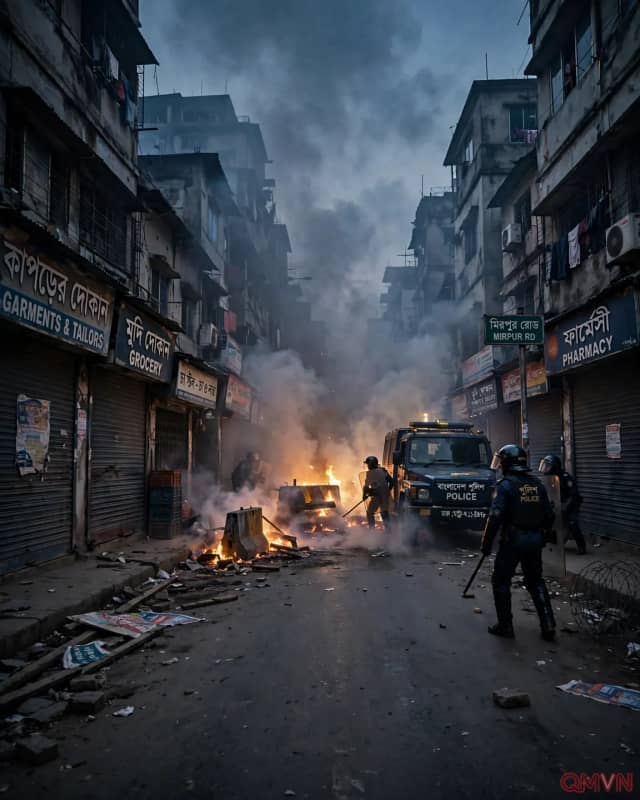
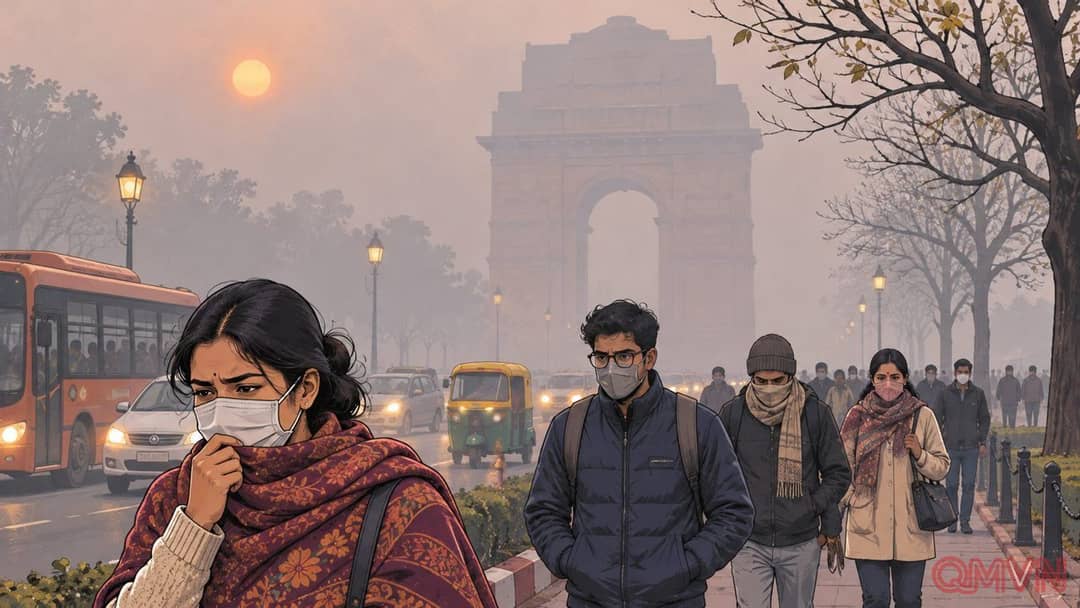
The reversal was rapid. Delhi’s daily reading climbed from 117 on October 31 to 261 on November 1, 324 on November 2, 350 on November 3 and 377 on November 4. Bloomberg’s figure of 379 was a morning observation; the slightly lower 377 was the end-of-day city reading. India classifies AQI from 301 to 400 as very poor and 401 to 500 as severe, meaning even the citywide average was close to the next danger band.
Conditions were harsher in individual neighborhoods. On November 4, 22 of Delhi’s 59 monitoring stations registered severe air quality, according to local reporting using official data. An average masks unequal exposure: a person living beside a busy road or industrial area may face much greater concentrations than the city’s headline number suggests. Both citywide trends and local monitoring therefore matter for public decisions.
Several sources of pollution, one shared atmosphere
There is no single explanation for Delhi’s annual pollution episode. Exhaust from transportation, dust from roads and construction, industrial and residential combustion, waste burning and crop-residue fires all contribute.
Delhi’s decision-support modeling attributed about 20.2% of November 4 pollution to stubble burning and 15.5% to transportation. Those estimates are specific to a model and a date; they must not be mistaken for permanent shares of the city’s emissions.
Why the atmosphere traps pollutants
As winter approaches, weak winds and a shallow mixing layer trap polluted air nearer the surface. A rainy day can briefly reduce the measured level, but this weather-assisted improvement becomes fragile if emissions remain high. That is why cleaner vehicles, tighter construction controls, improved waste systems and cooperation with surrounding states are more reliable than hoping the next rainstorm will clear the skyline.
Diwali adds a difficult seasonal decision. Fireworks can release additional particles during a period when the atmosphere struggles to disperse them. Reuters reported restrictions allowing less-polluting fireworks in limited time windows. Yet fireworks are not the only cause of winter smog, and treating the festival alone as the problem risks overlooking pollution that residents encounter throughout the year.
Protecting public health beyond the emergency
The health stakes are substantial. PM2.5 particles can reach deep into the respiratory system and are associated with cardiovascular and lung disease. The morning concentration cited by Bloomberg, 277 micrograms per cubic metre, is roughly 18.5 times the WHO’s 24-hour guideline of 15. This comparison illustrates the scale of exposure; it does not predict a particular individual’s illness or replace clinical advice.
During particularly polluted periods, children, older adults and people with existing respiratory or cardiac conditions may need extra precautions. Reducing strenuous outdoor activity, monitoring reliable local bulletins and using properly fitting particle-filtering masks when exposure cannot be avoided can help. Thin cloth face coverings should not be assumed to provide equivalent protection from fine particles.
Lasting progress requires enforcement and equity, not merely emergency restrictions. Transport changes must be practical for workers, industrial controls measurable, and neighborhood readings publicly accessible. Delhi’s October success demonstrates how quickly the air can clear under favorable conditions; November’s reversal demonstrates why emissions policy must carry the burden when the weather does not cooperate.