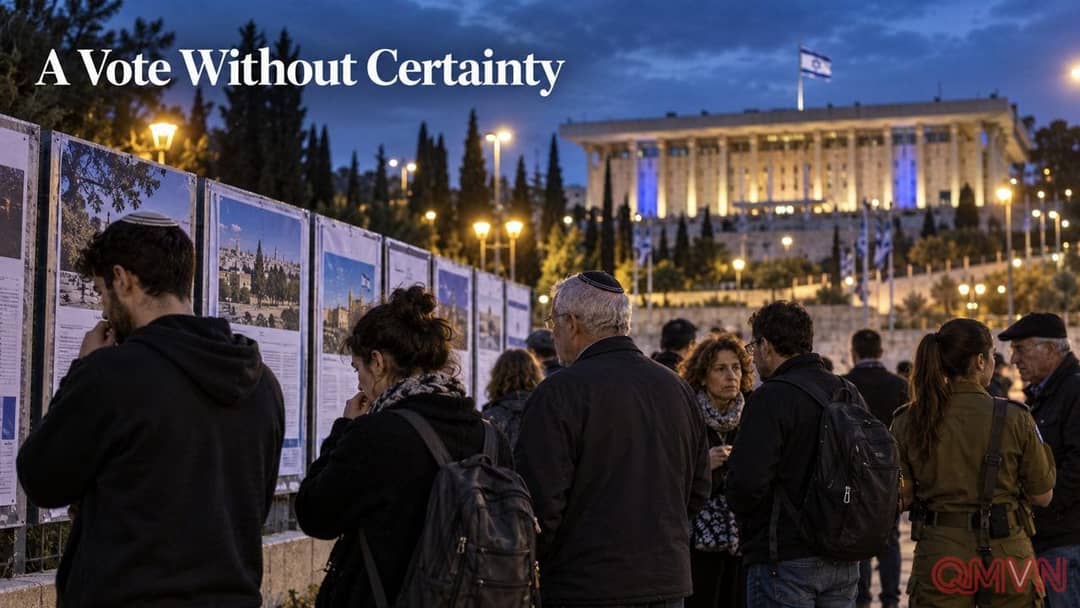
A tie at the top without a majority
The survey places Likud and Yashar on 23 seats, far short of the 61 required for control of the Knesset. Likud remains the anchor of Netanyahu’s right-wing camp. Yashar has emerged as a new centrist vehicle built around Eisenkot’s military record and a promise of institutional repair. A poll is a snapshot, not a ballot, yet a dead heat suggests that voters are distributing their confidence rather than handing it to one commanding force.
The decisive question is the arithmetic after election night. Recent polling has indicated that neither the Netanyahu-aligned bloc nor its opponents can easily reach a majority alone. Voters are therefore judging not only who should lead, but who can speak to others and prevent a new government from becoming paralysed at the moment it takes office.
What voters are weighing beyond the seat count
After years of security trauma and social tension, many Israelis are measuring leaders by their ability to provide safety, respond to the failures exposed by the Hamas-led attack of October 7, 2023, and chart a course through a prolonged regional conflict. Some see Netanyahu’s international experience as an asset. Others want a less confrontational style and clearer accountability.